
Apps Games Articles
TREBEL: Music, MP3 & Podcasts
M&M Media, Inc.
Rating 4.7star icon
Editor's summary
Editor rating
star icon star icon star icon star icon
half star icon
4.5

One-line summary TREBEL is one of the rare free music apps that genuinely delivers offline, on-demand listening without a subscription, but its catalog gaps and occasional rough edges keep it from feeling like a complete replacement for the big-name services.

  • Installs

    50M+

  • Developer

    M&M Media, Inc.

  • Category

    Audio

  • Content Rating

    Teen

  • Latest version

    5.7.7

  • Package

    com.mmm.trebelmusic

Screenshots
In-depth review
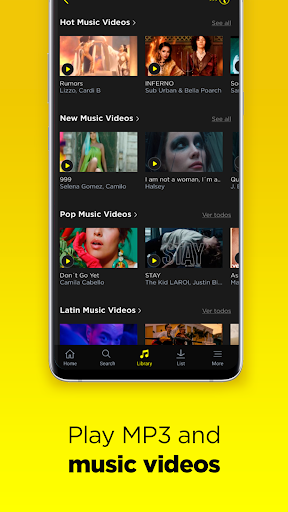
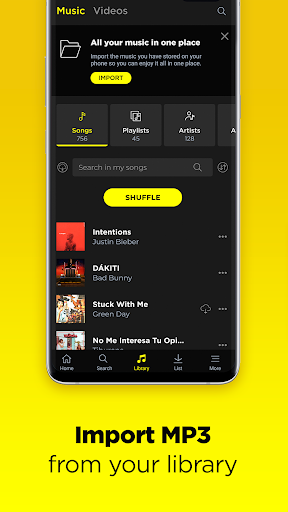
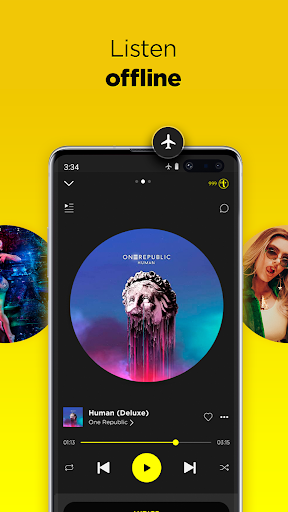
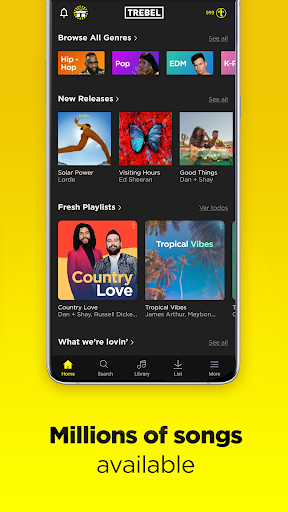
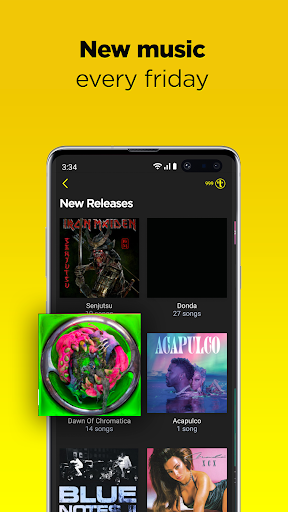
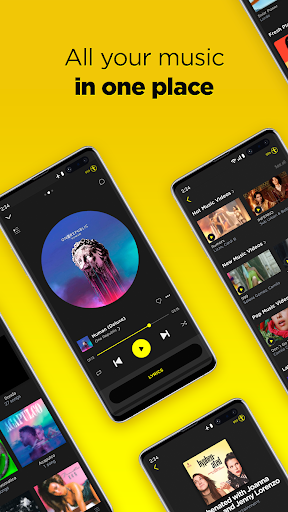
TREBEL: Music, MP3 & Podcasts feels like it was built around a very specific frustration: wanting to listen to music offline without being pushed into a monthly subscription. After spending time with the app, that core promise is exactly why it stands out. This is not a trial pretending to be free, and it is not a stripped-down radio app that hides the songs you actually want behind a paywall. TREBEL’s best quality is simple and immediately useful: you can search for music, download tracks, and play them back later without an internet connection. That sounds basic, but in everyday use it makes a big difference. On a commute, in a workplace with weak signal, or anywhere you want to conserve mobile data, TREBEL feels practical in a way many music apps no longer do. We found the app strongest when used as a “load it up on Wi-Fi, then forget about connectivity” player. Once songs are downloaded, the experience becomes much more relaxed. Playback is on demand, you can build your own playlists, and it does not feel like the app is constantly trying to funnel you into a premium tier just to regain control over your own listening. The catalog, from what we could tell during use, is broad enough to satisfy most casual and mainstream listeners. Finding popular tracks, familiar artists, and genre playlists was generally easy. The app also does a solid job of giving you multiple paths into music: search if you know what you want, browse categories if you do not, or jump into playlists when you just want something playing fast. That flexibility matters because TREBEL works best when it gets out of your way. In good moments, it feels refreshingly direct: pick songs, download them, hit play, move on. Another strength is that the ad experience, while present, is not nearly as punishing as many “free” audio apps. Ads are clearly part of the trade-off here, and TREBEL does ask for your patience from time to time, especially around downloads and the app’s reward flow. But during playback, it often feels less disruptive than expected. That makes the app easier to live with over time. We never got the sense that every tap was turning into an interruption, and for a free music app, that is a meaningful win. TREBEL also deserves credit for supporting a more personal music-library style of use. The option to import existing MP3 files helps the app feel more like a real audio hub instead of a walled-off streaming service. If you already have downloaded music on your phone, that feature makes the experience more cohesive. It is a small but smart touch, especially for users who still keep local music collections. That said, TREBEL is not polished enough to be a universal recommendation without reservation. The first issue is catalog consistency. While there is plenty of music here, availability can be uneven. In practice, that means you may search for a track you expect to find and run into a missing song, an unavailable version, or a “coming soon” style dead end. If your taste leans heavily toward chart music and broad genre coverage, you may be happy most of the time. If you are picky about exact versions, remixes versus originals, or deeper cuts from specific artists, the gaps become more noticeable. The second issue is app smoothness. Most of the time TREBEL works well enough, but it does not always feel refined. Navigation can take some getting used to, and certain parts of the interface feel less intuitive than they should. During testing, the app sometimes gave off the impression of being functional first and elegant second. That is not a deal-breaker, but it does matter. A music app is something people open constantly, often while multitasking, and small friction points add up. The third complaint is reliability at the margins. TREBEL’s core download-and-play workflow is good, but occasional glitches can break the illusion of simplicity. At times, previewing or loading content can feel inconsistent, and the overall experience is not quite as seamless as the best subscription services. If you are the kind of listener who expects every search result, every tap, and every playback transition to behave perfectly, TREBEL may test your patience now and then. Who is this app for? It is for listeners who prioritize free offline playback above all else. It is especially good for students, commuters, travelers, people with limited data plans, and anyone tired of shuffle restrictions or paywalled offline listening. It is also well suited to people who want a practical music tool rather than a glossy ecosystem. Who is it not for? If you want the deepest possible catalog, premium-level interface polish, or absolute consistency in song availability, TREBEL is probably not your final destination. It is also not ideal for listeners who get annoyed quickly by ads of any kind, even relatively restrained ones. Overall, TREBEL succeeds because it solves a real problem better than most free alternatives. It gives you meaningful control, usable offline listening, and a surprisingly generous experience without demanding a subscription up front. Its limitations are real, particularly around missing tracks and occasional clunkiness, but they do not erase its value. For the right user, TREBEL is not just a decent free option. It is one of the few that actually feels worth keeping installed.
Alternative apps