
Apps Games Articles
Going Balls
Supersonic Studios LTD
Rating 4.3star icon
Editor's summary
Editor rating
star icon star icon star icon star icon empty star icon
4.2

One-line summary Going Balls is easy to recommend for its genuinely satisfying roll-and-balance gameplay, but the repetitive later levels and persistent ad pressure keep it from being an essential download.

  • Installs

    100M+

  • Developer

    Supersonic Studios LTD

  • Category

    Casual

  • Content Rating

    Everyone

  • Latest version

    3.20

  • Package

    com.pronetis.ironball2

Screenshots
In-depth review
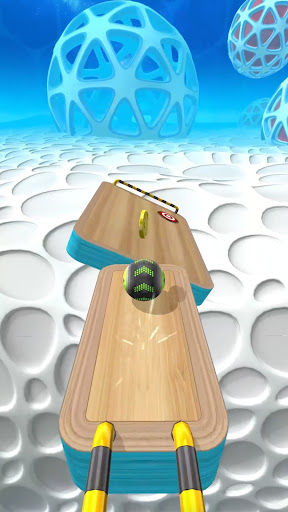
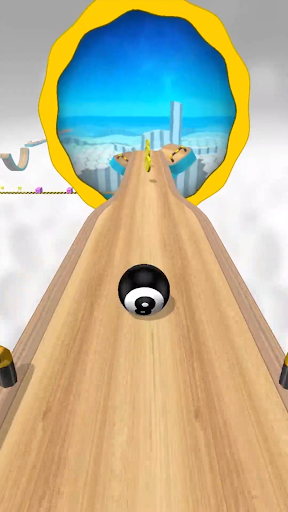
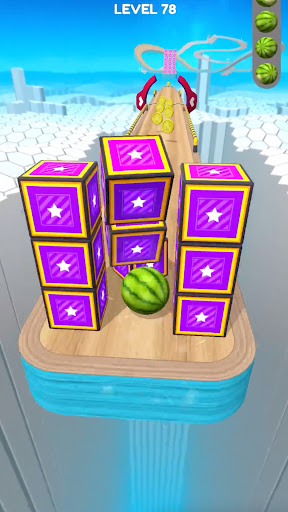
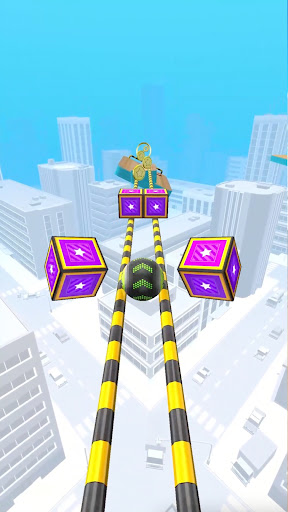
Going Balls is one of those mobile games that looks disposable at first glance and then quietly eats far more of your time than you planned to give it. After spending a good stretch with it, that is the clearest takeaway: beneath the bright hyper-casual presentation is a surprisingly well-tuned arcade game built around momentum, balance, and tiny corrections. It is simple enough to understand in seconds, but it has just enough bite that you keep telling yourself, “one more run.” The basic idea is straightforward. You guide a ball down suspended tracks, narrow rails, ramps, moving hazards, and sudden gaps, trying to reach the finish without tumbling into space. Controls are swipe-based and immediately readable, which is one of the app’s biggest strengths. Going Balls does not waste time overexplaining itself. Within a level or two, the relationship between speed and survival becomes clear: go too cautiously and you can lose rhythm, but go too aggressively and the physics will punish you. That tension is what gives the game its appeal. What impressed me most in actual play is how tactile it feels for such a stripped-down experience. The ball has enough weight to make momentum matter, and the courses are laid out to force constant micro-adjustments. On a good run, there is a pleasing flow to the whole thing. You line up a narrow bridge, absorb a bounce, thread past an obstacle, and drift into the finish with the sense that you earned it rather than stumbled into it. For a casual title, that sense of physicality is stronger than expected. The game also does a solid job of ramping difficulty, at least for a while. Early levels are breezy and almost meditative, but later stretches demand much steadier control. Some sections become genuinely tense, especially when the track narrows or the camera angle makes depth harder to judge. That escalation gives Going Balls more staying power than a lot of one-note arcade games. It can be relaxing in short sessions, but it also has enough challenge to keep skilled players engaged. A second strength is the structure of play. Levels are short, restarts are quick, and the reward loop is easy to understand. That makes it ideal for fragmented use: a few minutes in line, a quick break at lunch, one or two rounds before bed that somehow become ten. Unlocking new balls and collecting coins adds just enough progression to make repeated sessions feel like they are building toward something, even if cosmetic rewards are not especially transformative. The third thing Going Balls gets right is readability. The visuals are clean, colorful, and functional. This is not a showcase for cutting-edge graphics, but it does not need to be. Obstacles are generally easy to parse, the track layouts are clear, and the game rarely becomes cluttered. More importantly, the overall presentation supports the action rather than distracting from it. The rolling itself is the star, and the app usually understands that. That said, Going Balls absolutely has rough edges, and they become harder to ignore the longer you play. The biggest issue is repetition. After enough progress, the sense of discovery starts to wear thin, and the game begins recycling ideas and layouts more obviously than it should. What initially feels like an expanding challenge eventually starts to feel like a remix machine. For players who get hooked and push deep into the level count, this is the point where enthusiasm can cool. The controls remain solid, but fresh course design does not always keep pace. The second major frustration is monetization pressure. Going Balls is playable for free, and to its credit, it is not incomprehensible without paying. But the ad ecosystem is always hanging around the edges of the experience: extra rewards, coin multipliers, recovery prompts, and the general sense that many screens are trying to turn momentum into another video watch. It is not the worst offender in mobile gaming, but it is persistent enough to interrupt the clean arcade rhythm the game otherwise works hard to create. A third weakness is that polish can feel inconsistent once you spend real time with it. Most sessions are smooth, but occasional glitches, uneven mode behavior, or progression oddities can break the illusion of a finely crafted endless favorite. Nothing here made the game unusable in my time with it, but this is not a flawlessly premium-feeling package either. It has the familiar roughness of a mobile hit that is great at its core yet not always elegant in the details. So who is Going Balls for? It is a strong fit for players who like reflex-driven arcade games, quick-session mobile titles, and games that reward hand control more than strategy. It also works well for people who enjoy chasing clean runs and mastering physics-based movement. If you want something you can open instantly and enjoy without mental overhead, it succeeds. Who is it not for? If you have little tolerance for ads, if repeated level patterns quickly drain your interest, or if you want deep progression and lots of meaningful variety, Going Balls may wear out its welcome faster than its high install count suggests. It is also not the best choice for someone looking for a calm puzzle experience; even at its simplest, it is about reaction and precision under pressure. Overall, Going Balls earns its popularity honestly. At its best, it is fast, tactile, and unusually satisfying for such a minimal concept. The core rolling mechanic is good enough to overcome a lot of hyper-casual baggage, and that is not faint praise. I enjoyed it most in short bursts, where its best qualities stay front and center and its repetitive, ad-heavy side has less time to intrude. If you can accept those compromises, this is a polished little skill game with real staying power. If you cannot, you will still probably admire the core idea before eventually bouncing off the grind.
Alternative apps