
Apps Games Articles
Flex Run 3D
VOODOO
Rating 4.2star icon
Editor's summary
Editor rating
star icon star icon star icon star icon empty star icon
4.2

One-line summary Flex Run 3D is an easy-to-grasp, genuinely entertaining reflex game that nails quick-play fun, but its repetitive structure and ad friction can wear thin faster than its best levels deserve.

  • Installs

    10M+

  • Developer

    VOODOO

  • Category

    Casual

  • Content Rating

    Everyone

  • Latest version

    1.10.0

  • Package

    com.bluemonkeystudio.flexiblerun

Screenshots
In-depth review
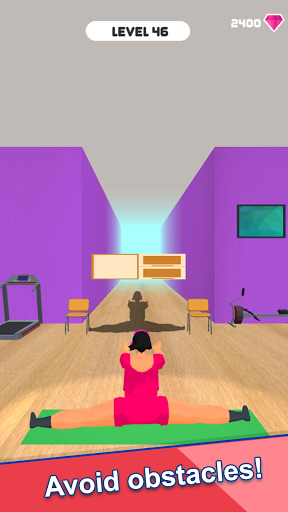
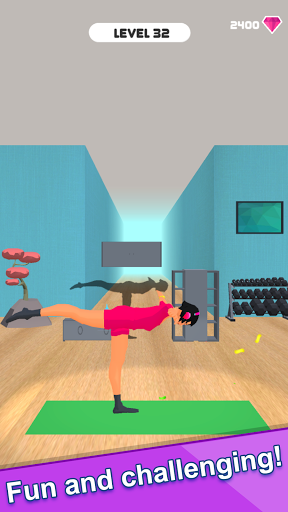
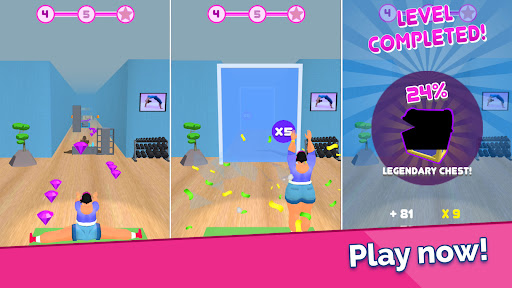
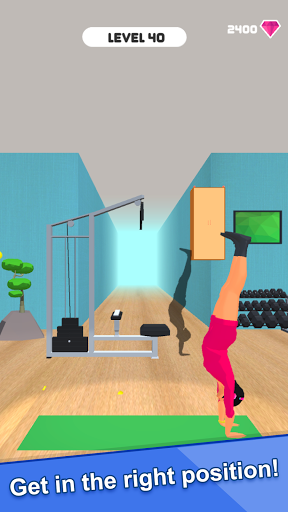
Flex Run 3D is exactly the kind of mobile game that knows how to win you over in the first minute. You open it, swipe to move your character into absurdly flexible poses, squeeze through an incoming obstacle, and instantly understand the appeal. There is no heavy tutorial, no complicated progression system to study, and no delay before the game starts asking for your attention. It is built around a single joke and a single mechanic, but for a while, that is enough. In practice, this is a fast, colorful, low-commitment casual game that works best when you want something to fill a few spare minutes rather than something to sink an evening into. What stood out most in my time with it is how readable the gameplay is. The controls are straightforward: you slide your finger and adjust your runner’s pose to match the space ahead. The game communicates its challenge clearly, which is one reason it feels immediately satisfying. When you fail, you usually know why. When you succeed, it feels like a tiny reflex puzzle solved in real time. That clarity is one of the app’s biggest strengths. Flex Run 3D does not waste your time pretending to be deeper than it is. It gives you a simple objective and lets the challenge come from speed, timing, and quick visual recognition. The second major strength is that it can be surprisingly tense in short bursts. Some obstacle layouts are obvious, while others require you to react much faster than the game’s playful presentation suggests. There is a nice split-second panic when a wall approaches and you are scrambling to find the right position before impact. That makes the game more engaging than many disposable endless-style or tap-to-dodge casual titles. Even when the concept starts repeating, the moment-to-moment act of adjusting your pose still has enough friction to stay entertaining. Its third strength is that it suits a very broad audience. This is the kind of game you can hand to someone without explanation. Younger players can understand it immediately, and adults looking for a brain-off distraction can do the same. Sessions are short, failure is easy to recover from, and the silly animation style keeps it light. If your ideal mobile game is something you can play while waiting in line, during a short break, or whenever you want a quick hit of challenge without emotional investment, Flex Run 3D is very much in its lane. That said, the game’s limits also become obvious pretty quickly. The biggest issue is repetition. Flex Run 3D has a strong hook, but it does not evolve enough to support long sessions. After a while, you start feeling the narrowness of the idea. You are still doing versions of the same action, reading similar obstacle patterns, and moving through a structure that does not meaningfully expand. The game remains playable, but the sense of discovery fades faster than it should. This is not a deal-breaker for a casual app, but it does cap how memorable the experience becomes. The second weakness is uneven ad pressure. In some stretches, the game feels relatively unobtrusive, and you can move through levels without too much interruption. In other moments, the stop-start rhythm becomes much more noticeable, especially around retries or transitions. That inconsistency matters because Flex Run 3D is at its best when it keeps you in a quick flow of attempt, fail, retry, succeed. Ads break that rhythm, and when the core game is already lightweight, interruptions feel heavier than they would in a deeper title. There is enough fun here to tolerate some monetization, but not enough depth to make frequent interruptions disappear into the background. The third weakness is that challenge progression is not as satisfying as it could be. Some levels feel nicely demanding, but the difficulty curve does not always create a strong sense of momentum. Instead of steadily building toward more interesting combinations, the game can feel like it is remixing its own gimmick without truly raising the stakes in a fresh way. I kept wishing for more variety, more surprise, or a mode that lets the core mechanic breathe in a different format. The app has a good central idea; it just does not stretch it as far as it could. In day-to-day use, that leaves Flex Run 3D in a very specific sweet spot. It is a good boredom killer. It is good when you want a quick challenge with almost no learning curve. It is also a decent stress-relief game in the sense that its goals are immediate and uncomplicated. But it is not the app I would recommend to someone looking for long-term progression, rich level design, or a game that keeps reinventing itself over dozens and dozens of sessions. So who is it for? It is for casual players, younger players, and anyone who enjoys simple reflex games with a goofy visual premise. It is also for people who like mobile games that can be played in tiny chunks without much setup. Who is it not for? Players who are sensitive to ads, those who get bored once a mechanic stops surprising them, and anyone looking for strategic depth or substantial variety will probably bounce off it. Overall, Flex Run 3D succeeds because the core interaction is fun. That may sound basic, but in a crowded casual category, that matters. Swiping into ridiculous poses to slip through obstacles is instantly understandable and often amusing, and the game gets a lot of mileage out of that. It just does not quite have the content or progression design to stay fresh for the long haul. I enjoyed it most in moderation: a few rounds here, a few rounds there, and then moving on before the repetition and ad breaks started to dominate the experience.