Apps Games Articles
Bluey: Let's Play!
Budge Studios
Rating 4.3star icon
Editor's summary
Editor rating
star icon star icon star icon
half star icon
empty star icon
3.9

One-line summary Bluey: Let’s Play! is one of the sweetest, safest preschool sandbox apps I’ve used, but its charm runs headfirst into a subscription wall that locks away too much of the fun.

  • Installs

    50M+

  • Developer

    Budge Studios

  • Category

    Casual

  • Content Rating

    Everyone

  • Latest version

    2026.2.0

  • Package

    com.budgestudios.googleplay.BlueyBLU

In-depth review
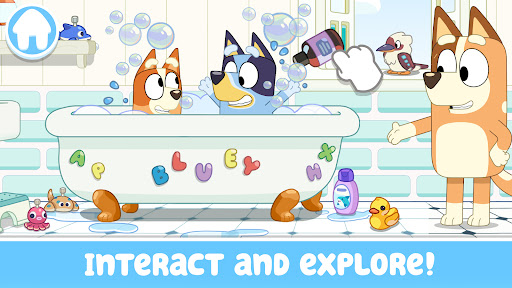
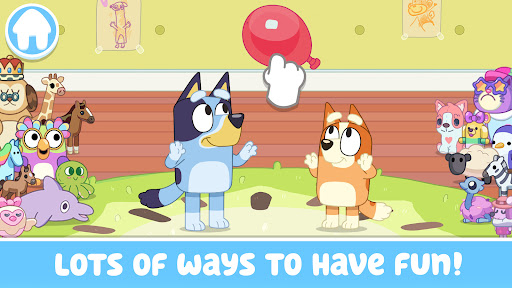
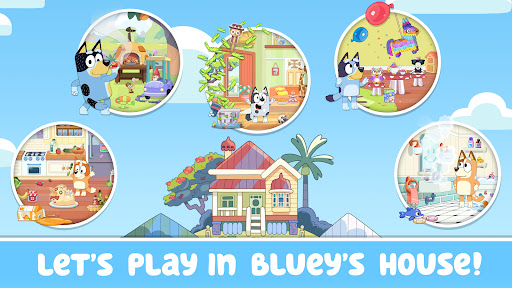
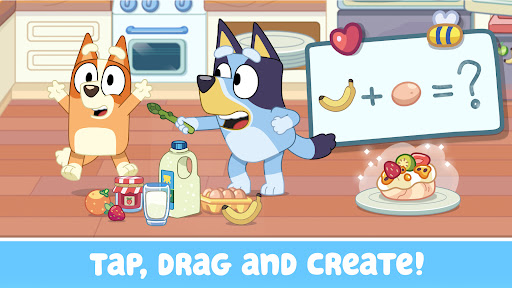
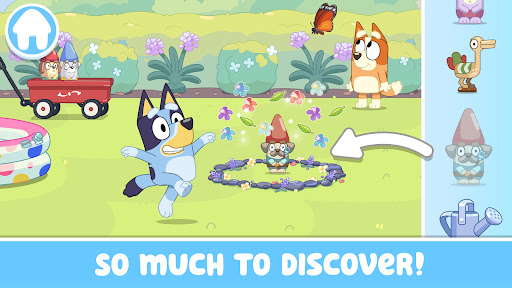
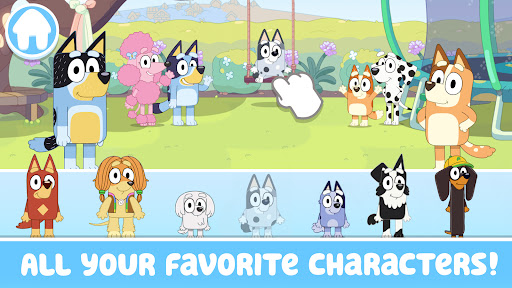
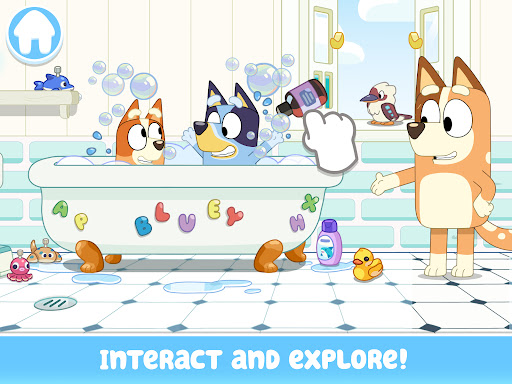
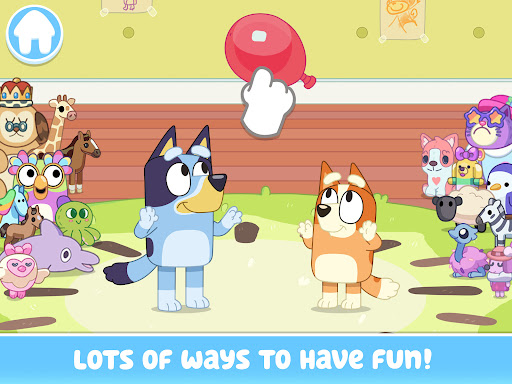
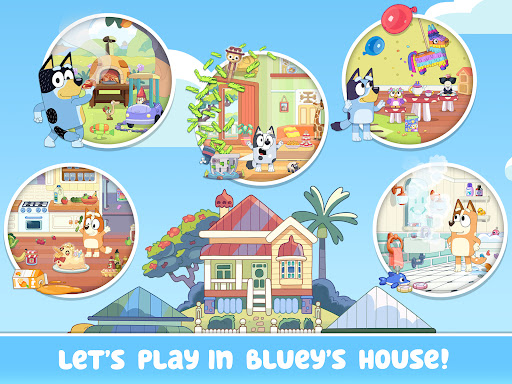
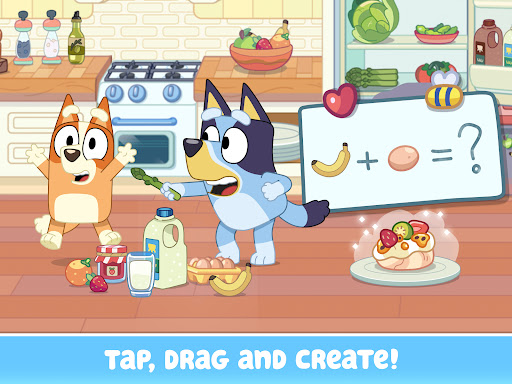
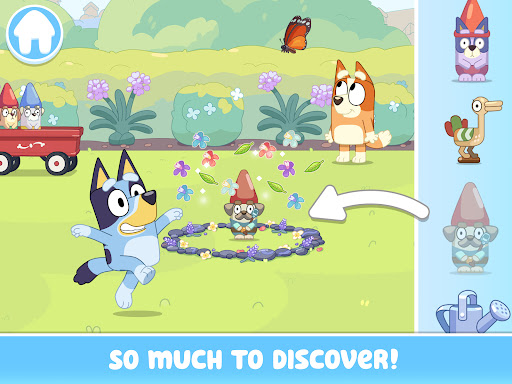
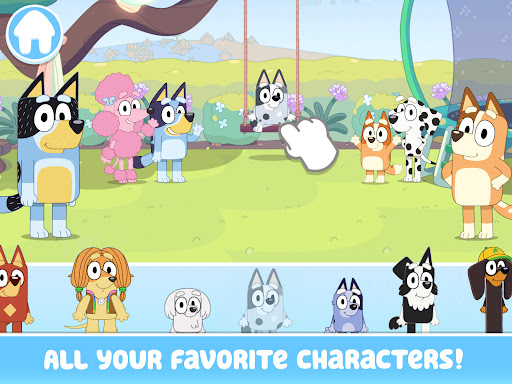
Bluey: Let’s Play! understands the appeal of the show better than a lot of licensed kids apps understand their own source material. Instead of turning Bluey into a noisy mini-game bundle or a hyperactive reward machine, it leans into pretend play. That was the first thing that stood out in my time with it: this is not a game built around winning. It’s built around poking, dragging, combining, decorating, cooking, and generally messing around inside a toy-like version of Bluey’s world. That approach fits the show perfectly. The app feels calm, warm, and inviting from the start. You move through familiar spaces, interact with objects all over the house, and create your own little moments rather than chase scores or complete constant objectives. For younger kids especially, that matters. The best sessions I had with the app were the most open-ended ones: moving characters around a room, trying recipes in the kitchen, tapping on random objects to see what responds, and bouncing between activities without pressure. It gives children room to explore at their own pace, and as a reviewer, I appreciated how little friction there is in the basic interaction model. Most actions are obvious, tactile, and easy to understand. That ease of use is one of the app’s biggest strengths. Bluey: Let’s Play! is clearly designed for very young players, and it shows in mostly good ways. You don’t need reading skills to get started. The touch targets are generally friendly, the interactions are simple, and the app avoids the cluttered menus and overstimulating chaos that drag down so many kids titles. It feels safe, gentle, and age-appropriate. For parents looking for something quieter than the average free mobile game, that alone gives it real value. The second big strength is presentation. The art style does a good job of capturing the look and mood of Bluey. Rooms are recognizable, the characters feel on-brand, and the overall tone is playful without becoming obnoxious. There’s a sense of care here. The app doesn’t feel like a lazy skin wrapped around generic mechanics. When you’re exploring the house, setting up food, coloring, or just moving things around to make your own tiny stories, it genuinely feels connected to the show’s everyday imagination-first energy. The third strength is the quality of the sandbox interactions themselves. The kitchen play in particular is enjoyable because it gives kids something to do instead of just something to watch. Tapping and dragging objects into combinations, experimenting a little, and seeing scenes react is exactly the kind of low-stakes digital play that works well on a tablet. The coloring component is also a smart fit. It adds another quiet, creative lane without pulling the app away from its central identity. But Bluey: Let’s Play! is also frustrating in a very modern mobile-app way: it gives a strong first impression, then quickly reminds you how much of the experience is gated. In practice, the free version feels more like a sample than a full app. You can absolutely get a feel for the mechanics and the tone, but it doesn’t take long before the locked content becomes the dominant part of the experience. That is the app’s biggest weakness, and it’s impossible to ignore because it affects nearly every recommendation I’d make. The problem is not simply that there is paid content. For a polished children’s app tied to a major brand, that’s expected. The issue is that the subscription model will feel heavy for families who only want occasional use. This is the sort of app many parents will open during a car ride, in a waiting room, or as a short wind-down activity. In those situations, a recurring fee can feel like overkill, especially when the app’s design is so clearly aimed at casual imaginative play rather than a deep, constantly evolving game. A second weakness is that the locked content can create disappointment faster than the app can build momentum. Young kids do not care about business models; they care that they can see rooms, characters, and activities they can’t access. In actual use, that changes the mood. What begins as exploration can turn into repeated encounters with things that are visible but unavailable. For adults, that reads as monetization friction. For kids, it just feels like the toy drawer has a lot of empty compartments. The third weakness is that some interactions, while charming, are a little limited once the novelty fades. Because the app is built around free play rather than structured progression, the fun depends heavily on how much your child enjoys pretend scenarios. That’s not a flaw in itself, but it does mean older kids or children who prefer goals, challenges, and more varied game systems may lose interest sooner. Even within the house, there are moments where I wanted a bit more responsiveness or a few more meaningful outcomes from what I was doing. So who is this for? It’s a very good fit for preschoolers, Bluey fans, and families who want a low-stress, ad-light-feeling creative app built around familiar characters and simple touch interaction. It’s also a solid choice for parents who value safety and tone as much as raw content volume. Who is it not for? Families looking for a truly generous free experience, anyone who dislikes subscriptions on principle, and older kids who want challenge, progression, or more game-like depth. In the end, I came away liking Bluey: Let’s Play! more than I expected and recommending it a little more cautiously than I wanted to. The core app is lovely. It captures the spirit of Bluey, it respects younger players, and it offers the kind of peaceful digital play that is increasingly rare. But the paywall sits too close to the heart of the experience. If you’re happy to subscribe, there’s a lot to enjoy. If you’re hoping for a broad free sandbox, this one will probably feel more restrictive than its cheerful tone suggests.