
Apps Games Articles
Chamet - Live Video Chat&Meet
Chamet Team
Rating 4.1star icon
Editor's summary
Editor rating
star icon star icon star icon
half star icon
empty star icon
3.8

One-line summary Chamet is easy to get into and genuinely fun for meeting people across borders, but I’d only recommend it if you’re comfortable with its coin-driven social mechanics and the occasional rough edge around reliability and account systems.

  • Installs

    10M+

  • Developer

    Chamet Team

  • Category

    Social

  • Content Rating

    Mature 17+

  • Latest version

    3.3.5

  • Package

    com.hkfuliao.chamet

Screenshots
In-depth review
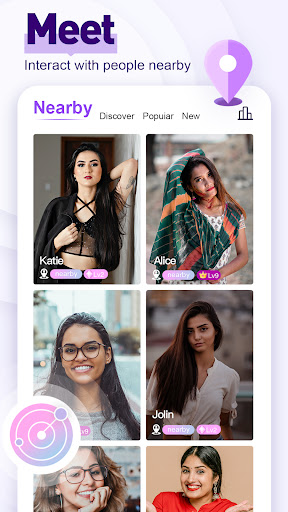
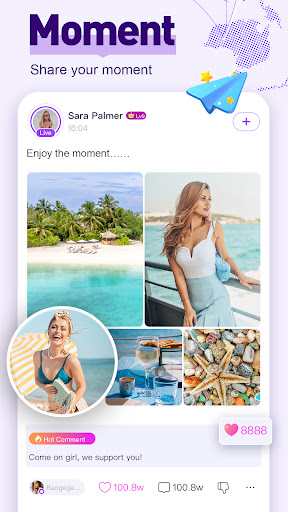
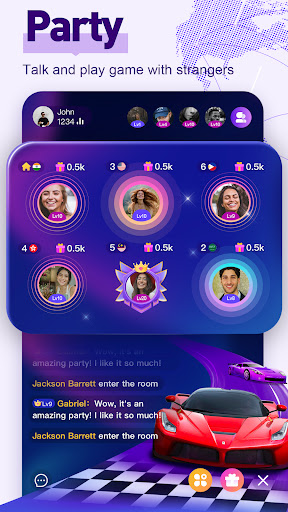
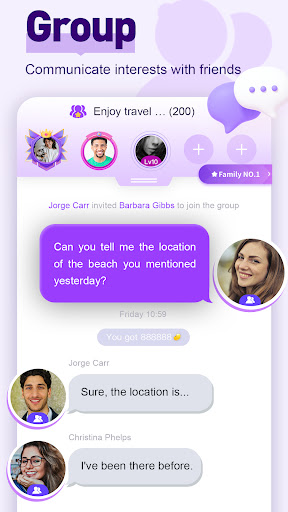
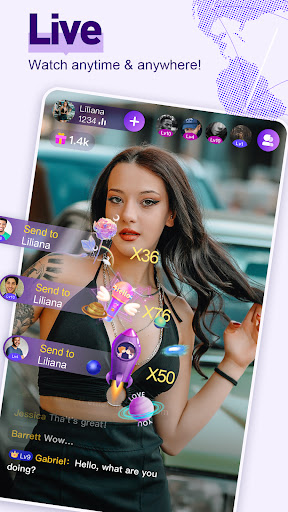
After spending real time with Chamet - Live Video Chat&Meet, my biggest takeaway is that this app knows exactly what kind of experience it wants to deliver: fast, highly social, slightly chaotic, and built around constant interaction. It is not trying to be a quiet, profile-heavy dating app where you spend half an hour reading bios. It wants you on camera, in voice chat, in party rooms, browsing live hosts, and jumping into conversations with as little friction as possible. In that sense, it succeeds more often than not. The first thing I liked about Chamet is how quickly it gets you into the action. The app has that modern live-social look that pushes faces, rooms, and active sessions to the front. You are not buried under endless setup before doing anything interesting. Within a short time, I was browsing live rooms, checking profiles, and getting a feel for the different ways the app encourages interaction. That sense of momentum matters, because Chamet works best when it feels lively. It gives you the impression that there is always something happening somewhere, whether that is a one-on-one conversation, a group party room, or a livestream. That leads to its biggest strength: global social discovery. Chamet is one of those apps that makes distance feel small. Meeting people from different countries is not just a marketing line here; it is central to the whole experience. The built-in translation support helps, and while I would not call real-time translation perfect in any app, it is useful enough to make casual conversation much easier than it would be otherwise. For users who enjoy the novelty of talking to people well outside their own region, Chamet feels more open and more international than many generic chat apps. The second strength is presentation. Video quality and beauty tools are a major part of the app’s appeal. Chamet clearly understands that a lot of its audience wants to look polished on camera, and the filters, beauty effects, and general visual design support that. Used lightly, these tools can make chats and livestreams feel more comfortable, especially for shy users who need a bit of confidence before appearing on video. The interface overall is reasonably approachable for an app with a lot going on. There is plenty to tap into, but I rarely felt completely lost. The third strength is variety. Chamet is not limited to one format. If you are not in the mood for direct video chat, there are party rooms and voice-based options. If you want something more performative, live rooms are there. If you want a more playful layer, gifts, badges, and interactive features give the app the energy of a social game. This variety helps prevent the app from feeling repetitive. It also broadens the audience: some people will come for flirting, some for casual friendship, some for livestream culture, and some simply because they enjoy hanging out in active voice rooms. That said, Chamet also shows the weaknesses common to many apps in this category. The first is the monetization pressure. Coins, gifts, paid interactions, and status systems are tightly woven into the experience. None of this is unusual, but in everyday use it can make the app feel less like a pure social platform and more like a social marketplace. If you are the type who wants organic, low-pressure conversation without constantly thinking about balances, rates, or recharge value, Chamet can become tiring. There is a very real sense that some interactions are shaped by the app’s economy first and personal chemistry second. The second weakness is inconsistency. In testing, Chamet generally felt smooth, but it also gave off that familiar live-app unpredictability where not every feature feels equally refined all the time. Certain systems around account progression, verification, visibility, or matching do not always feel transparent from a user perspective. At moments, the app feels polished; at others, it feels like you are negotiating with hidden rules. That can be frustrating, especially if you are investing time or money and expect the experience to feel stable and fair. The third weakness is that the community experience can be hit or miss depending on what you are looking for. Chamet promotes positivity and genuine connection, and there are absolutely moments when it delivers that. But because it mixes entertainment, flirting, livestream performance, gifting, and status-driven interaction, the tone can shift quickly. Some sessions feel warm and spontaneous. Others feel transactional, performative, or simply shallow. If your goal is deep conversation or serious relationship-building, you may need patience and a good filter. The app makes meeting people easy; it does not guarantee meaningful connection. Who is Chamet for? It is for extroverts, socially curious users, livestream fans, and anyone who likes the instant excitement of video-first social apps. It is especially good for people who enjoy meeting strangers from different countries, jumping into group rooms, and using visual features like filters and gifts as part of the fun. It can also suit shy users who find confidence through structured, app-led interaction rather than cold-start messaging. Who is it not for? If you dislike in-app currencies, do not want social interaction blended with monetized attention, or prefer slower, more intentional conversations, Chamet may wear you down quickly. It is also not the best fit for people who expect every system to feel crystal clear and friction-free. Overall, I came away thinking Chamet is better than many apps in this crowded space at delivering immediate, international, camera-first social energy. It is lively, accessible, and often genuinely entertaining. But it also asks you to accept the trade-offs of this genre: spending mechanics, uneven interaction quality, and occasional friction around how the app’s internal systems work. If you go in wanting fun, variety, and fast connection, Chamet can absolutely deliver. If you go in wanting simplicity and authenticity above everything else, it may be harder to love.
Alternative apps