Apps Games Articles
Tumblr—Fandom, Art, Chaos
Tumblr, Inc
Rating 4.1star icon
Editor's summary
Editor rating
star icon star icon star icon star icon
half star icon
4.5

One-line summary Tumblr remains one of the best places on mobile to find niche fandoms, art, and genuinely expressive posting, but its occasional lag, clumsy edge-case navigation, and a few rough UI decisions keep it from feeling fully modern and friction-free.

  • Installs

    100M+

  • Developer

    Tumblr, Inc

  • Category

    Social

  • Content Rating

    Mature 17+

  • Latest version

    32.3.0.110

  • Package

    com.tumblr

In-depth review
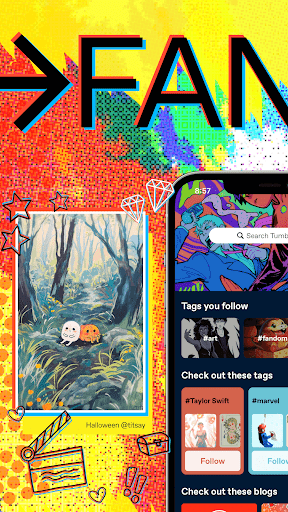
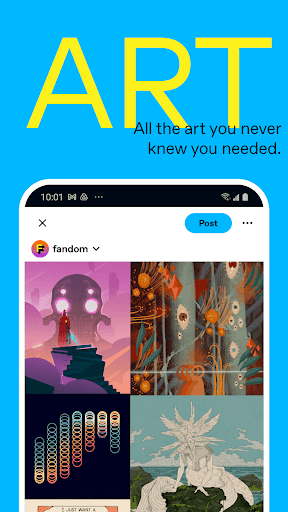
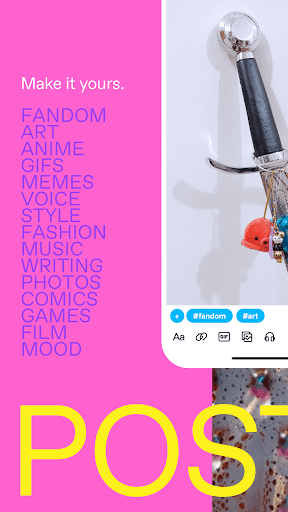
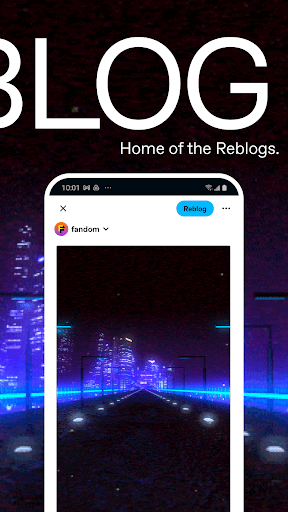
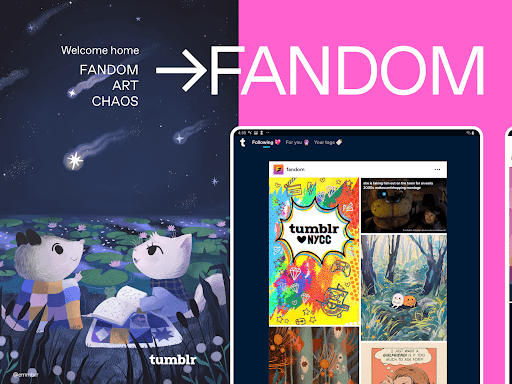
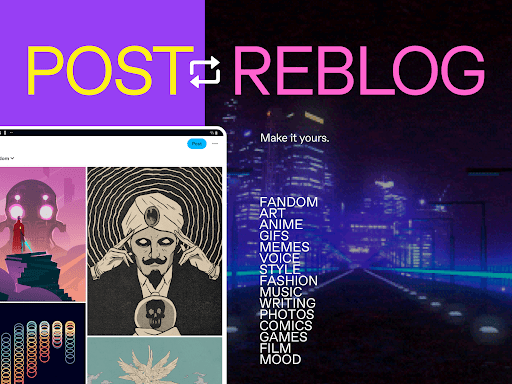
Tumblr is one of those apps that feels different the moment you open it. In a social app landscape that increasingly pushes everyone toward the same short-form, algorithm-heavy, personality-lite experience, Tumblr still feels like a place built for people who actually want to post things. Not just perform, not just scroll, not just react with a one-tap gesture and move on—but really post. Text, images, jokes, fan art, long rambles, weirdly specific observations, half-serious essays, and beautifully chaotic reblogs all fit here in a way they simply do not on most mainstream social platforms. After spending real time using the Android app, that identity comes through clearly. The first strength is the community structure itself. Tumblr is still exceptionally good at helping you fall into interests rather than just trending topics. Tags matter. Following a fandom, an artist, a theme, or a hyper-specific corner of internet culture actually leads somewhere. You don’t get the same sterile, over-optimized feel that dominates many modern feeds. Instead, the dashboard feels alive, messy in a good way, and full of personality. If your idea of a good social app is finding fan art, comics, memes, writing, and niche communities that don’t all sound like they were generated from the same engagement handbook, Tumblr delivers. The second thing Tumblr still gets right is expression. Posting on Tumblr feels richer than on many mobile social apps. The platform is comfortable with both short and long form, which means you can toss out a single image and a tag, or you can build a full text-heavy post with links, formatting, and a more distinct voice. That flexibility matters. During testing, the app felt especially well suited to artists, fandom accounts, hobby bloggers, and anyone who wants to maintain a semi-anonymous online identity without turning every post into a polished brand statement. There’s room for casual posting here, and that lowers the pressure in a way I appreciated. A third major strength is control. Tumblr still gives users more ability than many rivals to shape what they see. Filtering and tag-based discovery are meaningful tools, not decorative settings buried in a menu. Chronological-feeling browsing and following-based content make the app feel less manipulative than a lot of social media. That doesn’t mean the feed is perfectly pure or distraction-free, but it often feels like your dashboard belongs more to you than to an invisible recommendation engine. That alone will make Tumblr attractive to a certain kind of internet user who has grown tired of algorithmic overreach. That said, the Android app is not flawless, and some of its weak spots are impossible to ignore in daily use. The first issue is performance inconsistency. Most of the time, Tumblr is smooth enough, but there are stretches where the app feels laggy, a little sticky, or less responsive than it should be. It is rarely catastrophic, but it happens often enough to register. A social app built around fluid browsing and rapid-fire reblogging really needs to feel consistently snappy, and Tumblr doesn’t always clear that bar. The second problem is that parts of the interface still feel more quirky than polished. Usually, that quirk is part of the charm. But sometimes it turns into friction. A few tap targets feel awkwardly placed, and some actions take an extra beat of figuring out. Opening media, jumping between post views, or navigating in from links does not always behave as intuitively as it should. I also ran into moments where the app-to-web handoff felt clumsy, especially when approaching Tumblr content from outside links. That kind of broken flow makes the app feel less cohesive than the best mobile experiences. The third weakness is that Tumblr can still punish casual or mobile-first creation in annoying ways. Drafting and posting are generally good, but they do not always inspire confidence when connectivity gets shaky. This is the sort of app where people write long captions, stories, or thoughtful posts, so anything that makes saving feel uncertain is a real concern. Even when things work, I found myself wishing for more reassurance around composing and preserving work. An app this centered on self-expression should feel safer when you’re investing time into a post. Visually, Tumblr remains stylish, but the design won’t be for everyone. The dark, branded aesthetic gives it character, and that helps separate it from more generic social apps. At the same time, some color choices and visual emphasis can make navigation a bit less clear than ideal. In extended sessions, certain UI elements don’t stand out as well as they could. The result is an app that feels distinct, but not always maximally legible. Ads are present, but in my time with the app they were more tolerable than on many free social platforms. They interrupt the experience less aggressively than the loud, intrusive styles used elsewhere. If you are already used to ad-supported apps, Tumblr’s implementation is unlikely to be your main complaint. So who is Tumblr for? It is for artists, fandom dwellers, writers, meme collectors, internet old souls, and anyone who misses social media feeling like a collection of communities instead of a slot machine. It is especially good for people who like tags, reblogs, pseudonymous posting, and feeds shaped by interests rather than personal branding. It is not ideal for users who want a perfectly polished mainstream app, a hyper-simple interface, or a platform where everything is optimized for clean, fast, modern mobile interactions. And if you only enjoy social networks that spoon-feed content with minimal effort, Tumblr’s semi-chaotic structure may feel alien. Even with its rough edges, Tumblr remains refreshingly itself. That counts for a lot. It is creative, strange, expressive, and far more human than many of its competitors. I came away from the app feeling the same thing longtime Tumblr users have always understood: when Tumblr works, it doesn’t just feel like another social app. It feels like a place. And in 2025, that is rarer than it should be.
Alternative apps