
Apps Games Articles
Green Dot - Mobile Banking
Green Dot
Rating 4.0star icon
Editor's summary
Editor rating
star icon star icon star icon star icon empty star icon
4.2

One-line summary Green Dot is easy to recommend if you want a practical reloadable banking app with strong day-to-day money tools, but the fees, occasional verification friction, and less-than-perfect polish keep it from feeling like a top-tier digital bank.

  • Installs

    5M+

  • Developer

    Green Dot

  • Category

    Finance

  • Content Rating

    Everyone

  • Latest version

    4.61.0

  • Package

    com.cardinalcommerce.greendot

In-depth review
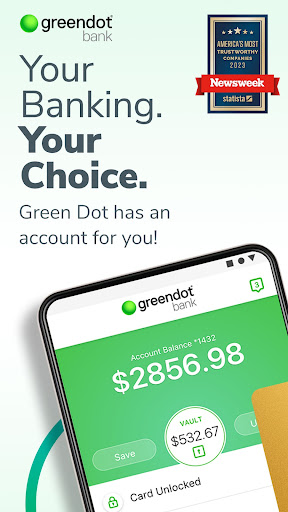
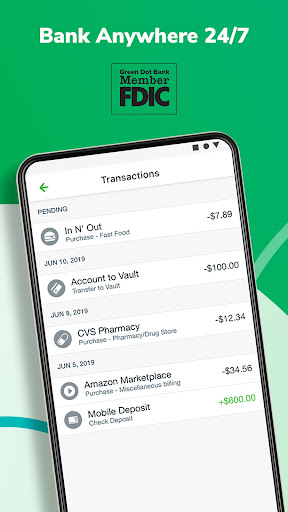
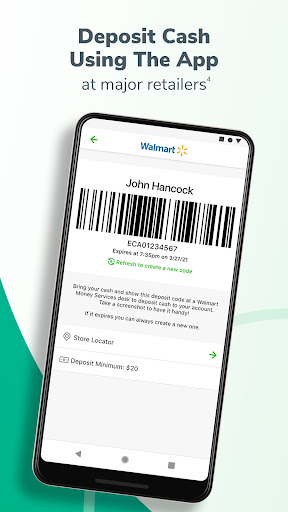
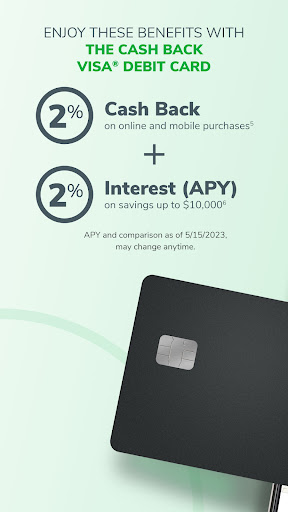
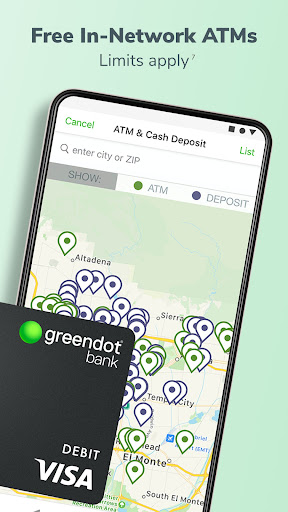
After spending real time with Green Dot - Mobile Banking, my biggest takeaway is that this app is at its best when you treat it like a no-nonsense financial utility. It is not trying to impress you with flashy design or clever budgeting dashboards. Instead, it focuses on the basics that matter most to people using a prepaid or alternative banking product: checking balances quickly, moving money around, handling direct deposit, depositing cash or checks, paying bills, and keeping a close eye on transactions. In daily use, that approach works more often than it doesn’t. The app makes a strong first impression by keeping key account actions close at hand. Once signed in and set up, it is easy to get where you need to go without digging through a maze of menus. Balance checks are fast, transaction history is clear enough to follow, and routine actions like transferring money between available account buckets feel straightforward. I especially liked how Green Dot keeps the experience grounded in practical money management rather than overcomplicating simple tasks. If your goal is to load money, spend it, stash some away, and monitor what’s happening, the app generally gets out of your way. That simplicity is one of Green Dot’s biggest strengths. During testing, the app felt most useful in small, frequent moments: checking whether a deposit landed, confirming a card charge, locking down the account, or moving funds into savings or a vault-like holding area. Those aren’t glamorous features, but they are the ones that determine whether a banking app becomes part of your routine or gets deleted. Green Dot understands that better than many finance apps that bury the basics under promotional clutter. A second strength is how well the feature set maps to real-world needs for people who don’t necessarily want a traditional bank relationship. Direct deposit support, mobile check deposit, cash deposits through retail channels, bill pay, and debit-card spending all combine to make the app feel like a genuine everyday banking tool rather than a limited companion app for a prepaid card. In practice, that matters. You can use it to receive income, handle bills, make online purchases, and separate spending money from money you want to keep untouched. For many users, that alone makes Green Dot more useful than simpler prepaid card apps. The third thing Green Dot gets right is peace of mind. Features like account locking, alerts, visible transaction tracking, and security verification help it feel responsibly managed. I also appreciated that the app does not feel flimsy or disposable. It has the structure of something meant to be used for years, not just activated once and forgotten in a drawer. That said, Green Dot absolutely has rough edges, and they are noticeable enough to matter. The first weakness is that the app can feel a little dated in its flow. Not broken, but not especially refined either. Some screens and account-management paths are intuitive, while others make you stop and think for a second. Navigation is mostly functional rather than elegant. If you are used to modern banking apps that feel frictionless from top to bottom, Green Dot can come off as a step behind. The second issue is verification and login friction. In regular use, security is welcome, but Green Dot sometimes leans into extra prompts in a way that interrupts the experience. Remember-device settings do not always seem as seamless as they should be, and authentication can occasionally feel less smooth than expected. If all you want is to quickly open the app and confirm a transaction, an extra security-code step can go from reassuring to annoying pretty fast. The third drawback is the overall fee cloud hanging over the experience. Green Dot does offer meaningful utility, and there are ways to reduce or avoid certain charges depending on usage, but this is not the kind of app where you can ignore the fee structure entirely. Some features are tied to conditions, some services involve costs, and the value equation depends heavily on how you use the card. In everyday terms, Green Dot feels dependable, but not always cheap. That is a meaningful distinction. I also noticed that notifications were not always as immediate as I would want from a money app. Transaction alerts arrived, but not always with the instant speed that gives you full confidence when monitoring card activity in real time. This is not a deal-breaker, but it is one of those quality-of-life details that separates a good banking app from a great one. Who is Green Dot for? It is a strong fit for someone who wants a flexible alternative banking app that covers the essentials well: direct deposit, spending, savings, cash reloads, check deposits, and basic account controls. It also makes sense for users who like having a dedicated spending card, want to isolate subscription charges, or prefer managing money without leaning on a traditional branch bank. Who is it not for? If you are highly fee-sensitive, demand a polished premium interface, or expect every alert and verification step to work with perfect smoothness, Green Dot may test your patience. It is also not the best choice for someone looking for advanced financial planning tools or a sleek fintech-style experience. In the end, Green Dot - Mobile Banking succeeds because it is useful in the ways that count. It handles everyday account management well, gives you a practical set of banking-like tools, and feels dependable enough to trust with regular spending and deposits. But it never fully escapes the trade-offs that come with this category: some fee friction, some UX inconsistency, and a level of polish that is solid rather than standout. I’d recommend it to people who want functionality first and can live with a little inconvenience around the edges.
Alternative apps