
Apps Games Articles
Cooking Madness -A Chef's Game
ZenLife Games Ltd
Rating 4.8star icon
Editor's summary
Editor rating
star icon star icon star icon star icon empty star icon
4.3

One-line summary Cooking Madness is one of the most satisfying mobile cooking games I’ve played thanks to its snappy time-management loop and honest gameplay, but the ad pressure and occasional progression friction keep it just short of an easy universal recommendation.

  • Installs

    100M+

  • Developer

    ZenLife Games Ltd

  • Category

    Arcade

  • Content Rating

    Everyone

  • Latest version

    2.1.9

  • Package

    com.biglime.cookingmadness

In-depth review
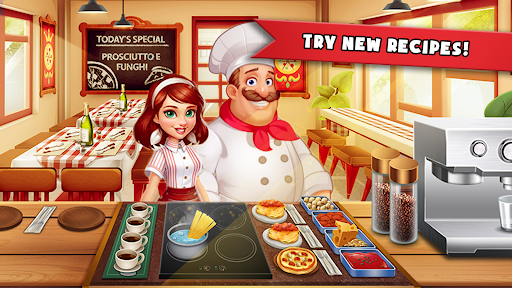
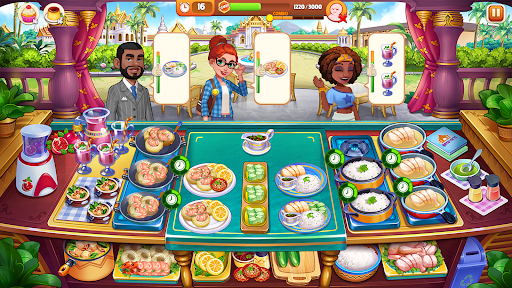
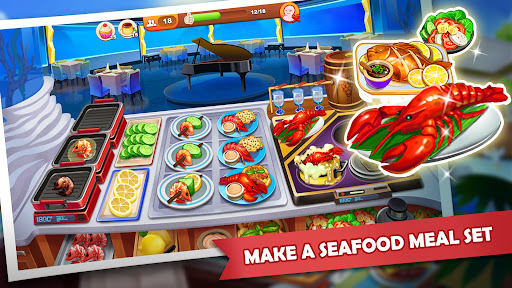
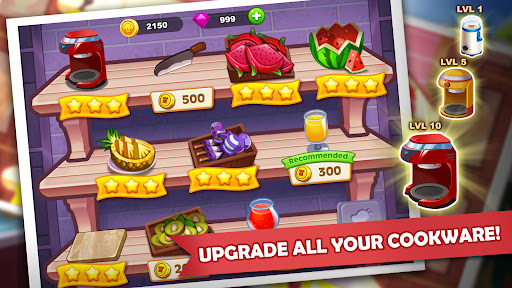
Cooking Madness -A Chef's Game understands the core fantasy of the genre better than most mobile arcade titles: it makes you feel busy, slightly stressed, and weirdly competent in a way that is hard to put down. After spending real time with it, my biggest takeaway is that this is not a fake-ad bait-and-switch or a shallow tapping toy. It is a genuine, fast-paced restaurant management game built around short levels, escalating multitasking, and a steady stream of upgrades that keeps the early and midgame engaging. The basic loop is instantly readable. Customers line up, dishes need prep, cooking stations fill up, and every level becomes a small puzzle about timing and prioritization. The controls are simple enough that you can understand the flow within minutes, but the game quickly starts layering in pressure: more recipes, more impatient diners, tighter targets, and less room for sloppy sequencing. That rising difficulty is one of the app’s biggest strengths. Cooking Madness does a good job of making you feel like you are improving, not just tapping faster. Success often comes from memorizing level patterns, pre-prepping the right ingredients, and figuring out when to hold a dish versus when to serve immediately. That sense of momentum is supported by a progression structure that is easy to appreciate in everyday play. Unlocking new restaurants, learning fresh dish combinations, and putting coins back into kitchen upgrades gives the game a satisfying rhythm. Upgrades matter. Better equipment and improved food stations noticeably smooth out the pace, and the game is smart to make coin-based upgrades feel central to progress. It helps the experience feel more skill-and-planning driven than many free-to-play cooking games that seem designed to push premium currency at every turn. I never got the impression that the entire design collapses unless you pay, and that alone makes Cooking Madness more recommendable than a lot of its peers. Another thing I liked is how well the game sustains attention in short bursts. It is ideal for five-minute sessions, but it also has that “just one more level” quality that can unexpectedly stretch a quick break into half an hour. The audiovisual presentation helps here. The graphics are colorful, bright, and readable without becoming cluttered, and the tap-driven interactions feel crisp. In a game where speed matters, responsiveness matters even more, and Cooking Madness usually feels smooth enough that failures feel like execution mistakes or strategy errors rather than interface friction. That said, this is not a frictionless experience. The biggest annoyance by far is advertising. In some stretches, ads feel manageable or tied to optional rewards, which is standard mobile-game territory. In other stretches, they become much harder to ignore, especially when they start appearing too frequently between levels. For a game built around fast retries and momentum, too many interruptions hurt the flow more than they would in a slower genre. It is the clearest reason to hesitate before recommending the game to absolutely everyone. If you are sensitive to ad-heavy free-to-play design, this can become grating. The second issue is energy and waiting. Cooking Madness wants to be a game you binge, but its life system occasionally reminds you that it would rather meter your enthusiasm. When you are stuck on a difficult level or learning a more demanding restaurant, waiting for lives to return can feel longer than it should. That tension is especially noticeable because the game is at its best when you are allowed to experiment, fail, and immediately try again with a new strategy. Any delay breaks the learning loop. The third weakness is that difficulty spikes can sometimes feel more frustrating than elegant. Most of the challenge curve is well judged, and I enjoyed that the game asks for real focus. But every so often, a level crosses the line from exciting to irritating, especially if you are just short of the upgrade path or need a very clean run to hit the target. I do not mind hard levels in this genre, but there were moments where I felt pushed into replaying old content for coins or hoping a run aligned more favorably than usual. It is not enough to ruin the game, but it does expose the edges of the free-to-play structure. There are also a few rough spots that feel less like design choices and more like maintenance issues. Rewarded ads do not always seem perfectly reliable, and there are signs that occasional bugs or crashes can interrupt the otherwise polished routine. These problems were not constant in my experience, but they are worth mentioning because a game this dependent on repetition needs to be dependable. Who is this for? It is a great fit for players who enjoy time-management games, multitasking challenges, upgrade loops, and arcade-style pressure that rewards repetition and pattern recognition. If you like being mentally “on” while you play, Cooking Madness is excellent at delivering that satisfying kitchen chaos. It is also a good pick for players who want a mobile game that actually resembles its premise instead of disguising a completely different genre under a cooking theme. Who is it not for? Anyone who hates ads, energy systems, or free-to-play friction should approach with caution. It is also not ideal for players looking for a calm, cozy cooking simulator. This is a twitchy, score-chasing restaurant game first and foremost. Overall, Cooking Madness is easy to like because the fundamentals are strong. The tapping feels good, the challenge curve is compelling more often than not, and the restaurant progression keeps the experience fresh. Its frustrations are very familiar mobile frustrations rather than fatal flaws, but they are real enough to stop it from feeling truly premium. Even so, if you want a cooking game that is actually fun to play and not just pretty to look at, this is one of the better options on Android.