
Apps Games Articles
BAND - App for all groups
NAVER Corp.
Rating 4.4star icon
Editor's summary
Editor rating
star icon star icon star icon star icon
half star icon
4.5

One-line summary BAND is one of the best group-organizing apps you can install if you want posts, events, chats, and team coordination in one place, but its interface can still feel a little cluttered when your group gets busy.

  • Installs

    50M+

  • Developer

    NAVER Corp.

  • Category

    Social

  • Content Rating

    Teen

  • Latest version

    24.0.1

  • Package

    com.nhn.android.band

In-depth review
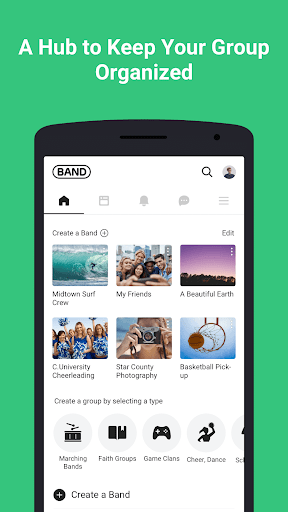
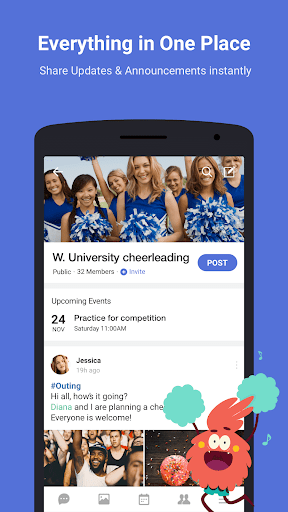
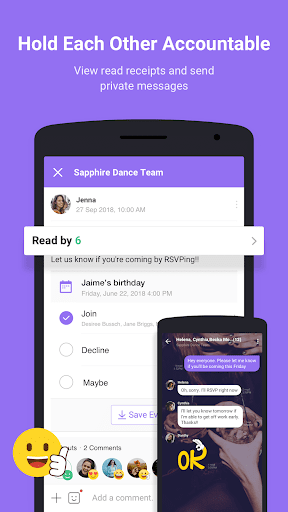
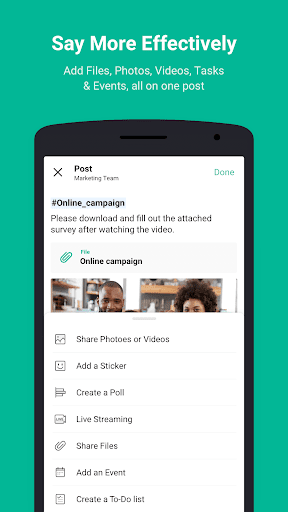
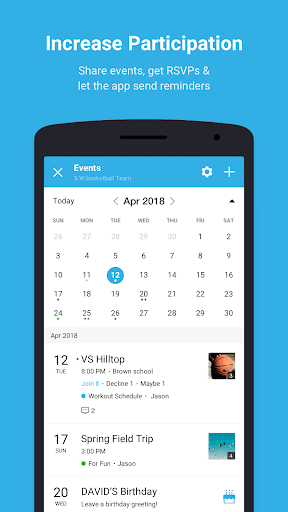
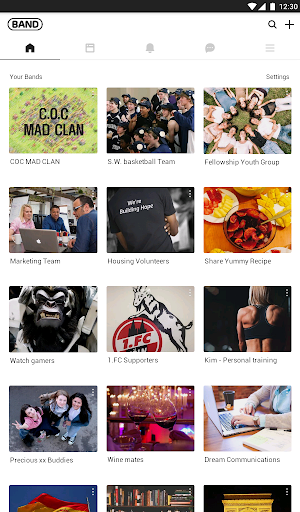
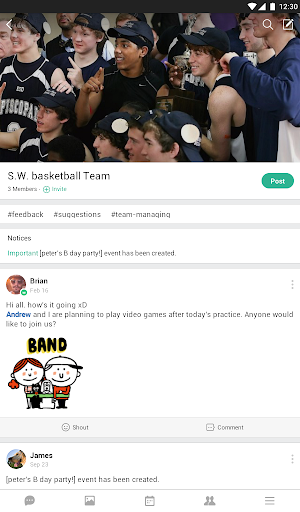
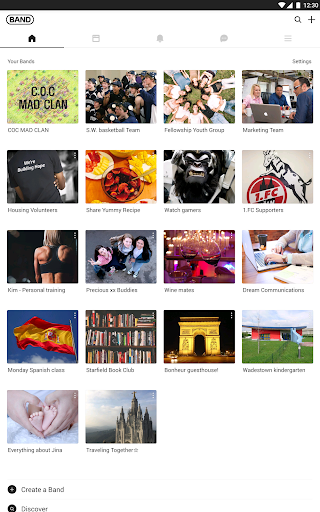
BAND - App for all groups feels like an app built by people who understand a simple truth: most group communication falls apart when it gets split across too many places. After spending time with it as a practical coordination tool rather than just another social app, what stood out most was how effectively it pulls group life into a single hub. Announcements, posts, schedules, photos, chats, attendance-style coordination, and quick feedback tools like polls all live under one roof. For clubs, sports teams, school groups, volunteer circles, church groups, scout troops, and family planning, that matters a lot more than flashy design. The best part of using BAND is that it reduces the usual chaos. In many group apps, you end up digging through an endless chat thread to find one event time, one document, or one important update. BAND is more structured than that. The Home area makes it easy to see what is happening across your groups, and the calendar-driven side of the app is genuinely useful. Creating events is straightforward, upcoming schedules are visible without much hunting, and reminders help keep the app from becoming a passive message board that people forget to check. In day-to-day use, this is where BAND feels strongest: it is not just for talking, it is for organizing. That structure is the app’s first major strength. BAND gives groups a sense of place and order. A team can post an announcement, collect reactions, attach event context, and keep a running record of activity in a way that feels more intentional than a basic messaging app. If you are a group leader, organizer, coach, or parent trying to keep many people aligned, that organization is the reason to install it. The second strength is usability. BAND has a lot going on, but it is generally approachable. Even without spending much time learning the system, it becomes clear how to post, comment, schedule something, or start a conversation. That ease of use is especially important for mixed-tech groups, where some members are comfortable with apps and others are not. BAND mostly succeeds at keeping the basics obvious. It doesn’t demand much setup discipline from ordinary members, and that lowers the barrier to getting an entire group onboard. Its third big strength is that it supports different kinds of interaction without forcing everything into one mode. Some apps are basically giant chat rooms. BAND is broader than that. Posts work well for updates people may need to revisit later. Comments and reactions keep engagement lightweight. Individual chats are useful when you need a private follow-up. The photo and video storage angle also makes sense in context: it gives groups a shared memory bank rather than scattering images across personal threads. That combination makes the app feel lived-in instead of transactional. But BAND is not perfect, and its biggest weakness is that the interface can get visually busy. Once a group becomes active, the app starts to feel crowded with tabs, alerts, content blocks, and layered tools. Nothing is completely broken, but the experience is not always elegant. There are moments where it feels like a utility app that kept adding useful features without fully rethinking the visual flow. The calendar, in particular, can start to feel cramped depending on how much is going on. If you prefer ultra-clean, minimalist software, BAND may feel a little dense. The second weakness is notification management. The app clearly wants to keep you informed, which is good in theory, but in practice group apps always walk a fine line between helpful and noisy. BAND gives control over alerts, and that helps, but active groups can still create a sense of constant motion. During testing, it was easy to appreciate the instant updates while also feeling that the app requires some tuning before it stops tugging at your attention too often. Less organized users may leave notifications on by default and quickly feel overwhelmed. The third weakness is that not every management action feels equally flexible for every member role. BAND is strongest when there is a clear organizer or admin keeping things tidy. For regular members, some actions can feel more limited than expected, especially around editing or managing shared items. That does not ruin the experience, but it reinforces the idea that this app works best when someone is actively steering the group rather than when everyone expects equal control over everything. In terms of feel, BAND sits in an interesting space between a private social network and a group productivity app. It is warmer and more community-oriented than a plain task or calendar tool, but more organized and less distracting than broad social platforms. That balance is probably why it works so well for recurring communities: softball teams, youth groups, parent organizations, work crews, hobby clubs, and extended families. It gives people room to socialize without letting the important details disappear. Who is it for? Anyone running an ongoing group with real schedules, announcements, and shared participation. If you need one app to keep a team or community informed, coordinated, and engaged, BAND is easy to recommend. Who is it not for? People who only need a simple one-room group chat, or users who want a minimal, ultra-light interface with very little structure. For those cases, BAND may feel like more app than necessary. Overall, BAND succeeds because it solves a real problem better than many generic communication apps do. It keeps group communication organized, gives members multiple ways to interact, and makes planning feel less fragmented. It is not the prettiest or simplest app in every corner, and it can feel cluttered once activity ramps up, but in actual everyday use, it proves itself where it matters: helping groups stay connected without falling into chaos.