
Apps Games Articles
SCRUFF
Perry Street Software
Rating 3.7star icon
Editor's summary
Editor rating
star icon star icon star icon star icon empty star icon
4.2

One-line summary SCRUFF is easy to recommend for its mature, feature-rich gay social experience and credible profiles, but I'd hesitate if you want a perfectly tuned matching system or consistently responsive conversations.

  • Installs

    10M+

  • Developer

    Perry Street Software

  • Category

    Social

  • Content Rating

    Mature 17+

  • Latest version

    7.50.1

  • Package

    com.appspot.scruffapp

Screenshots

In-depth review
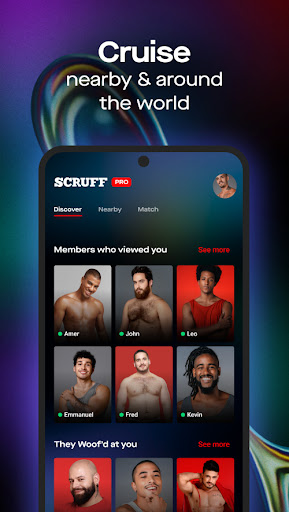
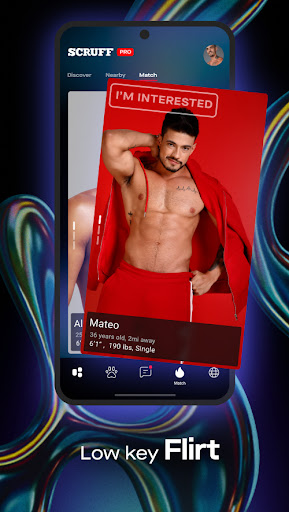
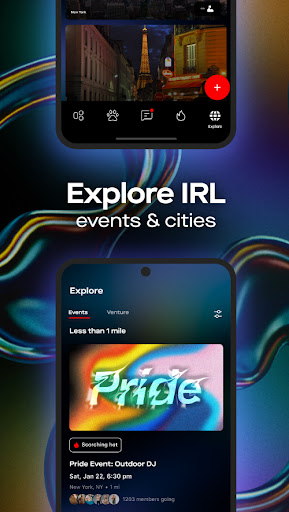
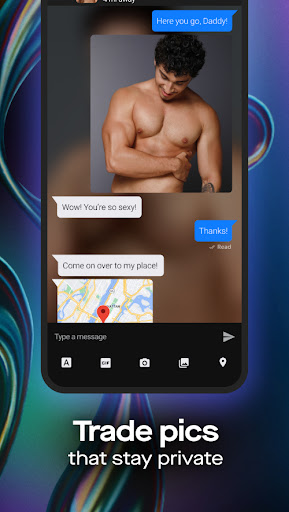
After spending real time with SCRUFF, what stood out most is that it feels like a dating app built by people who understand how this kind of social space is actually used day to day. It is not trying to be minimalist, and it is not trying to funnel every interaction into one gimmick. Instead, it gives you several ways to meet people: browsing nearby profiles, chatting directly, signaling interest, using match-style discovery, checking travel and event-oriented features, and shaping your profile with more personality than the average swipe app allows. That breadth is SCRUFF's biggest strength, and also one reason it can feel a little uneven depending on what you want from it. The best part of the experience is that SCRUFF generally feels more grounded than many apps in this category. Profiles tend to feel fuller, with enough room for people to say who they are and what they want instead of reducing themselves to a single photo and a few cryptic stats. That matters in practice. When I was browsing, it was easier to get a sense of whether someone was looking for dating, chatting, travel connections, or something more casual. The app supports a range of expression without making the profile setup feel like homework. Features like multiple photos, profile details, identity options, and private albums give people more control over how they present themselves, and that helps the whole community feel less anonymous. Another thing SCRUFF gets right is the simple mechanics of interaction. The app makes it easy to browse, tap into profiles, and signal interest without overcomplicating the process. The "I'm Interested" and match-style features add a low-pressure layer that works well when you do not want to lead with a cold message. I found that this creates a better rhythm than pure swipe apps, because you can still explore profiles in a more open-ended way instead of being trapped inside a single feed. Search and filtering on nearby browsing are genuinely useful too. If you know the type of connection you are looking for, the app gives you tools to narrow things down rather than forcing you to accept a generic stream of people. SCRUFF also deserves credit for making trust and safety feel like part of the product rather than a footnote. Verified profiles are one of those features that sound small until you use an app without them. Here, seeing verification badges gives the experience a bit more confidence, especially in a space where authenticity matters. The emphasis on privacy and the absence of the usual banner-ad clutter also help. In everyday use, that translates to a cleaner, less chaotic atmosphere. The app feels less like it is trying to squeeze attention out of you every second. That said, SCRUFF is not friction-free. The first weakness is that the app can sometimes feel busy. Not confusing exactly, but dense. There are enough features, tabs, and pathways that new users may need a little time before the whole thing feels natural. If you prefer a hyper-simple app that asks you to do one thing only, SCRUFF can feel a bit like it is offering an entire toolkit when maybe you only wanted a screwdriver. I appreciated the depth after a while, but the initial impression is less sleek than the most streamlined dating apps. The second issue is one that no dating platform fully solves, but SCRUFF only partly softens: conversations still depend heavily on the people using it. Even with a stronger profile culture and better intent signaling, you will still encounter chats that go nowhere, delayed replies, and interest that never turns into an actual conversation. The app gives you more ways to start a connection, but it does not magically make everyone more communicative. In practice, that means the experience is better than many rivals, but not transformative. The third weak spot is in the match flow itself. Browsing nearby with filters feels focused and useful, while the match-style experience can feel broader and less tailored. At times, it gave me the sense that the algorithm was showing a general assortment rather than a sharply curated set of people aligned with the same preferences I had already established elsewhere in the app. It is not bad, and the ability to pass, like, or revisit later helps, but this is one area where SCRUFF feels less polished than its stronger browsing tools. Video chat is a nice bonus rather than the centerpiece. It adds practical value for anyone who wants to verify chemistry before meeting or keep things virtual, and it fits naturally into the broader theme of giving users options. The Explore and travel-oriented features are similarly useful for people who move around or want to connect beyond their immediate neighborhood. These are not the reason most people will install SCRUFF, but they make the app feel more lived-in and versatile. Who is SCRUFF for? It is best for gay, bi, trans, and queer users who want more than a barebones swipe experience. If you value profile depth, browsing control, identity options, and a community that feels a bit more established, SCRUFF is one of the better choices on Android. It is especially good for people who like to be intentional: searching, filtering, reading profiles, and choosing when to message versus when to simply express interest. Who is it not for? If you want an ultra-simple, lightning-fast app with almost no learning curve, SCRUFF may feel too feature-heavy. And if your ideal dating experience is entirely algorithm-driven, with highly precise match recommendations doing most of the work, this app may feel stronger in manual discovery than in automated matchmaking. Overall, SCRUFF left me with a favorable impression. It feels thoughtful, capable, and mature in the places that matter most: profile quality, interaction tools, safety cues, and day-to-day usability. It is not flawless. The interface can feel crowded, match recommendations could be smarter, and the usual dating-app dead ends still exist. But as an actual place to meet people, it feels dependable, expressive, and more serious about the user experience than a lot of free social apps manage to be.
Alternative apps