
Apps Games Articles
Amazon Flex
Amazon Mobile LLC
Rating 4.6star icon
Editor's summary
Editor rating
star icon star icon star icon star icon
half star icon
4.5

One-line summary Amazon Flex is easy to recommend if you want a flexible, well-structured delivery app with solid earnings visibility, but I’d hesitate if you need flawless in-app navigation or a truly beginner-friendly first-run experience.

  • Installs

    5M+

  • Developer

    Amazon Mobile LLC

  • Category

    Business

  • Content Rating

    Everyone

  • Latest version

    3.129.6.23.0

  • Package

    com.amazon.flex.rabbit

Screenshots

In-depth review
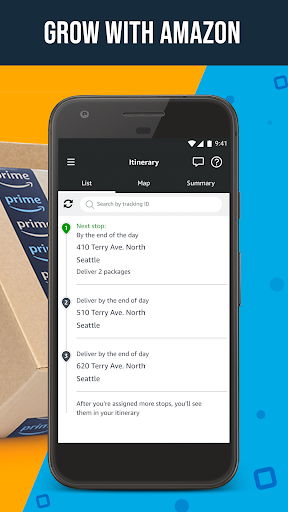
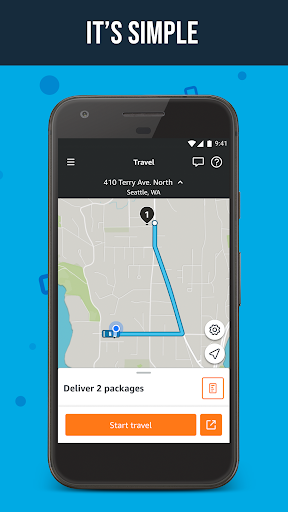
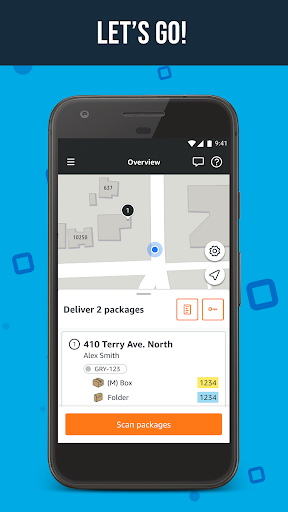
Amazon Flex feels less like a generic gig app and more like a purpose-built work tool, and that distinction shows up almost immediately. After spending time with it, what stood out most was how clearly Amazon has tried to reduce the friction of delivery work inside the app itself. From onboarding cues to route flow to delivery confirmation, the app usually does a good job of telling you what to do next without making you hunt for options. That matters, because this is the kind of app you use while moving, parking, scanning, walking, and trying to stay on schedule. The strongest part of Amazon Flex is its structure. Once you are in the workflow, the app is surprisingly straightforward. Accepting blocks, checking delivery details, scanning packages, and progressing from stop to stop all feel organized around a clear sequence. There is very little mystery about what the app wants from you during a run. I especially liked that it feels operational rather than flashy. The interface is built around action: where to go, what to scan, what to drop off, and how to move to the next stop. For drivers who want an app that behaves like a job tool instead of a social platform with side gigs attached, that focus is a real strength. Another thing Amazon Flex gets right is schedule flexibility. In practice, the app gives off the feeling that it is designed for people fitting delivery work around real life, not the other way around. That freedom is one of the biggest reasons to use it. If you want something that can slot into mornings, spare afternoons, or a few days a week, the app makes that model understandable. The availability experience will vary by area, of course, but the scheduling concept itself is easy to grasp and feels central to the app rather than buried inside menus. There is also a reassuring polish to the delivery flow once you are actually on the road. Scanning packages is generally quick, and confirming handoffs or drop-offs is not overly complicated. The app often succeeds at minimizing indecision, which is exactly what a delivery app should do. I came away with the sense that the best version of Amazon Flex is very efficient: load up, follow the sequence, complete the stop, move on. When everything clicks, it is one of those apps that fades into the background and lets you focus on the task. That said, Amazon Flex is not friction-free. Its biggest weak spot during use is navigation reliability. The in-app GPS can feel inconsistent, and that is not a small issue in a delivery app. On some runs it behaves normally, but there are moments where location handling feels unstable or the route guidance gets strangely awkward. That kind of glitch is more than a cosmetic annoyance when every stop depends on momentum. If you are the kind of driver who wants absolute trust in turn-by-turn guidance, you may find yourself leaning on a third-party maps app more often than you’d like. The second problem is that the first real delivery experience can be more overwhelming than the app initially suggests. Amazon Flex presents itself as simple, and at a high level it is, but the first block can still feel like being dropped into a system that makes more sense after you have already done it once. Warehouse pickup, package organization, route pacing, and understanding how to recover from small mistakes all involve a learning curve that the app does not fully smooth out. I never felt the app was unusable, but I did feel that beginners are expected to become competent pretty quickly. A third complaint is that when the app does glitch, it can disrupt confidence more than it should. Route adjustments, navigation oddities, or small moments of uncertainty are manageable if you already know the rhythm, but they are much more stressful when you are trying to stay efficient. This is one of those apps that feels strong when it is stable and mildly chaotic when it is not. The underlying workflow is solid enough to recover, but I would still call dependability an area that needs more consistency. One thing I appreciated is that Amazon Flex does not try to overcomplicate its design. Even visually, it keeps the attention on work. The recent return of dark mode is a nice quality-of-life touch, especially for early morning or evening use, and it makes long sessions a bit easier on the eyes. Small usability details like that help the app feel current instead of neglected. Who is this app for? It is for drivers who want a flexible way to take on delivery work and who are comfortable with a job that mixes app guidance with real-world improvisation. If you like structured tasks, can stay organized in your car, and do not mind a little self-management, Amazon Flex is a strong option. It is especially appealing to people who value the ability to fit work around their own schedule. Who is it not for? It is not ideal for someone who gets easily stressed by navigation hiccups, needs a lot of hand-holding on day one, or wants a completely effortless plug-and-play gig experience. If minor route weirdness or a confusing first block would ruin the experience for you, that hesitation is valid. Overall, Amazon Flex is a very good app with a clear purpose and a mostly competent execution. Its best qualities are its structured delivery flow, practical flexibility, and generally efficient task design. Its biggest drawbacks are the occasionally shaky GPS behavior, a first-run experience that can feel steeper than expected, and the fact that glitches hit harder here than in less time-sensitive apps. Even with those faults, I came away impressed. When it works as intended, Amazon Flex feels like one of the more usable and thoughtfully built delivery apps on Android.