
Apps Games Articles
Too Good To Go: End Food Waste
Too Good To Go Aps
Rating 4.9star icon
Editor's summary
Editor rating
star icon star icon star icon star icon
half star icon
4.6

One-line summary Too Good To Go is one of the rare apps that saves you real money while doing something genuinely useful, but its value depends heavily on whether your area has good participating stores and whether you can live with the unpredictability of surprise bags and pickup windows.

  • Installs

    50M+

  • Developer

    Too Good To Go Aps

  • Category

    Food

  • Content Rating

    Everyone

  • Latest version

    26.3.0

  • Package

    com.app.tgtg

Screenshots
In-depth review
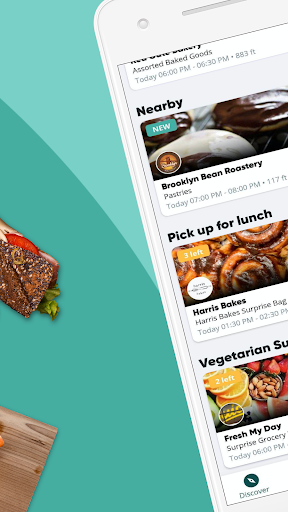
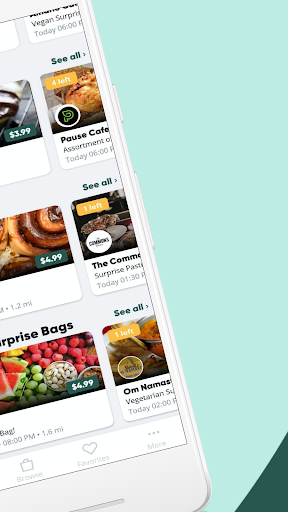
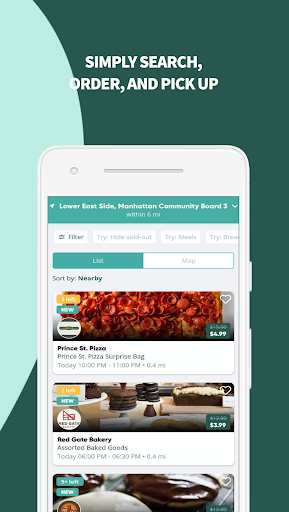
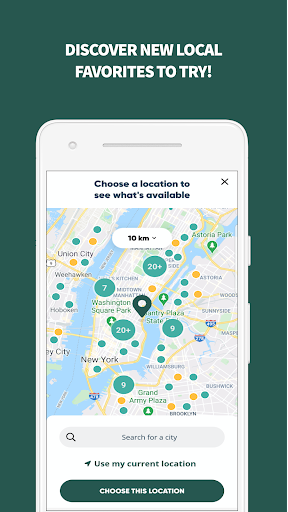
Too Good To Go is one of those apps with a pitch so simple it almost sounds too neat: buy unsold food from local shops, bakeries, cafes, and restaurants at a steep discount, then pick it up before it goes to waste. After spending real time with it, I came away thinking the core idea absolutely works—but only if you understand what kind of app this is before you tap your first order. This is not a food delivery app, and it is not a traditional discount marketplace where you scroll through exact items and build a basket. Too Good To Go is closer to a treasure hunt with a time limit. You open the app, check what nearby businesses have available, reserve a surprise bag, pay in the app, and then show up during a fixed pickup window. If that sounds appealing, the experience can be fantastic. If you need precision, flexibility, or dietary certainty, the cracks show quickly. The good news is that the app itself makes a strong first impression. The interface is clean, readable, and easy to understand even on a first run. Finding nearby offers is straightforward, and the combination of location, store listings, pickup times, and pricing gives you the information you need without much clutter. I never felt like I was fighting the app just to figure out what was available or how to reserve a bag. That simplicity matters because the whole experience depends on speed and convenience; if rescuing surplus food starts to feel like admin, the concept falls apart. What makes Too Good To Go genuinely fun is the feeling that you are getting a deal and an adventure at the same time. The best bags feel a little ridiculous in a good way: you pay a low price and walk away with a very solid haul of bread, pastries, prepared food, groceries, or a mix of whatever the business had left. When it clicks, it feels like one of the smartest apps on your phone. I found it especially compelling for bakeries and grocery-style pickups, where the value often feels most obvious and the contents are easiest to use over the next day or freeze for later. There is also a real pleasure in discovering places you might never have visited otherwise. As a local discovery tool, it works almost by accident. That said, the app’s biggest strength is also its biggest gamble: the surprise bag model. Some pickups feel generous and well judged. Others are merely fine. And occasionally you can tell that a store understands the letter of the service more than the spirit of it. Too Good To Go can save food and save money, but it cannot guarantee that every bag will feel exciting, balanced, or personally useful. If you are the kind of person who wants to know exactly what dinner is before leaving the house, this experience can become frustrating fast. A second friction point is timing. Pickup windows are a core part of the app, but they can also be the part that makes an apparently great deal less attractive in practice. I often found myself doing the mental math: yes, the bag is cheap, but is it worth rearranging the evening to collect it during a narrow window? Sometimes the answer was absolutely yes. Sometimes it was not. The app is at its best when you treat it as opportunistic—something you grab because it fits your route or schedule—not as something you depend on every day. The third weakness is filtering and personalization. The basics are there, but after extended use, I wanted more control. Certain stores simply were not relevant to me, and I would have liked an easier way to hide or deprioritize them permanently. I also wanted better ways to sort by pickup time and availability, because when today’s and tomorrow’s options blur together, browsing becomes less efficient than it should be. The app is easy to use, but not always easy to tailor. There are also some practical limitations that are not really bugs, but they do shape the experience. Dietary restrictions can be tricky with surprise bags. If you are vegetarian, have allergies, or strongly dislike certain foods, some offers will be better than others, but this is not a service built around fine-grained preference matching. Likewise, the app depends heavily on local participation. In a strong area, it feels alive and useful. In a weaker area, the map can thin out quickly, and the best bags disappear fast enough that it starts to feel like a race. Still, I keep coming back to the fact that Too Good To Go nails the part that matters most: it makes food waste reduction feel practical instead of preachy. You are not asked to donate, subscribe, or wade through guilt-forward messaging. You just open the app, find food, pay less, and pick it up. That directness is a major reason the experience works so well. It turns an environmental good into a normal, repeatable habit. Who is this app for? It is excellent for budget-conscious eaters, flexible planners, curious food explorers, students, and anyone who does not mind building a meal around what is available rather than what was originally intended. It is especially good for people with freezer space and a bit of improvisational spirit. Who is it not for? If you need exact ordering, delivery, highly predictable portions, strict ingredient control, or broad availability at all hours, this will feel limiting. In the end, Too Good To Go earns its reputation because it delivers something increasingly rare in mobile apps: clear value with very little nonsense. It is useful, it is easy, and at its best it is kind of addictive. You just have to accept the trade-off at the heart of it. The lower prices come with uncertainty, the best deals come with scheduling constraints, and the quality of your experience depends partly on the stores near you. If you can live with that, this is one of the smartest feel-good apps you can install.
Alternative apps
  • Olio
  • Flashfood
  • Karma