
Apps Games Articles
The Walking Dead: Survivors
Galaxy Play Technology Limited
Rating 4.5star icon
Editor's summary
Editor rating
star icon star icon star icon star icon
half star icon
4.5

One-line summary The Walking Dead: Survivors is one of the better mobile strategy games to sink into thanks to its busy, clan-driven loop and surprisingly fair free-to-play pace, but the late-game grind and whale-heavy PvP can still wear down anyone looking for a more relaxed experience.

  • Installs

    10M+

  • Developer

    Galaxy Play Technology Limited

  • Category

    Strategy

  • Content Rating

    Mature 17+

  • Latest version

    3.5.0

  • Package

    com.elex.twdsaw.gp

Screenshots
In-depth review
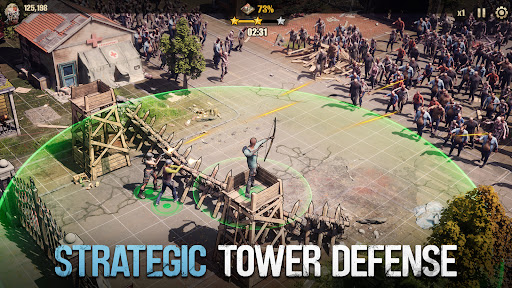
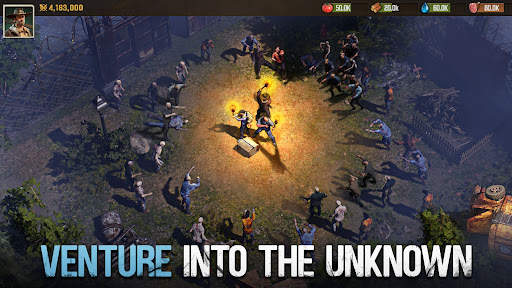
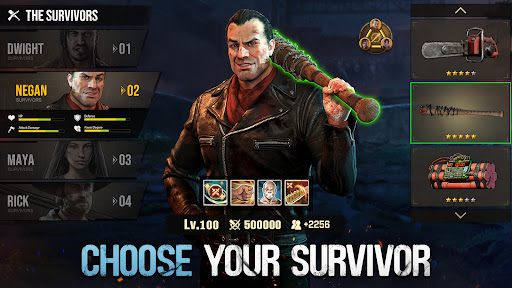
The Walking Dead: Survivors knows exactly what kind of game it wants to be: a social strategy builder wrapped in a Walking Dead skin, with enough tower defense and map pressure to keep it from feeling like a bland clone. After spending real time with it, what stood out most was not the license, though that certainly helps, but how quickly the game gets its hooks in if you enjoy the routine of upgrading, coordinating, defending, and checking in throughout the day. The opening hours are strong. The tutorial is smooth, readable, and far less overwhelming than many games in this genre. You are walked through base construction, troop handling, hero use, and defense in a way that feels brisk instead of hand-holding. That matters because this kind of mobile strategy game can be intimidating for newcomers, especially when it throws menus, currencies, research trees, and PvP systems at you all at once. Here, the onboarding is polished enough that I rarely felt lost. Within a short time, the loop became clear: build up your settlement, improve defenses, send out teams to gather and fight, and tie your progress to a clan if you want to move efficiently. That early-to-midgame loop is the app's first major strength. There is almost always something to do. Upgrades are ticking, resources are being collected, events are asking for attention, and the world map gives you enough movement and activity to make the game feel alive. It is easy to dip in for a few minutes and make progress, but it is just as easy to stay for an hour because one task rolls naturally into another. For a strategy game built around timers, it does a good job of making those timers feel like part of a larger rhythm instead of a hard stop every few minutes. The second big win is how well the social layer is integrated into the actual play experience. A lot of games in this category say they are about alliances, but here clan participation genuinely changes how the game feels. Playing alone is possible, but it is clearly not the ideal way to experience it. Joining an active clan opens up faster help, better momentum, more interesting map dynamics, and a stronger sense that your settlement is part of a larger struggle rather than a lonely outpost in a menu system. Some of my most enjoyable sessions came from coordinating movement, contributing to shared goals, and watching the political drama of a server unfold. If you like strategy games because of the social chessboard, this one understands the assignment. The third strength is that the game generally avoids feeling hostile to free players in its earlier stages. Yes, it has in-app purchases, yes, there are plenty of opportunities to spend, and yes, the monetization is visible. But in regular play I did not feel bullied by nonstop pop-ups or forced ads. Progress without paying is absolutely possible, and the game is smart enough to keep free players feeling useful and engaged for a long time. That is not the same as saying spending does not matter; it definitely does. But there is an important difference between a game that feels impossible without purchases and one that simply becomes faster and more dominant if you open your wallet. The Walking Dead: Survivors is much closer to the latter. That said, its weaknesses become more obvious the longer you stay. The first is the familiar late-game drag. Upgrade times stretch, resource demands rise, and the sense of constant momentum starts to slow into a more routine grind. Early on, the game is exciting because nearly every login produces visible progress. Later, that progress becomes more incremental, and the daily cycle can start to feel like maintenance rather than discovery. If you are sensitive to timer-heavy progression systems, you will eventually hit the point where patience becomes part of the price of admission. The second issue is PvP balance, or more specifically the feeling that social and financial power can tilt a server too far. In the best case, server politics create tension and excitement. In the worst case, stronger alliances or heavy spenders can dominate the map and reduce the strategic variety for everyone else. The game does include mechanics that soften the sting compared to harsher strategy titles, and being attacked does not feel quite as devastating as in some rivals, but dominance problems still emerge. If your server culture is healthy, the game shines. If it is ruled by a few giants, it can become exhausting. The third weakness is that a lot of the action is more managerial than tactile. Troops auto-engage, many activities revolve around dispatching and waiting, and even the combat-adjacent systems are often about preparation rather than hands-on execution. The tower defense angle adds flavor and helps the settlement feel more vulnerable and alive, but this is still fundamentally a strategic planning game, not an action game. If you want granular control in every fight, you may find the interaction too passive. Presentation is solid overall. The visual style is functional rather than cutting-edge, but it fits the bleak, post-apocalyptic setting well enough. Character recognition helps, and familiar Walking Dead faces add personality without carrying the entire experience on nostalgia alone. Menus are busy, as they always are in games like this, yet I found the interface manageable once the basic systems clicked. The app also benefits from keeping the screen active with meaningful tasks instead of just decorative clutter. So who is this for? It is for players who enjoy alliance-based strategy games, like checking in multiple times a day, and want a mobile title that gives them lots of small goals to chase. It is especially good for fans of the Walking Dead universe who want something more strategic than purely narrative fan service. It is not for players who hate grind, dislike PvP politics, or want direct control over combat. And if you already know that whale-driven server dynamics ruin this genre for you, this game is unlikely to change your mind. Overall, The Walking Dead: Survivors is one of the stronger entries in the mobile base-building strategy space. It is approachable at the start, sticky in the middle, and socially engaging when you land in the right clan. It does not fully escape the genre's usual problems—grind, monetization pressure, and power imbalance—but it handles them better than many of its peers. For the right player, it is very easy to turn a quick trial into a long-term routine.