
Apps Games Articles
Ball Run 2048: merge number
KAYAC Inc.
Rating 4.2star icon
Editor's summary
Editor rating
star icon star icon star icon star icon empty star icon
4.2

One-line summary Ball Run 2048: merge number is an easy game to recommend if you want a genuinely satisfying, low-effort time killer, but its momentum is repeatedly undercut by ads and occasional lag.

  • Installs

    100M+

  • Developer

    KAYAC Inc.

  • Category

    Casual

  • Content Rating

    Teen

  • Latest version

    0.8.7

  • Package

    com.kayac.ball_run

In-depth review
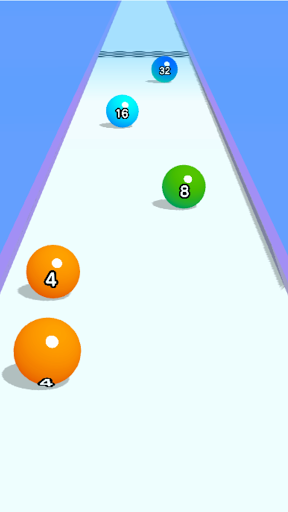
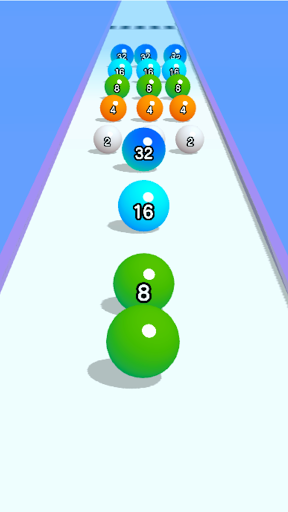
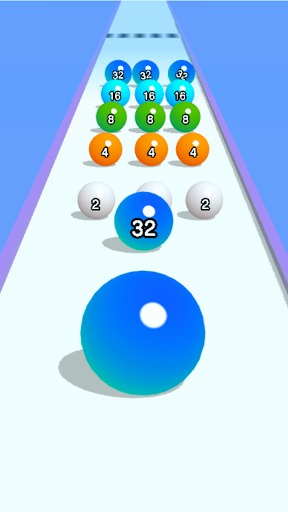
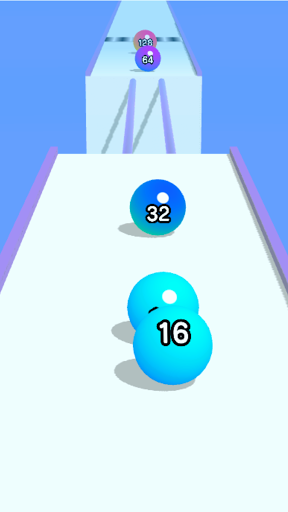
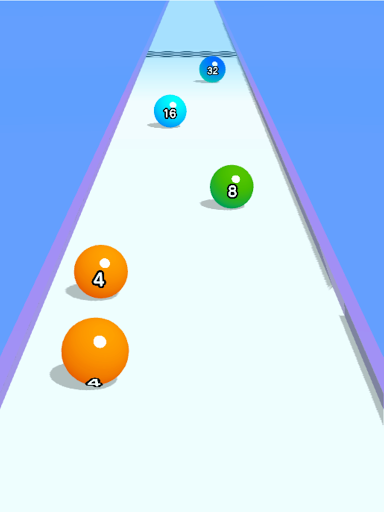
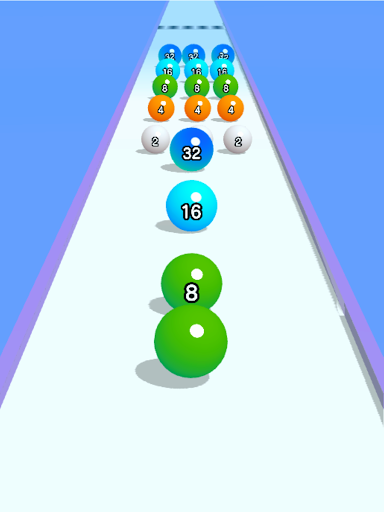
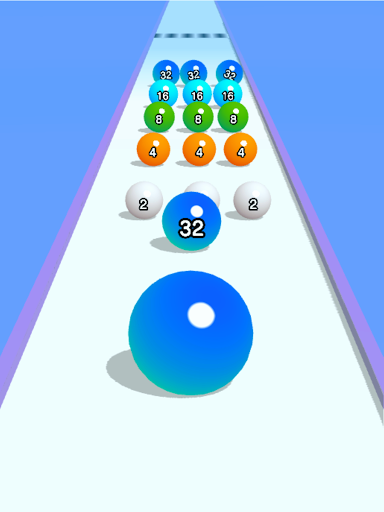
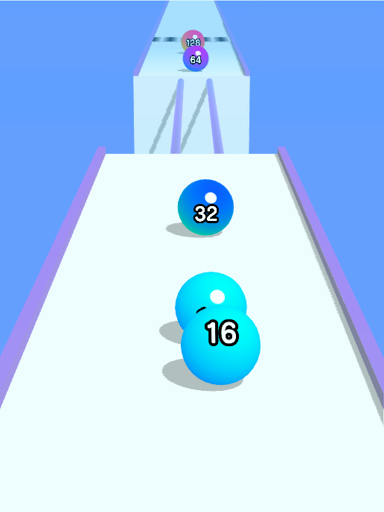
Ball Run 2048: merge number understands a very specific kind of mobile-game pleasure: the joy of watching a simple number go up while your fingers stay busy for thirty seconds at a time. After spending time with it, that is the clearest reason it works. It takes the familiar 2048-style merging loop, turns it into a forward-running ball game, and delivers the kind of quick, tactile satisfaction that makes you say, “one more round” far more often than you planned. The core idea is extremely easy to grasp. You guide a numbered ball down a narrow course, weaving into matching balls to merge and double your value while avoiding drops, hazards, and bad collisions. That sounds almost too basic on paper, but in practice it has a strong arcade rhythm. You are always making tiny lane adjustments, always looking a few feet ahead, and always chasing the next satisfying merge. The better your run, the bigger and flashier your ball becomes, and that escalation is where the app earns most of its appeal. What impressed me first was the sensory feedback. The merge effect is punchy, and the changing colors give the game a clear sense of progression even when the underlying mechanic stays simple. There is a toy-like charm to seeing a small ball evolve into something larger and more vibrant as the number climbs. This matters more than it might seem, because the game does not have deep strategy in the traditional puzzle sense. Instead, it relies on feel: the movement, the quick decisions, and the little burst of reward every time two equal values connect. On that front, it does a good job. A second strength is accessibility. This is the kind of game you can hand to almost anyone and they will understand it within seconds. There is no intimidating learning curve, no cluttered interface to decipher, and no pressure to memorize systems. You swipe, steer, merge, avoid. That makes it especially good for short sessions when you are waiting in line, half-watching TV, or just trying to fill a spare minute without committing to something heavier. It also has a light educational side to it, since the doubling pattern is constantly reinforced. I would not call it a math app, but there is a small mental rhythm to recognizing the number progression that gives the gameplay a nice structure. The third thing it gets right is pacing in the early and middle experience. Runs are short, restarts are immediate, and failure rarely feels catastrophic. If you fall off the course or hit a nasty obstacle at the wrong moment, you are back in almost instantly. That fast retry loop is essential for a game like this, and Ball Run 2048 handles it well. It keeps friction low enough that even a sloppy run does not feel like a huge waste of time. That said, the game absolutely has rough edges, and they become more noticeable the longer you spend with it. The biggest drawback is advertising. Early on, the ad load feels tolerable, which helps the game make a strong first impression. But over longer play sessions, ads start interrupting the flow much more often, especially when you are completing levels regularly. In a game built on fast repetition and rhythm, those interruptions matter. They break the trance-like quality that otherwise makes the app so effective as a casual decompression game. Performance is the second weakness. During my time with it, the game was mostly playable, but not perfectly smooth. There are moments where the action feels a little sluggish or briefly stutters, and in a title based on precise swiping down narrow paths, even minor hiccups can be annoying. This is not the sort of issue that destroys the experience outright, but it does chip away at the polish. A game this simple should feel consistently slick, and Ball Run 2048 does not always get there. The third limitation is depth. The game is very good at delivering a narrow kind of fun, but it is still a narrow kind of fun. After a while, the structure starts to feel repetitive. The thrill of climbing to larger numbers remains satisfying, but the moment-to-moment play does not evolve dramatically. If you are looking for rich progression, lots of modes, or a strong sense that the game keeps introducing meaningful new ideas, this may start to feel thin. Its appeal depends heavily on whether you enjoy repeating a basic loop for the comfort of mastery and incremental improvement. So who is this for? It is for players who like hyper-casual mobile games, especially ones that can be understood instantly and played in very short bursts. It is also a good pick for people who enjoy simple merge mechanics, satisfying sound and color feedback, and games that are more about relaxation than intense challenge. If you want something light and mildly addictive to dip into throughout the day, it fits nicely. Who is it not for? If you are impatient with ads, sensitive to occasional lag, or looking for a more substantial puzzle or runner experience, this one may wear out its welcome. It also is not ideal for players who need a lot of variety to stay engaged. Overall, Ball Run 2048: merge number succeeds because it understands the mobile basics: easy controls, quick rounds, satisfying feedback, and instant readability. It stumbles when ads and technical roughness interrupt that formula, and it does not have enough depth to become a true long-term obsession for everyone. But within its lane, it is an enjoyable, polished-enough casual game that is easy to pick up and surprisingly hard to put down for those first several sessions.
Alternative apps