
Apps Games Articles
Crazy Diner: Cooking Game
Smart Fun Casual Games
Rating 4.7star icon
Editor's summary
Editor rating
star icon star icon star icon star icon
half star icon
4.5

One-line summary Crazy Diner is one of the rare mobile cooking games I’d actually recommend because it feels fast, fair, and generous for free players, though the long ad breaks and occasional late-game grind still keep it from being an easy perfect score.

  • Installs

    10M+

  • Developer

    Smart Fun Casual Games

  • Category

    Strategy

  • Content Rating

    Everyone

  • Latest version

    1.3.5

  • Package

    com.smartfunapps.crazydiner

In-depth review
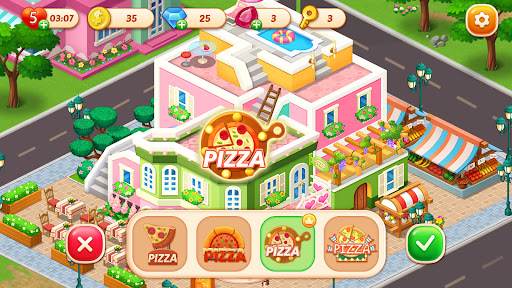
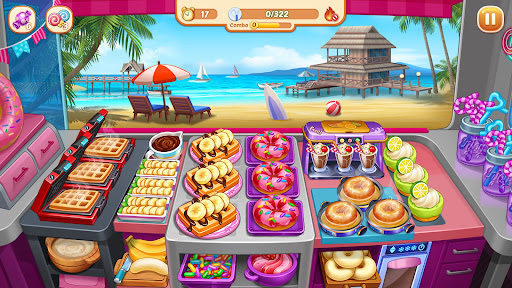
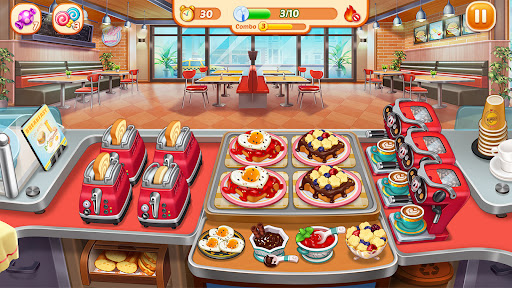
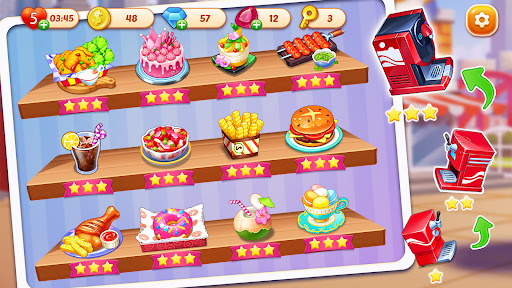
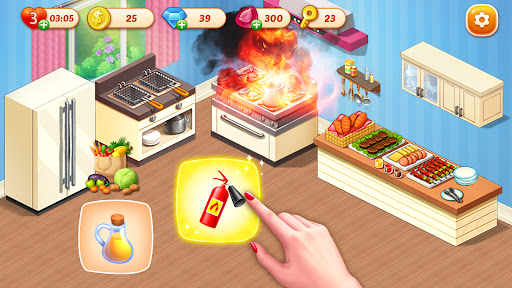
Crazy Diner: Cooking Game is the kind of mobile time-management game that knows exactly why people show up for this genre: quick rounds, escalating kitchen chaos, and the satisfying rhythm of turning a messy counter into a perfectly timed service streak. After spending real time with it, what stands out most is not that it reinvents the cooking-game formula, but that it executes it unusually well. It feels polished where many rivals feel cynical. The core loop is simple and immediately readable. Customers pour in, dishes queue up, and your job is to tap through prep stations, assemble meals, and keep the line moving before patience runs out. The important detail is that Crazy Diner feels responsive. Inputs are clean, the pace ramps up naturally, and the game does a good job of making even familiar restaurant tasks feel energetic rather than repetitive. One of its best design choices is that it avoids some of the fussier interaction patterns that make other cooking games physically annoying over long sessions. You spend more time making decisions and less time fighting the interface. That smoothness matters because this is a game built around repetition. You will replay levels, revisit restaurants, and grind for upgrades. In weaker games, repetition turns into friction. Here, it often turns into flow. There is genuine pleasure in seeing a level go from overwhelming to manageable as you learn its rhythm, optimize your taps, and finally hit the objective with seconds to spare. The difficulty curve deserves credit too. Early on, Crazy Diner is welcoming without being mindless. Later, it becomes demanding enough to feel like a real time-management game rather than a glorified tapping toy. A second big strength is how fair the economy feels for a free-to-play title. Crazy Diner absolutely has ads and in-app purchases, and it does nudge you toward boosts, extra currency, and efficiency upgrades. But in everyday play, it rarely feels like it is setting you up to fail just to force a purchase. I was able to progress steadily, collect premium currency at a decent pace, and keep upgrading kitchens without feeling boxed in. That makes a huge difference. The game gives off the impression that spending money is an option, not a requirement. For this genre, that alone puts it ahead of a lot of the field. The third major strength is variety around the edges. The restaurant progression, upgrade systems, and decorative side elements help break up what could otherwise be a pure level treadmill. The decoration aspect is especially useful because it adds a sense of place and ownership to the grind. You are not just clearing stage 47 and stage 48; you are gradually building out a brighter, more personalized version of the game world. It is light-touch rather than deep simulation, but it works. The art also deserves a mention: dishes are colorful, stations are readable at a glance, and the overall presentation is cheerful without becoming visually cluttered. That said, Crazy Diner is not above the usual genre annoyances. The biggest one is ads. They are more tolerable here than in many free mobile games because a lot of them are framed as optional reward ads rather than relentless interruptions, but they are still frequent enough to shape the experience. The typical 30-second ad is long when you are in the mood for quick-fire levels, and if you rely on ad-based bonuses to maximize coins, gems, or retries, the stop-start rhythm becomes noticeable. The game is generous, but that generosity often comes attached to a video player. The second issue appears once the challenge rises. Crazy Diner is fair, but not endlessly breezy. Some later stages hit hard enough that progress slows and the pressure to use boosts increases. To the game’s credit, boosts are obtainable and useful, and I never got the sense that success was impossible without paying. Still, there is a difference between “possible without paying” and “consistently smooth without grinding,” and this game does drift toward the latter in tougher stretches. If you dislike replaying stages for resources or waiting until your upgrades catch up with the level design, you will feel that friction. The third weakness is pacing outside the kitchen. Crazy Diner is at its best when it keeps you in the action, but menus, between-level transitions, upgrade detours, and reward screens can slow down a session more than they should. None of this is disastrous, and it comes with the territory, but the game occasionally interrupts its own momentum. When you are in the zone, bouncing back and forth through hub screens and claim prompts is less charming than the actual cooking. So who is this for? If you like time-management games, casual challenge, and a satisfying sense of progression without being forced to spend right away, Crazy Diner is an easy recommendation. It is also a good fit for players who want a cooking game that feels approachable at first but has enough bite to stay interesting over time. If you enjoy optional ad-watching in exchange for meaningful rewards, you will probably find the economy surprisingly reasonable. Who is it not for? If you are allergic to mobile free-to-play structure, have no patience for replaying levels, or want a completely ad-free premium-style experience, this will wear you down. Likewise, players looking for deep restaurant simulation or story-heavy management systems may find it too streamlined. Overall, Crazy Diner succeeds because it respects the fundamentals. It is fast, tactile, colorful, and usually fair. It knows that cooking games live or die on whether another round sounds fun after you finish the current one. In my time with it, the answer was usually yes. That is not something I can say about every game in this crowded category.