Apps Games Articles
Thief Puzzle: to pass a level
TapNation
Rating 4.3star icon
Editor's summary
Editor rating
star icon star icon star icon star icon
half star icon
4.5

One-line summary Thief Puzzle is easy to recommend if you want quick, goofy brain-teasers you can play in short bursts, but the ad clutter and occasional control jank keep it from feeling truly premium.

  • Installs

    100M+

  • Developer

    TapNation

  • Category

    Puzzle

  • Content Rating

    Everyone

  • Latest version

    1.5.8

  • Package

    com.weegoon.thiefpuzzle

In-depth review
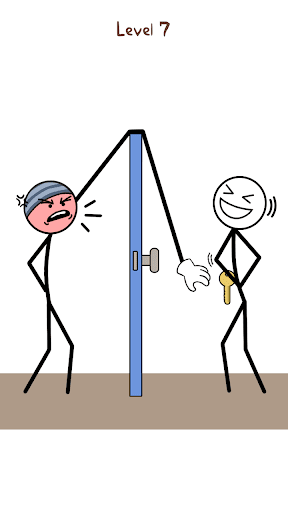
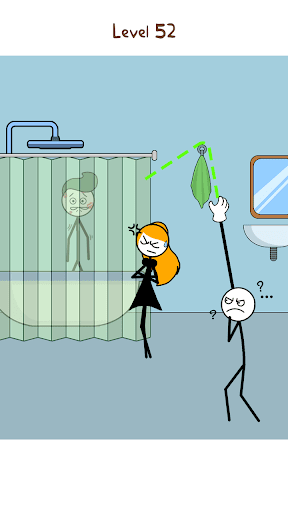
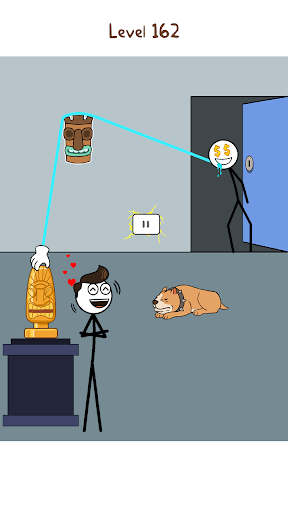
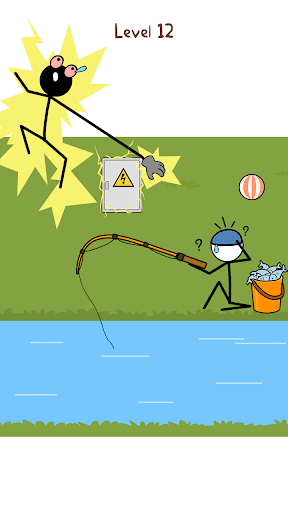
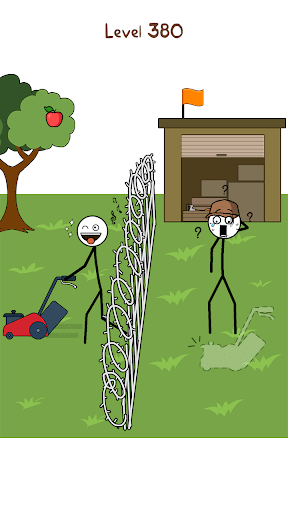
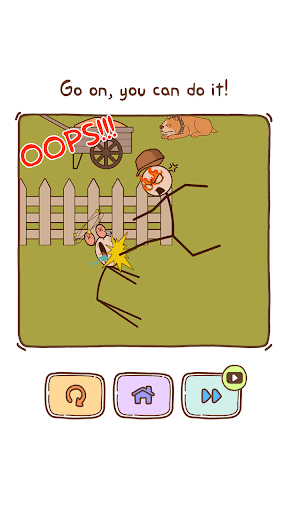
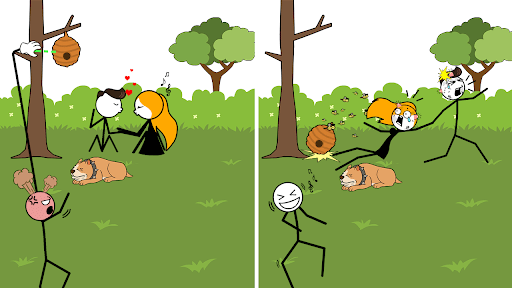
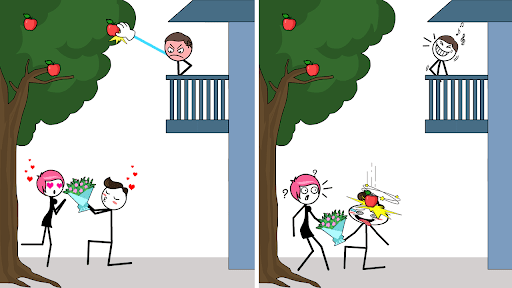
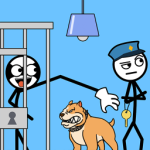
Thief Puzzle: to pass a level is one of those mobile games that looks almost too simple to bother with, and then quietly eats far more of your time than you planned to give it. After spending real time with it, the appeal is easy to understand: this is a very lightweight puzzle game built around one tactile idea that works surprisingly well. You drag the thief’s stretchy arm around obstacles, guards, traps, and other environmental hazards to reach a target object, and if you draw the route correctly, the hand snaps back with the prize. It is silly, immediate, and usually funny enough to keep you moving from one stage to the next. What makes the game work is how quickly it gets you into its rhythm. There is almost no friction between opening the app and playing a level. The core interaction is simple enough that anyone can understand it in seconds, but there is still room for experimentation. Early puzzles are extremely easy, almost to a fault, but they serve their purpose by teaching you how the arm bends, how collision works, and how the game wants you to think. Before long, the levels start asking for better timing, more careful pathing, and a little trial and error. That balance between simplicity and just enough challenge is the game’s strongest quality. The second thing that stood out in use is the tone. Thief Puzzle does not try to be a serious stealth game or a cerebral brain-burner. It leans into slapstick. Getting caught is often part of the entertainment, and the short fail states help the game avoid feeling punishing. That matters because this is a puzzle game you will often play casually: on a break, while waiting in line, or when you want something less demanding than a strategy game or card battler. It has a breezy, low-stakes feel that makes it easy to return to. A third strength is that it works well as a bite-size offline-style time killer. The levels are short, self-contained, and ideal for stop-and-start play. Even when a puzzle is not especially clever, the game benefits from pace. You are rarely stuck in one place for too long unless you choose to be. If you just want a mobile game that gives you a tiny puzzle, a quick laugh, and then another puzzle, this one understands the assignment. That said, the game is not flawless, and its weaknesses become more obvious the longer you play. The biggest issue is advertising. In free-to-play terms, it is not the most aggressive ad machine on the Play Store, but ads are still a regular presence, and they can interrupt the game’s otherwise clean flow. Because the actual puzzles are so quick, even short ad breaks can feel disproportionately intrusive. It is the kind of game where you really notice any delay between levels, because the design is built around momentum. Another weakness is that the challenge curve is uneven. The first chunk of the game can feel overly basic, to the point where it risks underselling itself. Later on, the game does become more interesting, but not always in a smooth, steadily escalating way. Some levels feel cleverly constructed, while others rely more on gimmick timing or hidden gotchas than on satisfying puzzle logic. It never becomes a deep puzzle experience in the traditional sense, so players hoping for dense, elegant problem-solving may eventually find it shallow. The third issue is polish. Most of the time, the controls are intuitive: draw the path, avoid the danger, grab the object. But there are moments when the stretchy-hand mechanic feels a little sloppy, especially if the arm overextends or interacts awkwardly with level boundaries and obstacles. In a game where precision matters, even occasional input weirdness stands out. It does not ruin the experience, but it can turn a funny failure into a mildly irritating one. Visually, the app keeps things basic, and that is mostly fine. The art style is functional rather than impressive, with simple character models and readable level layouts. The advantage is clarity: you almost always understand what the goal is and what might stop you. The downside is that it can look repetitive over time. This is not a game you play for visual spectacle. You play it for the puzzle hook and the comic payoff. Who is this for? It is best for players who like casual puzzle games, short-session mobile gaming, and humor-driven design. It is especially good for someone who wants a relaxing app that still asks for a little attention and spatial planning. It is also a nice fit for younger players or families, provided the comic thieving theme does not bother you. Who is it not for? If you hate ads on principle, want premium-level polish, or are looking for a truly demanding brain-teaser with layered systems, this probably will not hold your interest for long. Likewise, if the idea of a game built around stealing as a joke is a nonstarter for you, the theme will be a turnoff no matter how harmlessly cartoonish the presentation is. Overall, Thief Puzzle succeeds because it knows exactly what kind of mobile game it wants to be. It is quick, goofy, accessible, and often genuinely amusing. It is not elegant enough to be a puzzle classic, and it can absolutely test your patience with ads and occasional control roughness, but as a free casual game, it is easy to pick up and hard to put down. For short bursts of mischievous, low-pressure puzzle solving, it does the job very well.