
Apps Games Articles
Smule: Karaoke Songs & Videos
Smule
Rating 3.8star icon
Editor's summary
Editor rating
star icon star icon star icon star icon empty star icon
4.2

One-line summary Smule is still one of the most entertaining karaoke communities on Android thanks to its huge song library and duet-first social design, but its best features sit behind VIP and the Android app can feel uneven when recording or searching.

  • Installs

    100M+

  • Developer

    Smule

  • Category

    Audio

  • Content Rating

    Teen

  • Latest version

    10.9.9

  • Package

    com.smule.singandroid

Screenshots
In-depth review
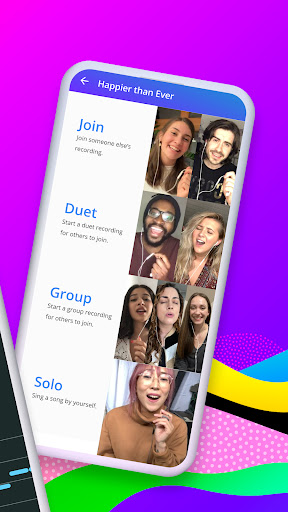
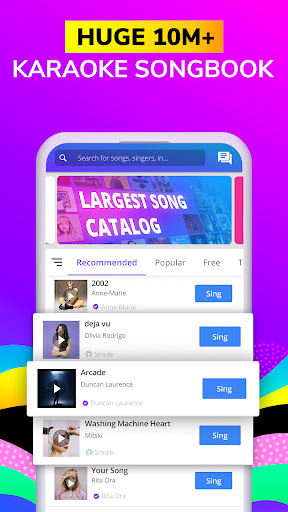
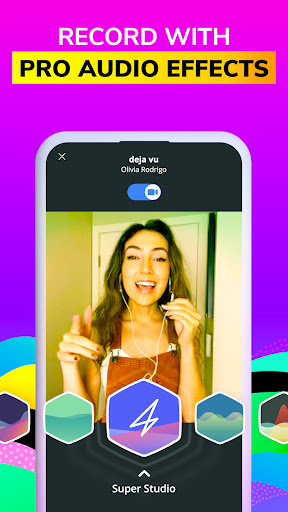
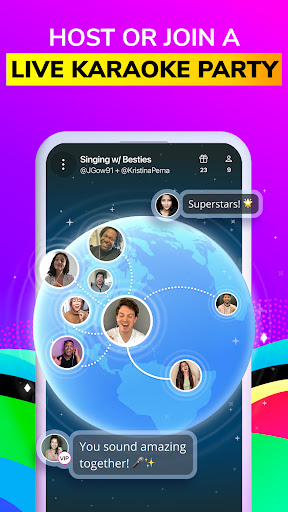
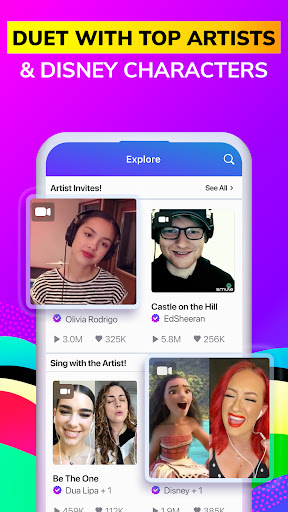
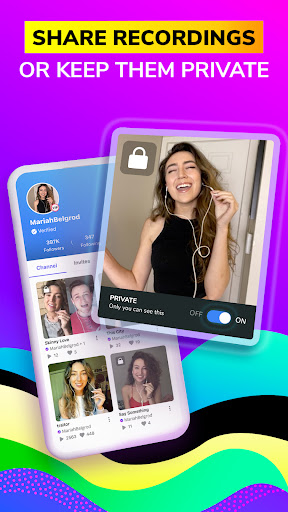
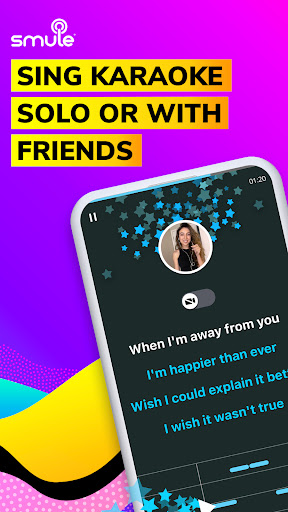
Smule has been around long enough that most people already know the pitch: sing karaoke, record yourself, duet with strangers or friends, and share the result. What matters now is whether it still feels fun in 2025 on Android, and after spending real time with it, the answer is yes—with a few important asterisks. The best thing about Smule is that it does not feel like a bare-bones karaoke lyric app. It feels like a full singing playground. From the start, the app pushes you toward participation rather than passive browsing. You are not just picking a song and mumbling through it alone; you are joining open invites, layering harmonies, testing effects, and stumbling into a surprisingly active social scene built around music. That social energy is the app’s biggest strength. Even if you are not a polished singer, there is something genuinely inviting about dropping into a duet, adding a backing line, or trying a group performance. Smule understands that karaoke is often more fun when it is collaborative, and that sense of musical back-and-forth gives it an identity that many recording apps lack. The second major win is the sheer breadth of material. Smule’s catalog feels enormous in practice, not just on a marketing bullet point. During testing, it was easy to bounce from current pop songs to classic standards, musical numbers, softer acoustic arrangements, and alternate versions of familiar tracks. That matters because karaoke gets stale fast if every song feels like the same instrumental template. Here, there is enough variety to keep experimenting. I also liked that the app is not just about chasing one perfect vocal take; it encourages trying different versions of the same song, which makes casual practice feel more relaxed and creative. The recording experience, when it works properly, is also stronger than expected. Smule gives you enough polish to make an average take sound more present and shareable. Reverb, vocal effects, pitch guidance, key adjustment, and video embellishments all help make performances feel produced rather than raw. This is not the same as a professional DAW, of course, but that is the point: it lowers the barrier to making something entertaining. I especially appreciated how quickly I could go from opening a song to having a recording worth sending to someone. That said, Smule is not frictionless, and Android users in particular may run into the app’s rougher edges. My biggest recurring frustration was technical inconsistency. On one session, recording and playback felt smooth; on another, sync or playback behavior felt a little off. This is the kind of app where latency matters a lot, because even a slight disconnect between your voice and the track can ruin confidence. There are ways to work around some of it, and headset and connection choices can change the experience, but it is still one of those apps that can feel device-sensitive in a way it really should not be. The second weakness is the free-versus-paid divide. Smule does let free users get in the door, and there is definitely entertainment value without paying. But the app constantly reminds you that the most flexible experience is reserved for VIP. If you just want to casually join existing duets, that may be enough. If you want more control over your own sessions, more freedom in how you sing, or a more complete creative toolkit, the paywall becomes impossible to ignore. Smule is still fun for dabblers, but it is clearly designed to make serious users feel the limits quickly. My third complaint is that some parts of the app still feel fussier than they should. Search, navigation, and recording flow are usually manageable, but not always elegant. There are moments when you feel the age and complexity of the platform: lots of options, lots of community layers, lots of content, and not always the cleanest path to what you want. For newcomers, the app can briefly feel overwhelming rather than playful. For longtime users, the clutter may be easier to tolerate because the core payoff remains strong. Even with those frustrations, I kept coming back to Smule because it captures something that most karaoke apps miss: momentum. You finish one duet and immediately want to try another. You hear someone else’s arrangement and want to answer it. You switch genres, test a different effect, or record a version just to hear how your voice sits in the mix. It turns singing into a loop of participation and discovery, and that loop is why the app still works. Who is it for? Smule is for people who enjoy singing out loud, who like the idea of collaborating with others, and who want karaoke to feel social instead of solitary. It also works well for hobbyists who want light vocal tools without learning serious audio software. If you like sharing performances, joining communities, and experimenting with your voice, Smule remains easy to recommend. Who is it not for? If you hate subscriptions, want a totally offline or no-frills karaoke tool, or expect flawless technical consistency on every Android device, Smule may test your patience. It is also not the best fit for musicians looking for broad instrumental creation tools rather than vocal-centric performance. In the end, Smule remains one of the most enjoyable karaoke apps because it combines a giant song library, strong social design, and surprisingly effective recording tools in one place. It is not perfect, and Android still shows some cracks in reliability and feature balance, but when the app clicks, it is easy to see why so many people stick with it for years.