
Apps Games Articles
myAir™ by ResMed
ResMed
Rating 4.3star icon
Editor's summary
Editor rating
star icon star icon star icon star icon empty star icon
4.2

One-line summary If you use a compatible Resmed CPAP, myAir is one of the most useful companion apps in medical tech, but its occasional syncing hiccups and device lock-in keep it from being an easy universal recommendation.

  • Installs

    1M+

  • Developer

    ResMed

  • Category

    Medical

  • Content Rating

    Everyone

  • Latest version

    VARY

  • Package

    com.resmed.myair

Screenshots
In-depth review
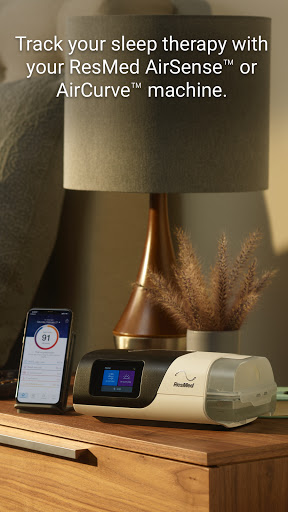
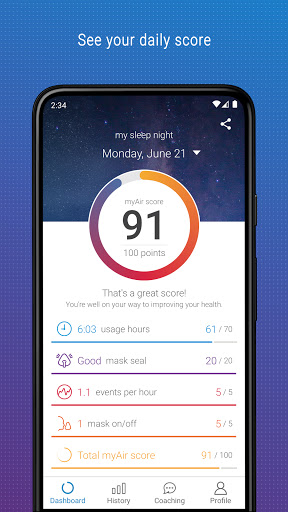
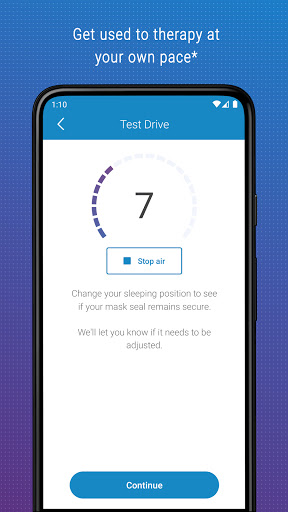
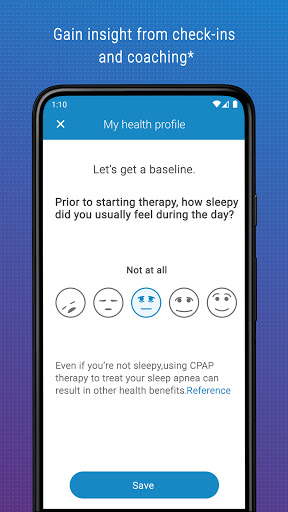
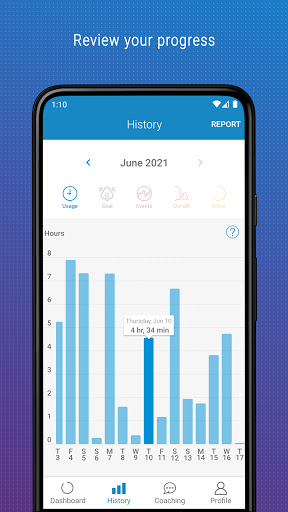
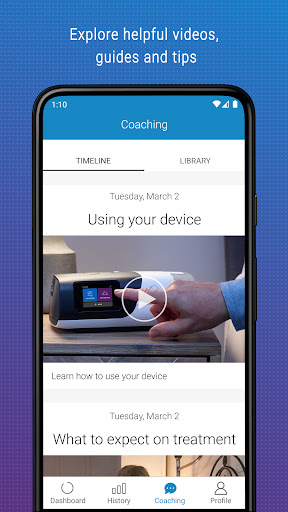
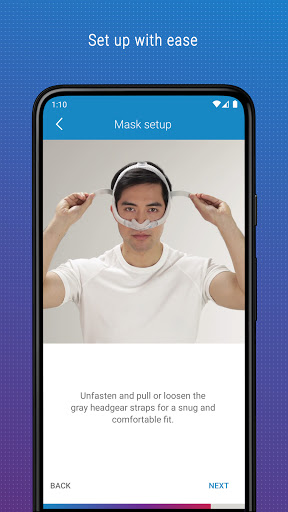
myAir by ResMed is a very specific kind of health app: it is not trying to be a broad wellness dashboard, and it is not useful at all unless you already own a compatible Resmed AirSense or AirCurve machine. That narrow focus turns out to be both its biggest strength and its clearest limitation. In daily use, myAir feels less like an optional add-on and more like the digital front panel your PAP machine should have had from the beginning. What stood out immediately in our time with the app is how well it translates sleep therapy into something understandable. PAP data can easily feel clinical, intimidating, or buried behind terminology that only a sleep specialist would love. myAir does a good job turning that into a simpler daily routine. Open the app in the morning, and the headline information is easy to grasp at a glance. The myAir score gives you a quick sense of how the night went, and the detailed metrics underneath provide enough substance to be useful without overwhelming the average user. For a therapy that depends heavily on consistency, this kind of approachable feedback matters. That clarity is the app’s first major win. We never felt like we had to dig through a maze of menus just to answer the basic question: “How did last night go?” The charts and trends are especially effective because they make the data feel actionable rather than decorative. Over time, you can start connecting patterns between good nights, mask issues, and overall therapy consistency. If you are the kind of person who wants visibility into the same general data your doctor is looking at, myAir delivers that in a polished, consumer-friendly way. The second strength is the onboarding and support experience. For a lot of people, starting PAP therapy is uncomfortable and frankly a little unnerving. myAir is at its best when it acts like a calm coach rather than a medical portal. Guided setup, instructional content, and comfort-oriented features make the early days less intimidating. We especially appreciated that the app seems designed around a real first-week user, not just a long-term enthusiast. The content is practical, and the overall tone is supportive without becoming overly cute or patronizing. That matters when you are trying to get used to sleeping with pressurized air and a mask on your face. A third strong point is how the app fits into a broader health-tracking routine. The integration with health platforms gives myAir a little more context than a single-purpose machine utility would normally have. We would not call this a full health hub, but seeing therapy data alongside other tracked wellness signals makes the experience more complete. It helps the app feel like part of your everyday health picture instead of an isolated medical silo you only open when something goes wrong. Still, myAir is not flawless, and the biggest annoyance is reliability around syncing. Most of the time, the app feels straightforward: use the machine, check the results, move on with your day. But when the data does not appear as expected, the whole experience becomes surprisingly fragile. That is because the app’s value depends on trust. If the nightly sync stumbles, even occasionally, it creates doubt at exactly the moment you want reassurance. During our review, this did not feel like a constant failure, but it did feel like the kind of issue that can sour the experience fast when it happens. In a health app tied to a sleep device, “usually works” is not quite the same as “dependable.” The second weakness is the app’s hard dependency on compatible hardware, and even within Resmed’s ecosystem, some features are limited to newer machines. That is understandable from a technical standpoint, but from a user standpoint it makes the app feel uneven. You can tell parts of the experience are more fully realized if you have the right device generation. If you are on older supported hardware, or if you are expecting every feature mentioned in the app’s marketing language to show up for you, there is room for disappointment. Third, while the app is admirably simple, power users may eventually bump into the ceiling of that simplicity. myAir is strongest as a friendly therapy companion, not as a deeply customizable analytics platform. That is a sensible design choice for most patients, but if you want exhaustive control, advanced interpretation, or a more technical presentation of every possible data point, the app can feel a little too curated. It gives you enough insight to stay engaged and informed, but not necessarily enough to satisfy someone who wants to obsess over every metric. In terms of day-to-day feel, the app is clean, readable, and generally easy to live with. We liked that it encourages regular check-ins without making the experience stressful. There is a fine line between coaching and nagging in health apps, and myAir mostly stays on the right side of it. Notifications and prompts feel aligned with therapy adherence rather than generic engagement tactics. That gives the app a more credible, patient-first feel. Who is this app for? It is for Resmed PAP users who want a clear, supportive way to track nightly therapy, understand the basics of their treatment, and stay motivated during the adjustment period. It is especially good for beginners, people who want digestible data, and anyone who benefits from visual progress tracking. Who is it not for? Anyone without a compatible Resmed machine, anyone expecting a device-agnostic sleep app, and highly technical users who want deeper raw analysis than the app appears designed to provide. Overall, myAir is one of those rare companion apps that feels genuinely useful rather than obligatory. It turns dry therapy data into something understandable, gives new users a smoother start, and adds enough coaching to improve confidence. Its occasional sync frustrations and hardware-specific limits keep it from being perfect, but if you are already in the Resmed ecosystem, this is a solid, well-considered tool that meaningfully improves the ownership experience.
Alternative apps
  • AirMini by ResMed
  • DreamMapper
  • prisma APP