
Apps Games Articles
Telehealth by SimplePractice
SimplePractice - Practice Management
Rating 4.6star icon
Editor's summary
Editor rating
star icon star icon star icon star icon empty star icon
4.4

One-line summary Telehealth by SimplePractice is easy to recommend for fast, low-friction therapy sessions because joining an appointment feels refreshingly simple, but it is still a niche tool that makes far less sense if your clinician does not already use SimplePractice.

  • Installs

    500K+

  • Developer

    SimplePractice - Practice Management

  • Category

    Medical

  • Content Rating

    Everyone

  • Latest version

    3.1.1

  • Package

    com.simplepractice.video

Screenshots
In-depth review
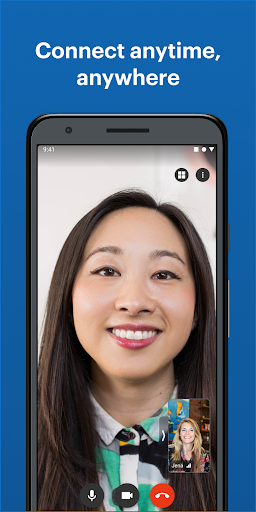
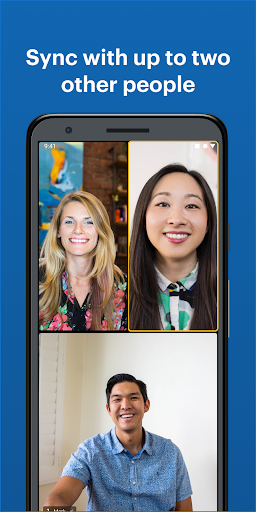
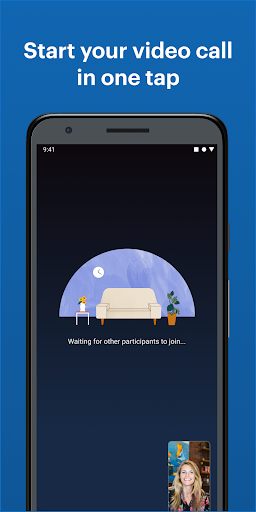
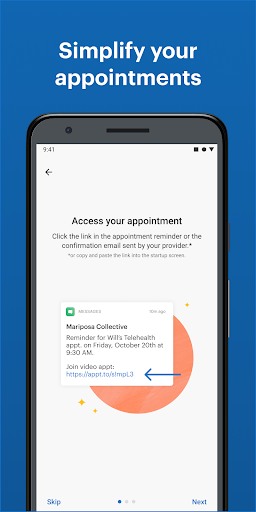
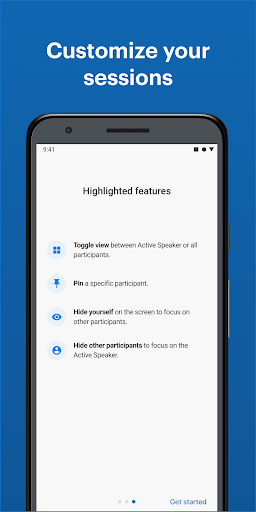
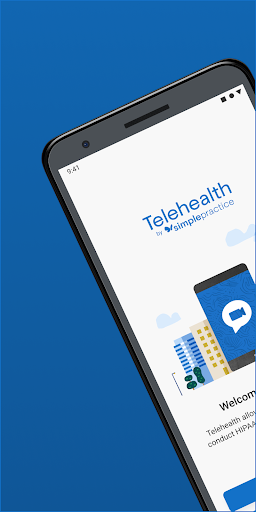
Telehealth by SimplePractice knows exactly what kind of app it wants to be, and that focus is both its biggest strength and its main limitation. After spending time with it from the perspective of a client joining remote care sessions, what stood out most was how little it tries to get in the way. This is not a broad health platform stuffed with extra menus, educational content, or account-heavy onboarding. It is a purpose-built telehealth app for getting you into a secure video appointment with as little friction as possible. That design choice pays off immediately. The first thing I appreciated was the straightforward setup. Telehealth appointments can be stressful enough on their own, especially when they involve therapy or other private care. The last thing anyone wants five minutes before a session is a maze of account creation, password resets, or unexplained prompts. Here, the process feels appropriately trimmed down. The app’s identity is clear from the start: open it, access your session, make sure your device is ready, and connect. That simplicity is genuinely valuable. It lowers the barrier for people who are not especially comfortable with tech, and it makes the app feel calmer than a lot of video-based tools that overload the screen with controls. In daily use, the interface feels clean and focused. There is a medical seriousness to it, but not in a cold or intimidating way. More importantly, the app does a good job of communicating its purpose without making every step feel clinical. The idea of attending a session from home, work, or any private place is central to the experience, and the app is at its best when it supports that kind of flexibility. On a phone, that matters even more. You are often joining under less-than-ideal circumstances, and a lean interface is a real advantage. A second major strength is the sense of privacy built into the product. The HIPAA-compliant positioning is not just a marketing line; it shapes how the app feels. You do not get the impression that you are using a generic meeting app awkwardly repurposed for care. It feels more like a dedicated clinical doorway, which matters for trust. When the purpose of the appointment is therapy or other sensitive care, users want an experience that feels contained, discreet, and intentional. Telehealth by SimplePractice does a solid job of delivering that tone. The third strength is that the app is refreshingly direct. It does not appear bloated with side features, ads, or upsell noise. Since it is free to use and does not push in-app purchases, the experience feels cleaner than many consumer apps. That may sound like a small thing, but in medical software, every unnecessary distraction stands out. Here, the lack of clutter works in the app’s favor. That said, the app’s narrow focus also creates some frustration. The biggest drawback is that Telehealth by SimplePractice is only really useful inside a specific care workflow. If your provider uses it, great—it can be a very convenient bridge into your session. If not, there is not much reason to have it on your phone. This is not the kind of telemedicine app you download to browse doctors, manage a broad healthcare life, or use as a standalone service. Its utility is highly dependent on your clinician already being in the SimplePractice ecosystem. The second weakness is that while the simplicity is usually a strength, it can also make the app feel a little bare. If you are expecting a richer patient experience with lots of self-service tools, account controls, or more robust session-management options, this may feel limited. There is a fine line between streamlined and sparse, and Telehealth by SimplePractice occasionally lands on the sparse side. That is not necessarily a flaw for its intended purpose, but it does mean the app can feel more functional than fully featured. A third frustration is contextual rather than unique to this app: telehealth depends heavily on your environment, your connection, and your device permissions. Because the app is designed around quick entry into live appointments, any snag involving camera access, microphone permissions, or unstable mobile conditions becomes especially noticeable. In a broader app, there might be more room for tutorials or alternate workflows. Here, because everything is built around fast joining, any hiccup can feel more abrupt than it should. Who is this app for? It is best for clients whose therapist, counselor, or healthcare provider already uses SimplePractice and who want a no-nonsense way to join secure video appointments from their phone. It is especially well suited to people who value ease, privacy, and low setup friction over extra bells and whistles. It is also a strong fit for users who may be anxious before appointments and benefit from an app that does not make them jump through technical hoops. Who is it not for? If you want a general healthcare app, a doctor-discovery platform, or a video service you can use independently of a provider relationship, this is not that. It is also less appealing for users who prefer feature-rich patient portals with broader health management tools baked in. Overall, Telehealth by SimplePractice succeeds because it respects the moment in which it is used. Nobody opens a telehealth app for entertainment. They open it because they need to connect, privately and reliably, with a professional. This app understands that and keeps the path relatively short. It is not expansive, and it is not trying to be everything, but for the specific job it was built to do, it feels polished, practical, and reassuringly focused. If your provider sends you into this ecosystem, there is a good chance you will appreciate how little drama the app adds to an already personal experience.
Alternative apps