
Apps Games Articles
Sydney Health
Elevance Health, Inc.
Rating 4.6star icon
Editor's summary
Editor rating
star icon star icon star icon star icon
half star icon
4.5

One-line summary Sydney Health is one of the better insurer apps we’ve used because it turns claims, ID cards, and care search into a genuinely usable mobile experience, but it still can’t fully escape the usual insurance-app limits around fragmented payments and plan-dependent features.

  • Installs

    1M+

  • Developer

    Elevance Health, Inc.

  • Category

    Medical

  • Content Rating

    Everyone

  • Latest version

    9.8.1

  • Package

    com.anthem.sydney

Screenshots
In-depth review
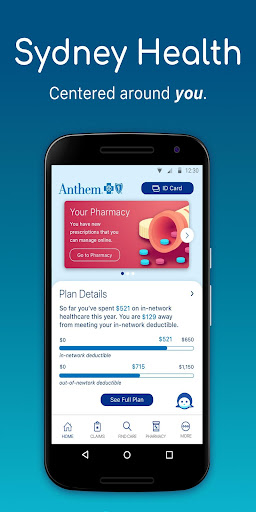
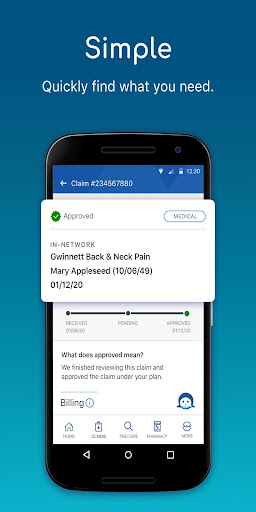
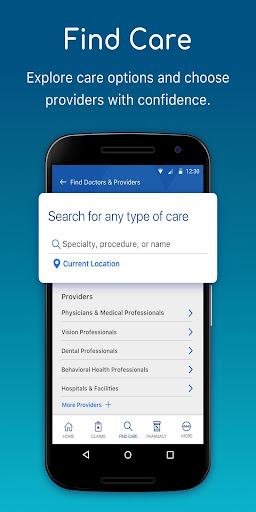
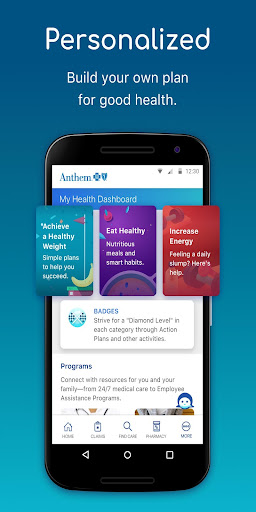
Sydney Health is the kind of app that most people download out of necessity rather than excitement. Health insurance apps usually promise convenience and then bury you in clunky menus, vague billing language, and broken navigation. After spending real time with Sydney Health, what stands out is that it avoids a surprising amount of that pain. It does not magically make health insurance fun, but it does make a tedious category noticeably easier to live with. The first thing we noticed is that the app is built around the tasks people actually need most often. Pull up your ID card, check what a visit might cost, look at a claim, find a doctor, and get help when something is confusing. That sounds obvious, but many insurer apps still feel like stripped-down portals where the important tools are hidden under corporate labels. Sydney Health feels more intentional. The interface is clean, the layout is readable, and the app generally does a good job of surfacing the things you are likely to need in a hurry. The digital ID card is one of the best examples of the app’s practical value. In daily life, this is the feature that justifies having the app installed. Being able to pull up a current card without digging through email or carrying a paper copy is simple, but genuinely useful, especially during appointments or when sharing information with a provider. It behaves like a real utility, not a box-checking feature. That same sense of usefulness carries over to claims and plan details. Sydney Health gives you a centralized place to look at costs, deductibles, copays, and claim status, and it generally presents that information in a way that is easier to digest than a typical insurance website. That is the app’s first major strength: it organizes confusing insurance information into something that feels approachable. Insurance terminology is still insurance terminology, and the app cannot fully rescue that, but it at least makes the hunt for answers less aggravating. The second strength is navigation. We found Sydney Health easier to move through than many apps in this category. Menus are labeled in a plain-English way, and the most common actions are not buried too deeply. Even when a feature is tucked away a bit, the app still feels coherent rather than chaotic. There is a visible effort to make the experience accessible to normal people, not just those already fluent in health-plan jargon. The third strength is support access. The built-in chat, available around the clock, gives the app a sense of responsiveness that matters when you are trying to sort out coverage or locate the right information quickly. In our use, that support-first design helps offset one of the biggest frustrations of dealing with insurance: not knowing where to start. Sydney Health does a respectable job of making assistance feel close at hand instead of hidden behind a phone tree. It also helps that the app tries to be more than a static insurance dashboard. Care search, virtual care access, and prescription refill support all push it toward being an actual health-management hub rather than just a claims viewer. For members whose plans support those features, that breadth makes the app more worth returning to. Instead of opening it only when something goes wrong, you can use it as part of routine care logistics. That said, Sydney Health is still an insurer app, and some of its weaknesses come with that territory. The biggest limitation is that not every feature will matter equally to every member. The app itself makes clear that options vary by plan, and that can create a slightly uneven experience. You may see a polished set of tools on paper, but depending on your coverage, some parts may feel more useful than others. As a result, the app can sometimes feel like it promises a full health hub while delivering a more modest toolkit for certain users. Another weakness is that it does not fully solve the fragmented nature of healthcare payments and billing. Sydney Health is strong on viewing claims and understanding costs, but that is not the same thing as completing every related task in one place. If you are hoping for a single mobile command center where insurance, providers, and payments all connect seamlessly, this app does not quite get there. Some financial follow-through still depends on outside systems, which breaks the flow. The third complaint is more subtle: while the design is cleaner than average, there are still moments where health-plan complexity leaks through the interface. You can tell the app is working hard to simplify a deeply messy backend. Most of the time it succeeds, but not always. Certain sections still require patience, and users who expect a consumer-tech level of elegance may occasionally run into the familiar stiffness of enterprise healthcare software. Who is Sydney Health for? It is best for Anthem, Wellpoint, and related plan members who want a reliable mobile home for the basics: ID cards, claims, coverage details, care search, and quick support. If you routinely need to check benefits, track costs, or locate in-network care, this app earns a place on your phone. It is also a good fit for anyone who prefers solving small insurance questions through chat rather than by calling customer service. Who is it not for? If your expectation is a fully unified healthcare super-app that handles every payment, every provider interaction, and every wellness function with perfect consistency, Sydney Health may feel limited. It is also less compelling for people who rarely interact with their insurance beyond an occasional annual check. Overall, Sydney Health is a strong example of a category that usually underdelivers. It is useful, clear, and thoughtfully focused on the jobs that matter most. It does not eliminate the complexity of the healthcare system, but it reduces the friction of dealing with it. That may sound like faint praise, but in the world of insurance apps, it is actually a meaningful achievement.