
Apps Games Articles
Piano Music Go-EDM Piano Games
Joy Journey Music Games
Rating 4.3star icon
Editor's summary
Editor rating
star icon star icon star icon star icon
half star icon
4.5

One-line summary Piano Music Go is easy to recommend because it delivers fast, satisfying rhythm play without burying every run under aggressive friction, but the ad presence, uneven song selection, and occasional rough edges keep it from feeling truly premium.

  • Installs

    50M+

  • Developer

    Joy Journey Music Games

  • Category

    Music

  • Content Rating

    Everyone

  • Latest version

    2.28

  • Package

    com.joyjourney.PianoWhiteGo

Screenshots

In-depth review
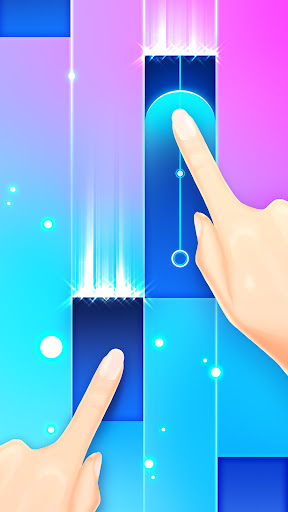
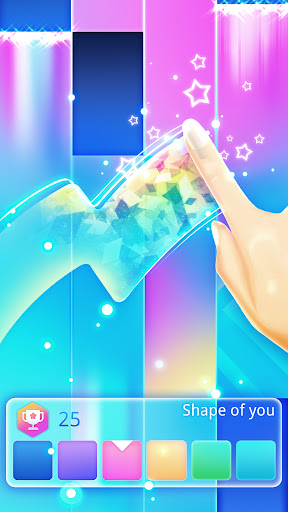
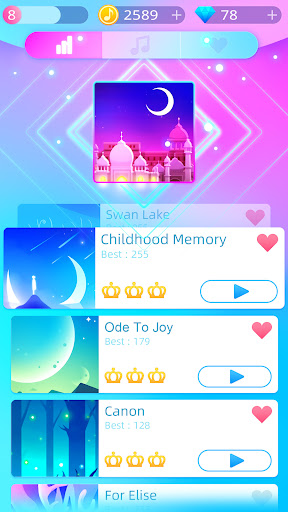
After spending time with Piano Music Go-EDM Piano Games, the first thing that stood out to me was how quickly it gets to the point. This is not a music app that hides its fun behind bloated menus, tutorials, or too many currencies before you can actually play. You open it, pick a song, and start tapping. That immediacy matters for a rhythm game, and Piano Music Go understands it better than many free mobile titles in the same category. At its core, this is a familiar black-tile rhythm game: tap in time, avoid mistakes, and survive as the speed ramps up. That formula is old, but it still works when the timing feels clean, the visual feedback is readable, and the app resists the temptation to overcomplicate itself. In day-to-day use, Piano Music Go feels smooth and surprisingly focused. It is easy to understand within seconds, but it still has enough challenge to keep you in the “one more run” loop, especially once songs accelerate and your fingers have to react on instinct instead of intention. The strongest part of the experience is simply the flow. The app gives you a satisfying sense of momentum, particularly in endless-style play where songs begin manageable and then gradually become frantic. There is a nice rhythm-game pleasure in feeling your hands lock in with the notes, and Piano Music Go captures that very well. It does not feel like a fake piano simulator so much as a reflex game dressed in musical language, and that is perfectly fine. It knows what it wants to be: a quick, accessible music game that feels good in short sessions and still holds up if you play for longer stretches. Its second major strength is accessibility. I found it welcoming to casual players because the rules are simple and the presentation is clean. You do not need music training, and you do not need to memorize complicated mechanics. The challenge comes from speed and consistency, not from obscure systems. The option to play offline is also a real advantage. For a game built around short bursts of concentration, being able to jump in without needing a connection makes it much more useful as a commute game, a waiting-room game, or something to burn five minutes without commitment. The third thing Piano Music Go gets right is customization and progression. Being able to change tile colors sounds minor, but it helps the app feel less generic than many clones in this space. Unlocking songs through play also gives a basic but effective sense of reward. You are not just replaying the same chart forever; there is a reason to keep going, earn currency, and open up more tracks. That progression is not especially deep, but it fits the game’s lightweight design. That said, the app is not flawless, and its biggest weakness is one that comes with a lot of free mobile games: ads. In my time with it, Piano Music Go did not feel as relentlessly ad-driven as some of the worst offenders in the genre, and that already puts it ahead of a lot of competition. Still, the ad layer is noticeable enough that it breaks the rhythm of play. In a game built on concentration and tempo, interruptions feel more annoying than they might in a slower puzzle game. Even when ads are partially avoidable or reward-based, they remain part of the texture of the experience. The second weakness is the music library itself. There is a decent range here, and the app does a fair job mixing recognizable classics with more contemporary flavor, but the catalog can feel uneven depending on your taste. If you come in expecting a deep, meticulously curated songbook or a true piano-learning experience, this is not that app. Some tracks are catchy, some are merely functional, and some players will hit the point where they want more variety or an easier way to find specific songs. The game is at its best when the soundtrack clicks with your preferences; when it does not, the tapping remains competent but less compelling. The third weakness is polish around the edges. The app generally runs well and feels responsive, but it does not always give the sense of a refined premium product. Some sounds and note feedback can feel a little thin, and there are moments where the presentation reminds you that this is a mass-market free game rather than a carefully authored music experience. I also would have liked a few more quality-of-life touches, especially around song browsing and session control. None of this ruins the app, but it does set a ceiling on how elegant the overall package feels. Who is this for? It is for players who want a straightforward rhythm game, like short sessions, enjoy the piano-tiles style of play, and can tolerate some free-to-play friction in exchange for solid moment-to-moment fun. It is especially good for casual players who want something relaxing at first and then surprisingly intense once the speed climbs. Who is it not for? It is not for anyone looking for a serious piano tutor, a music game with deep expressive mechanics, or a polished premium experience with zero interruptions. If your patience for ads is near zero, or if you want a huge searchable library tailored to your exact taste, this will probably wear thin faster. Overall, Piano Music Go succeeds because it nails the most important thing: tapping along to music feels good here. That sounds simple, but it is the difference between a rhythm game you delete after ten minutes and one you keep installed for months. It does not reinvent the genre, and it carries the usual free-game compromises, but the core loop is strong enough that I kept coming back. For a free mobile music game, that is a strong endorsement.