
Apps Games Articles
Piano Fire: Edm Music & Piano
Adaric Music
Rating 4.4star icon
Editor's summary
Editor rating
star icon star icon star icon star icon
half star icon
4.5

One-line summary Piano Fire is one of the better mobile rhythm games because it feels immediately fun and surprisingly replayable, but its occasional input hiccups, uneven song handling, and ad-driven progression keep it from being an easy perfect score.

  • Installs

    100M+

  • Developer

    Adaric Music

  • Category

    Music

  • Content Rating

    Everyone

  • Latest version

    1.0.107

  • Package

    beatmaker.edm.musicgames.PianoGames

In-depth review
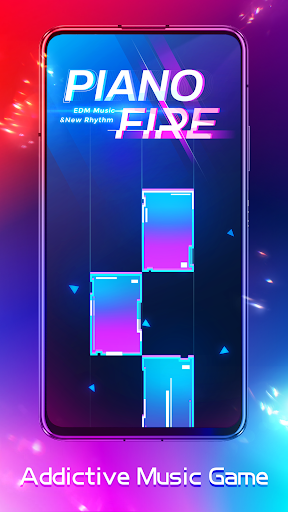
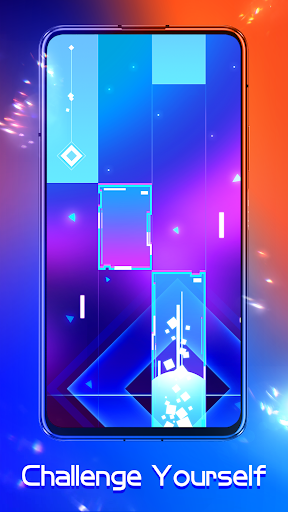
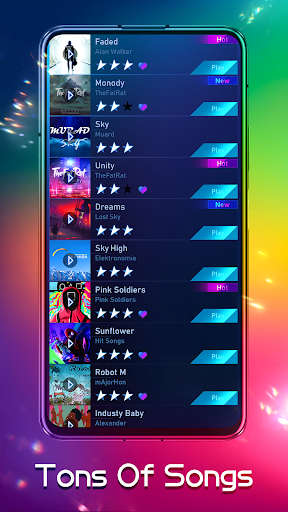
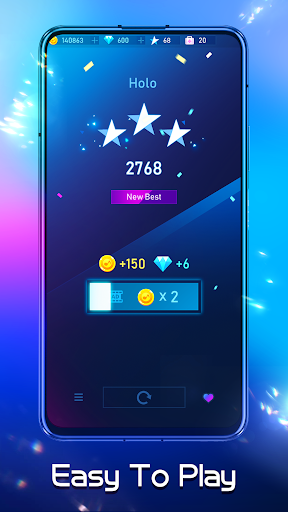
After spending time with Piano Fire: Edm Music & Piano, the easiest way to describe it is this: it understands the simple thrill that makes tile-based rhythm games hard to put down. You tap falling notes, chase a combo, aim for stars, and tell yourself “one more song” far more often than you planned to. That core loop is not new, but Piano Fire executes it with enough confidence that it still feels fresh for longer than expected. What stood out first in actual play was the pacing. The game is quick to get into, songs start fast, and there is very little learning curve if you have ever touched a piano tiles-style game before. The taps feel intuitive, and the game does a good job of creating that escalating sense of tension where a track begins comfortably and then suddenly demands much sharper timing. That ramp-up is one of Piano Fire’s biggest strengths. It works as a casual time-killer when you want something light, but it also has enough bite that skilled players can chase cleaner runs and higher ratings instead of sleepwalking through every track. The second big strength is variety in challenge. Some music games on mobile flatten everything into the same speed and note pattern, which makes them blur together after a few sessions. Piano Fire does better. Easy tracks are accessible, while harder and expert-style charts can actually push your reactions. That makes the game useful for two different moods: relaxing with familiar songs or locking in and trying to perfect a harder chart. It is one of those rare free rhythm games that can entertain both someone killing five minutes and someone who genuinely wants a score-chasing routine. A third thing the app gets right is the overall presentation. The visual style is colorful without becoming too messy, the backgrounds and tile effects give it energy, and the whole thing feels designed to be satisfying rather than merely functional. The soundtrack selection also helps. You get a mix that aims for recognizable, catchy material, and that matters because rhythm games live or die on whether the songs make you want to replay them. Piano Fire generally succeeds there. Even when the chart design is simple, a good track can keep the run enjoyable. The offline-friendly structure is also genuinely convenient. Once songs are available on your device, the app becomes much easier to treat as a dependable travel or downtime game. That gives it more staying power than titles that feel permanently tethered to a connection or constant pop-ups. In everyday use, that convenience makes a noticeable difference. Still, Piano Fire is not polished enough to avoid frustration. The biggest issue during play is that note registration can feel inconsistent at times. Every rhythm game depends on trust between player and input, and when you are sure you tapped correctly but the game drops the note anyway, it breaks the flow immediately. It does not happen constantly, but it happens often enough to be memorable, especially on stronger runs when a missed input feels expensive. A music game can survive a lot of things; shaky hit detection is much harder to ignore. Another weakness is the way progression and rewards sometimes lean too hard on coins, unlocks, and optional ads. To the app’s credit, the ad load is not as oppressive as many free mobile games, and in some sessions it stays fairly restrained. But the economy still shapes how you move through the catalog, and there are moments when it feels like you are being nudged toward watching something to speed things up or recover momentum. It is not a deal-breaker, just a reminder that this is very much a free-to-play product rather than a clean premium rhythm game experience. The song library is also a mixed bag in practice. There is enough to enjoy, but curation can feel uneven. Some tracks are great picks, some players will wish for more range outside the obvious pop-heavy lane, and song availability can feel inconsistent if you are attached to specific favorites. The import-your-own-music idea is appealing on paper, but custom song handling in games like this is only as good as the beat mapping, and that is an area where expectations should stay modest. If you want handcrafted precision for every imported track, this probably will not fully satisfy you. There are also a few smaller quality-of-life annoyances that keep surfacing over longer use. Certain songs feel shorter than you want them to be, which can make a run end just as it becomes interesting. The timing line and hit feedback could feel more customizable or forgiving in presentation. And while the interface is mostly straightforward, there are moments when it prioritizes flashy momentum over fine control. So who is Piano Fire for? It is a very good fit for casual mobile players, fans of rhythm and piano-tile games, younger players, and anyone who wants a music game that can swing between relaxing and mildly intense without demanding a lot of setup. It is also a strong option for people who like replaying tracks for three-star clears and enjoy a steady stream of songs and events. Who is it not for? If you are highly sensitive to input inconsistency, want a purist rhythm-game experience with impeccable chart precision, or dislike any kind of ad-linked reward loop, this will probably wear on you over time. It is also not the best choice for someone looking for deep music-game systems or highly customizable controls. Even with those caveats, Piano Fire remains easy to recommend. It captures the addictive side of the genre, looks lively, offers a satisfying range of difficulty, and stays enjoyable in short bursts or longer sessions. It is not the most refined rhythm game on Android, but it is one of the more approachable and consistently fun ones. For a free download, that is a strong result.