
Apps Games Articles
Jelly Dye
Good Job Games
Rating 4.3star icon
Editor's summary
Editor rating
star icon star icon star icon
half star icon
empty star icon
3.9

One-line summary Jelly Dye is easy to recommend if you want a quick, genuinely soothing ASMR time-killer, but it’s much harder to endorse wholeheartedly because ads, repetition, and limited depth set in fast.

  • Installs

    50M+

  • Developer

    Good Job Games

  • Category

    Simulation

  • Content Rating

    Everyone

  • Latest version

    1.82

  • Package

    com.game.colorslime

Screenshots
In-depth review
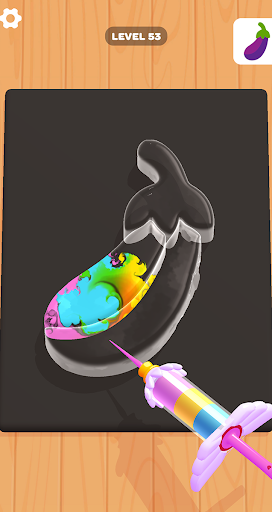
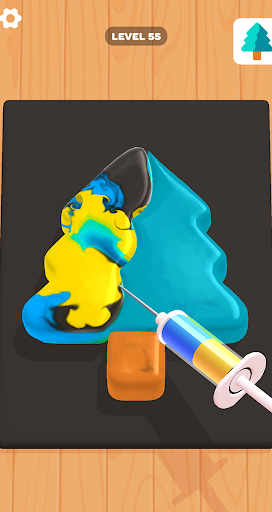
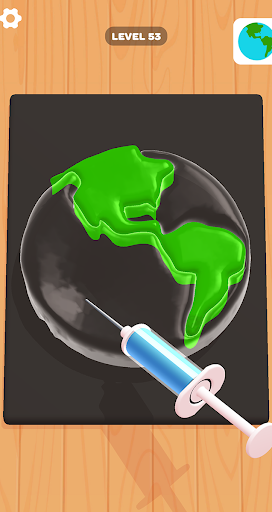
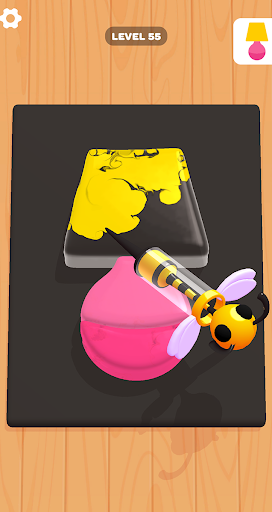
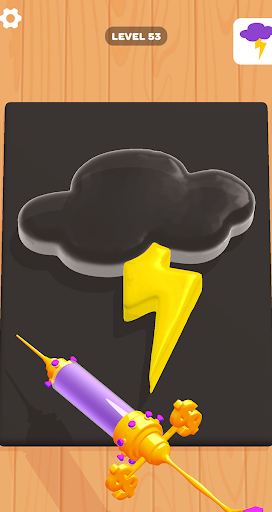
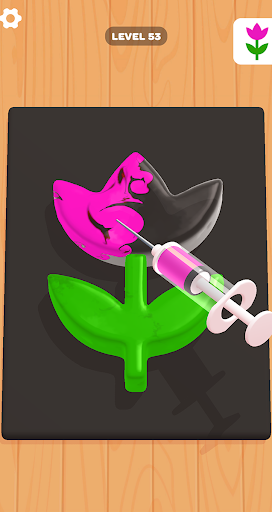
Jelly Dye knows exactly what kind of mobile game it wants to be: a low-pressure, sensory little distraction built around color, squishiness, and just enough interaction to keep your hands busy while your brain powers down. After spending time with it, that pitch mostly works. This is the kind of app you open when you have a few spare minutes, want something visually satisfying, and do not feel like dealing with timers, complicated menus, or competitive mechanics. It is simple almost to a fault, but that simplicity is also the source of its appeal. The basic loop is immediately understandable. Each level presents a jelly model and asks you to inject dye into it so the final result matches the target pattern shown on screen. You select colors, line up the syringe, and tap to fill sections of the jelly. The dye spreads through the translucent surface in a soft, pleasing way, and the wobble of the object sells the whole toy-like illusion. The first thing that stood out in my hands-on time was how effective the visual feedback is. The jellies shimmer, flex, and absorb color in a way that feels tactile even though the interaction itself is very light. For an ASMR-style mobile game, that matters more than complexity, and Jelly Dye gets that part right. The second strength is accessibility. You can hand this to almost anyone and they will understand it in seconds. There is very little friction between installing the app and actually playing it. Controls are limited to basic taps and aiming gestures, and the game does not punish mistakes harshly. That makes it especially good for younger players, for people who want something relaxing rather than demanding, and for anyone who likes “oddly satisfying” apps more than traditional games. I also found it to be a decent focus companion: the repetitive motion and predictable visual payoff make it easy to play while listening to music, a podcast, or just zoning out after a long day. Its third major win is the tone. Jelly Dye is not trying to overwhelm you. There is no sense of urgency, and that calm pace is a big part of why it works. A lot of mobile games claim to be relaxing while constantly interrupting the experience with cluttered UI, progression pressure, or overdesigned effects. Jelly Dye, at its best, is cleaner than that. When you are in a level and simply matching colors, the app can be genuinely soothing. That said, the gap between the best moments and the overall package is fairly noticeable. The biggest issue in day-to-day use is ad pressure. Even when a game is free, there is a limit to how often it can break your rhythm before the relaxation starts to evaporate. Jelly Dye crosses that line more often than it should. The actual coloring is the part you came for, but sessions can end up feeling chopped into short bursts by frequent interruptions. In a game built around calm and sensory immersion, that is especially damaging. If you are very tolerant of ads, you may brush this off. If not, this will probably be the number one reason you stop playing. The second problem is repetition. While the core mechanic is satisfying, it is also narrow. The act of selecting color and injecting jelly does not evolve much, and after a while the levels blur together. There are different shapes and patterns, but the sense of novelty fades sooner than I would like. During my time with the game, I kept waiting for the design to introduce more meaningful twists, alternate tools, or some deeper layer of strategy. Instead, Jelly Dye stays very close to its initial idea. That consistency can be comforting, but it also means the game starts to feel shallow once the novelty wears off. The third weakness is that content can feel limited relative to how fast you can move through it. This is not the sort of app that demands long, thoughtful play on each level. Once you understand how dye spreads and where to aim, progress comes quickly. That is good for pick-up-and-play convenience, but not so good for longevity. There are moments where you can sense the app running on variations of the same puzzle rather than introducing something fresh. I also noticed the occasional rough edge in presentation, with some visuals and level design lacking the polish needed to keep the experience feeling premium over time. Who is Jelly Dye for? It is for players who want a casual sensory game, kids and teens looking for something easy to grasp, adults who use simple mobile games to unwind, and anyone who likes satisfying animations more than challenge. It is also a decent fit for short play sessions because you can complete a level quickly and put it down without losing momentum. Who is it not for? If you dislike ads, want deeper mechanics, or expect a long-form progression system that steadily opens up new ideas, this is probably not the app for you. It is also a weak match for players who want precise creative freedom rather than guided coloring objectives. Jelly Dye gives you a task to complete, not a big sandbox to experiment in. Overall, Jelly Dye is a pleasant, tactile little distraction with a strong core feel. When it lets you simply play, it delivers on its promise of colorful, jelly-like relaxation. But it also feels like a game that reaches its ceiling early. The visuals are satisfying, the controls are easy, and the mood is calming; the downside is that the ads are too intrusive, the variety is modest, and the whole package starts to repeat itself sooner than its best levels suggest. I enjoyed dipping into it, especially in short sessions, but I would recommend it with a clear condition: come for a light ASMR pastime, not for a deep or enduring mobile game.
Alternative apps