Apps Games Articles
Music Piano 7: Rush Song Games
Melodya Muses
Rating 4.7star icon
Editor's summary
Editor rating
star icon star icon star icon star icon empty star icon
4.2

One-line summary Music Piano 7 is easy to recommend if you want a huge, trend-savvy song library in a simple tap-to-the-beat game, but the constant ads and occasional scoring/input weirdness keep it from feeling truly premium.

  • Installs

    50M+

  • Developer

    Melodya Muses

  • Category

    Music

  • Content Rating

    Everyone

  • Latest version

    3.7.3

  • Package

    com.bunbunstudio.magicblocktiles

Screenshots
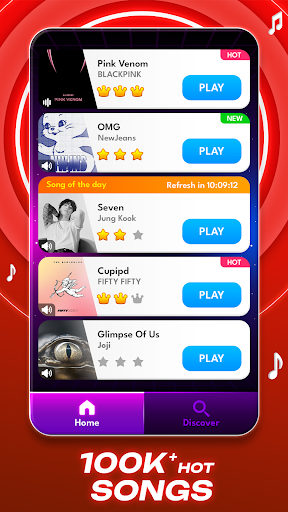
In-depth review
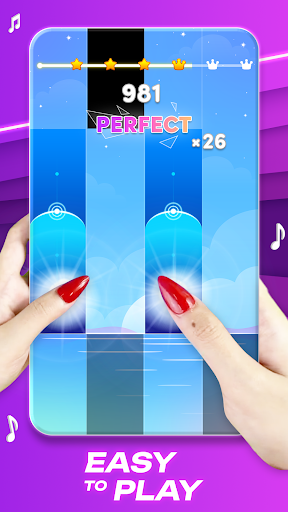
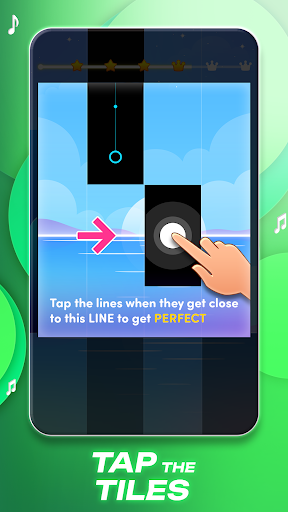
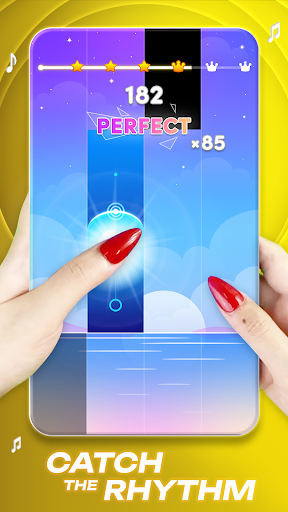
Music Piano 7: Rush Song Games knows exactly what kind of rhythm game it wants to be. It is not trying to simulate real piano technique, and it is not built like a hardcore note-charting game for purists. Instead, it goes after instant gratification: recognizable songs, fast taps, escalating speed, and that familiar “one more round” loop that makes these tile games so easy to lose time to. After spending time with it, I came away thinking it succeeds at that goal more often than not. The first thing that stands out is song selection. This app leans hard into what is currently popular rather than just recycling the same small bundle of generic piano covers. In practice, that makes a big difference. Browsing the library feels more current than many games in this category, and the range is broad enough that it does not feel locked to a single audience. You can jump between pop, K-pop, EDM, phonk, anime-adjacent picks, and other viral tracks without the catalog feeling completely random. That variety gives the app real personality. It also helps the game avoid the biggest problem with many budget rhythm titles: boredom setting in after ten minutes because every song sounds interchangeable. Once you are actually playing, Music Piano 7 is immediately approachable. The core interaction is what you expect: tap the tiles in time, hold longer notes when needed, keep the streak alive, and survive when the tempo starts to ramp up. That simplicity is a strength. I never felt like the game needed a long tutorial, and it is easy to hand to someone who has never played a piano tiles game before. At lower difficulties, it is relaxed enough to play casually while half-distracted. At higher speeds, it starts demanding much sharper reflexes and better pattern recognition. I particularly liked that progression. Beating a track and then stepping up to a harder version gives the game a useful sense of structure beyond just replaying the same song forever. The app also deserves credit for momentum. Sessions move quickly, load times do not feel intrusive, and the game does a solid job of feeding you the next thing to try. Even when I was not chasing perfection, I kept opening “just one more” track because the experience is built around short, satisfying bursts. For commuters, younger players, or anyone who wants a quick rhythm fix rather than a long-form music game, that is exactly the right design. That said, the biggest weakness is impossible to ignore: ads. Music Piano 7 is very much a free-to-play app that wants you to feel that fact at all times. Ads show up often enough that they break the natural rhythm of the game, which is especially frustrating in a genre where flow matters. Finishing a song, trying a new selection, or recovering from mistakes can all turn into another interruption. I could tolerate it in short sessions, but over longer play it becomes the main thing holding the app back. The game underneath is fun; the ad pressure keeps reminding you that you are borrowing that fun rather than fully settling into it. My second complaint is that scoring and note judgment do not always feel as crisp as they should. There were moments where I tapped what looked like cleanly timed notes and still did not fully trust the feedback. That uncertainty matters in a rhythm game, because the entire appeal depends on the game feeling fair and readable. Music Piano 7 is not broken, and most songs played smoothly enough, but it does not consistently deliver the precision I would want from a top-tier rhythm title. Closely tied to that, I noticed occasional rough edges in responsiveness and flow, including moments where the experience felt less polished than the best games in the category. The third weak point is content stability and feature depth. The large song library is a genuine asset, but the overall package can feel a little lightweight once you start wanting more control over your progress. This is the kind of game that makes you wish for stronger account support, more persistent progression, and more substantial competitive options. The app hints at social and challenge-oriented appeal, but in everyday use it still feels more like a solo time-killer than a fully developed music platform. Also, if you get attached to specific tracks or higher-difficulty content, the library can feel less fixed than ideal. Still, there is a lot to like here. Strength number one is the song catalog: broad, current, and much more interesting than many rivals. Strength number two is accessibility: anyone can understand the game in seconds, but there is enough speed and difficulty scaling to keep skilled players entertained. Strength number three is pure pick-up-and-play energy: this is a very easy app to return to throughout the day. On the downside, weakness number one is the heavy ad load. Weakness number two is occasional inconsistency in scoring and touch feel. Weakness number three is that the game can leave more invested players wanting better progression tools and a more stable, feature-rich structure. So who is Music Piano 7 for? It is for players who want a casual rhythm game with lots of trendy songs, quick sessions, and low friction. It is especially good for younger players, mobile gamers who like reflex-based challenges, and anyone who wants a music game that feels current rather than nostalgic. It is not for rhythm-game purists who demand highly reliable judgment timing, nor for players who have no patience for frequent ads. It is also not the best fit if you want a deep, account-based ecosystem with robust long-term progression. In the end, Music Piano 7 is one of those mobile games that is genuinely fun despite the baggage attached to it. I kept coming back because the core loop works and the music selection gives it an edge. If the ad experience were toned down and the input feedback felt a little more dependable, this would be an easy top-tier recommendation. As it stands, it is still a very good casual rhythm game, just one that asks for a bit too much patience in exchange for its best moments.