
Apps Games Articles
Beat Slash: Blade & Saber Song
LinhVan Game
Rating 4.2star icon
Editor's summary
Editor rating
star icon star icon star icon star icon empty star icon
4.1

One-line summary Beat Slash: Blade & Saber Song is easy to recommend if you want a fast, low-friction rhythm game with instant arcade appeal, but it’s harder to love if you need deep variety and a consistently polished long-session experience.

  • Installs

    10M+

  • Developer

    LinhVan Game

  • Category

    Music

  • Content Rating

    Everyone

  • Latest version

    2.0.2

  • Package

    com.music.blade.beat.force

In-depth review
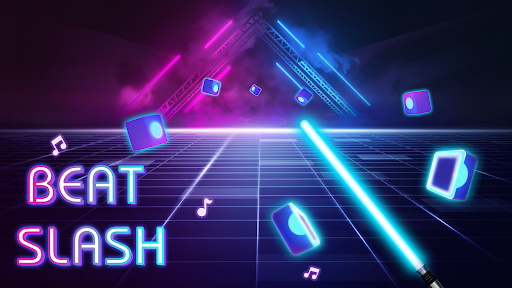
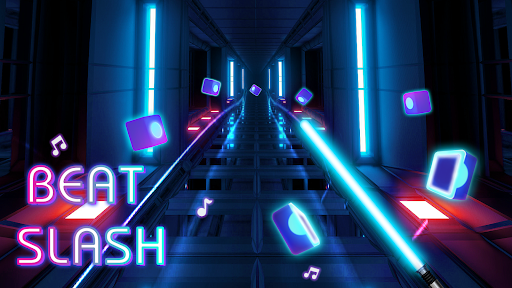
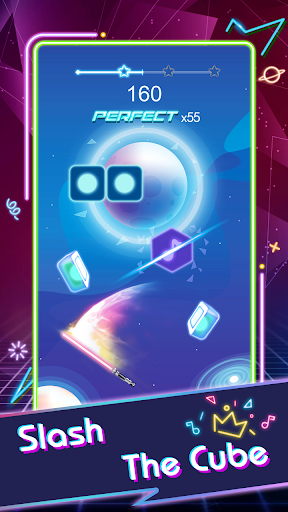
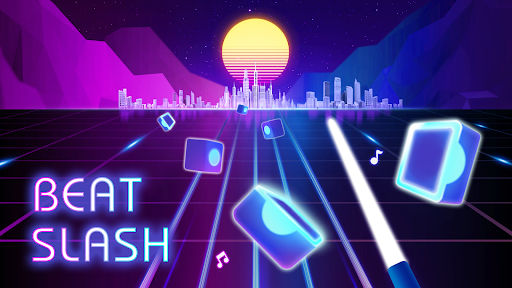
Beat Slash: Blade & Saber Song is one of those mobile games that tells you almost everything you need to know within the first few minutes. You launch it, drop into a song, start slicing through incoming beats, and immediately understand the appeal: this is a rhythm-action game built around quick sensory satisfaction. It aims for that sweet spot where music, motion, and reflexes click together just enough to make you say, “one more track,” and in my time with it, it often succeeded. What works best here is the basic feel of play. The core loop is simple and accessible in the right way. You don’t need a long tutorial or a lot of patience to get going. The game is readable, responsive enough to stay enjoyable, and structured around that familiar mobile rhythm-game pattern of short runs and quick restarts. That makes it easy to pick up for five minutes at a time, but it also has enough flow to keep you playing longer than you intended. When the timing lines up and you get into a groove, Beat Slash delivers a satisfying sense of momentum. It is not trying to be an intimidating music sim; it is trying to be immediately fun, and that is a smart fit for phones. A second strength is how approachable the whole package feels. Some rhythm games on mobile are excellent but demand commitment before they become enjoyable. This one leans much more casual-friendly. Even if you are not especially good at rhythm games, the visual logic of slicing targets in time to music makes instant sense. It lowers the barrier to entry, which is probably a big part of why it has reached such a broad audience. I found it easy to hand over to someone else for a minute and have them understand the premise without explanation. That kind of design clarity matters more than people think. The third thing the game gets right is its raw energy. Beat Slash is built around motion, impact, and musical pacing, and when those elements are aligned, it feels lively rather than fussy. There is a nice arcade directness to it. You are not spending most of your time buried in complicated systems; you are getting into songs and reacting. For players who want something active and lightly immersive without a lot of setup, that’s a real advantage. That said, the game also shows the limits of this design pretty quickly. My biggest hesitation is long-term depth. In short sessions, the formula feels punchy. Over longer stretches, it can start to feel samey. The central mechanic is entertaining, but the app leans heavily on that one core sensation, and if you are the kind of player who wants rhythm games to keep evolving with new layers of complexity, Beat Slash may begin to plateau. I enjoyed dipping in and out of it more than I enjoyed treating it like a game to master for weeks. Another issue is polish consistency. The game is generally smooth enough to be fun, but it does not always feel premium. There are moments where the presentation and overall flow come across as more functional than refined. In a game like this, where music and reaction are everything, even small rough edges stand out more than they would in a slower genre. Nothing here completely broke the experience for me, but there were enough reminders that this is a free mobile title first and a meticulously tuned rhythm experience second. The third drawback is that the game can become a bit one-note in mood and engagement. The initial hook is strong because slicing to music is inherently satisfying, but maintaining that excitement depends on how much you personally enjoy the audiovisual loop. If that loop clicks for you, Beat Slash can be a reliable go-to distraction. If it doesn’t, the game doesn’t have a lot of extra texture to fall back on. I found myself enjoying it most in bursts, especially when I wanted something kinetic and uncomplicated, but less when I wanted a rhythm game with more personality or strategic variation. Who is this for? It is for casual players, mobile rhythm fans who prefer accessibility over complexity, and anyone looking for a free game that feels active and immediately rewarding. It is especially good for people who like the fantasy of slicing through music without needing console-level commitment or skill. It is not ideal for players who want a highly nuanced rhythm system, a deeply varied progression curve, or a consistently polished, premium-feeling experience over long sessions. Overall, I came away liking Beat Slash more than I expected. It knows its lane and mostly stays in it. The app is fun in the most direct mobile-gaming sense of the word: quick to understand, satisfying in short bursts, and easy to return to. Its shortcomings are real, especially once the novelty wears off, but they do not erase the core appeal. If you approach it as an energetic, accessible rhythm-action time-killer rather than a genre-defining music game, there is a lot to enjoy here. It is not the deepest or most elegant entry in this space, but it is a solid, entertaining one that earns its place on a phone better than many free rhythm games do.