
Apps Games Articles
Beat Blade: Dash Dance
BattleCry HQ Studio
Rating 4.3star icon
Editor's summary
Editor rating
star icon star icon star icon star icon
half star icon
4.5

One-line summary Beat Blade: Dash Dance is one of the rare ad-supported mobile rhythm games that actually feels slick and satisfying to play, though its frequent interruptions and a few quality-of-life gaps keep it from true must-install status.

  • Installs

    10M+

  • Developer

    BattleCry HQ Studio

  • Category

    Music

  • Content Rating

    Teen

  • Latest version

    3.6.0

  • Package

    com.dropthebeat.beatblade

In-depth review
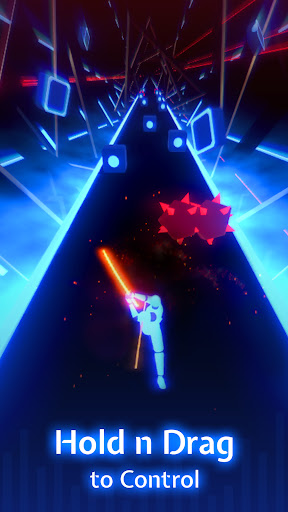
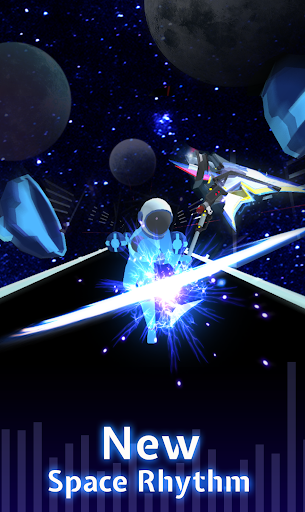
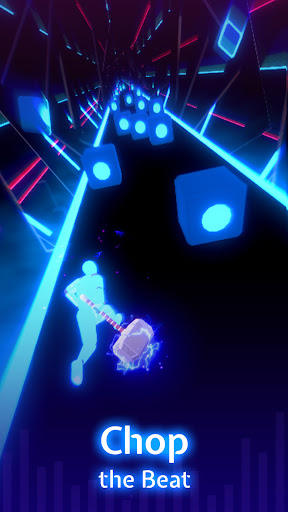
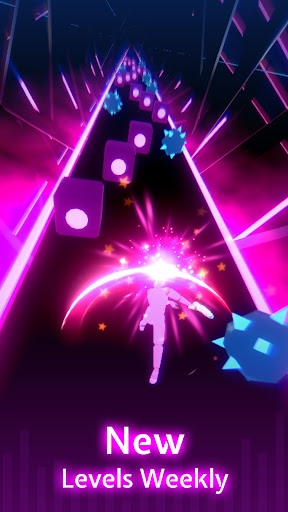
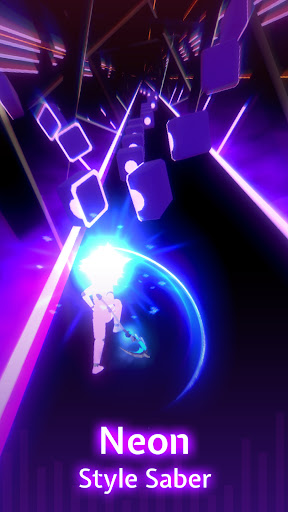
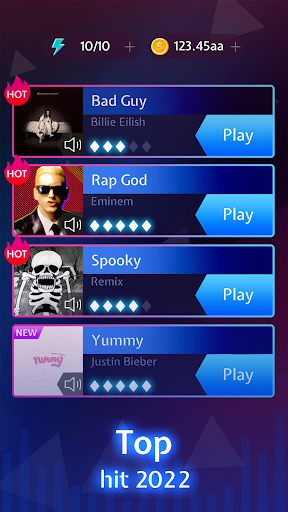
Beat Blade: Dash Dance is the kind of mobile game that is easy to dismiss at a glance. The neon visuals, the music-driven runner setup, and the whole sword-slashing concept can make it look like just another flashy arcade clone built to farm ad views. After spending real time with it, though, I came away more impressed than cynical. This is a genuinely entertaining rhythm runner that understands the most important thing in the genre: if movement and timing do not feel good, nothing else matters. Here, they mostly do. The basic loop is simple. You pick a track, hold and drag your character left or right, and slice through beat blocks while avoiding hazards on a glowing lane. It is an extremely approachable control scheme, and that is one of the app’s biggest strengths. You do not need a tutorial marathon or a calibration headache just to start having fun. Within minutes, the game clicks. That one-thumb control makes it ideal for short sessions while commuting, waiting in line, or killing ten spare minutes. At the same time, it is not so passive that it plays itself. Once the note patterns get busier and traps start appearing more aggressively, you have to stay locked in. What surprised me most during use was how smooth and readable the gameplay feels. Beat Blade does a good job of turning songs into movement patterns that are easy to understand at speed. When a level is working, there is a strong sense of flow: your thumb glides, blocks crack on beat, and the neon effects create just enough spectacle without completely obscuring the lane. Mobile rhythm games often struggle with either cluttered visuals or mushy input response. This one avoids both more often than not. It feels responsive, and that goes a long way toward making the game hard to put down. The second major strength is the music library itself. A rhythm game lives or dies by whether you want to keep browsing the song list, and Beat Blade gives you a decent reason to do that. The selection feels broad rather than stuck in one narrow lane, with enough recognizable pop, dance, hip-hop, K-pop, and novelty picks to keep the app from becoming monotonous. More importantly, the game does not make the catalog feel completely out of reach. In regular play, it feels possible to keep opening up more songs without immediately running into a hard paywall, which gives the whole experience a more generous tone than many free mobile games in this category. The presentation also deserves credit. The neon-space aesthetic is hardly original, but it is polished enough to work. Colors pop, the slashing effects are satisfying, and the game has that arcade glow that makes even short sessions feel eventful. It is easy to understand why this app gets compared to larger rhythm-action experiences, because it does capture a bit of that power fantasy in a simpler mobile form. Still, Beat Blade is not above the usual mobile free-to-play frustrations. The biggest weakness is ads. Whether you find them tolerable or annoying will depend on your patience level, but in extended play they absolutely become part of the experience. They are not always overwhelming, yet they appear often enough between runs and unlock paths that they break the momentum. In a rhythm game, flow matters, and anything that repeatedly interrupts that flow feels more intrusive than it might in a turn-based or puzzle app. The second issue is that the game could use more refinement in its menu and run-management quality of life. During play, I often wanted quicker ways to restart a song after a mistake, especially when chasing a cleaner run early in a track. Likewise, navigating songs and difficulties can feel less elegant than it should. The core game is streamlined; the surrounding interface is less so. It works, but it does not always respect the player’s time as well as the best pick-up-and-play mobile games do. Third, while the core mechanics are strong, the formula can become a bit narrow over longer sessions. Beat Blade is excellent in bursts, but after an hour or more, the repetition starts to show. You are still dragging on a lane, dodging, and slicing in variations of the same visual language. The song variety helps, but the gameplay structure does not evolve dramatically enough to completely shake off that sameness. I also noticed that the visual intensity and constant motion can be a little battery-hungry and occasionally less comfortable on lower-energy phone sessions. Who is this for? It is for players who want a stylish, low-friction rhythm game they can jump into immediately, especially if they like the idea of Beat Saber-style energy on a touchscreen. It is also a strong fit for casual players who enjoy unlocking songs over time and do not mind a free-to-play framework as long as the game underneath is solid. It is not for players who are deeply allergic to ads, who want ultra-precise hardcore rhythm systems, or who expect the kind of depth and customization found in more dedicated music games. Overall, Beat Blade: Dash Dance is better than its first impression. It has responsive controls, a fun music selection, and enough visual polish to make everyday play genuinely enjoyable. Its biggest problems are not about the central mechanic failing; they are about the usual friction points around it. If you can live with ads and a few rough edges in the surrounding design, this is one of the more enjoyable mobile rhythm runners on Google Play.