
Apps Games Articles
PolyBuzz: Chat with AI Friends
CLOUD WHALE INTERACTIVE TECHNOLOGY LLC.
Rating 3.8star icon
Editor's summary
Editor rating
star icon star icon star icon
half star icon
empty star icon
3.9

One-line summary PolyBuzz is easy to recommend if you want a huge, highly customizable AI roleplay playground for free, but it gets hard to love once the ads, memory limits, and occasional immersion-breaking replies start piling up.

  • Installs

    10M+

  • Developer

    CLOUD WHALE INTERACTIVE TECHNOLOGY LLC.

  • Category

    Entertainment

  • Content Rating

    Mature 17+

  • Latest version

    2.1.96

  • Package

    ai.socialapps.speakmaster

Screenshots

In-depth review
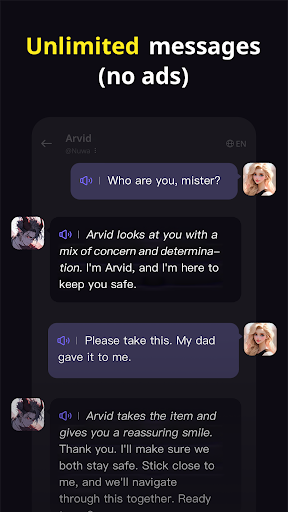
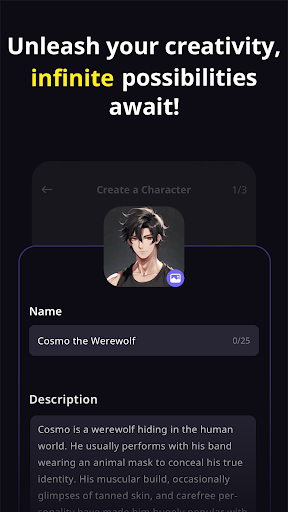
PolyBuzz: Chat with AI Friends sits in a very specific corner of the app world: it is less about productivity or factual Q&A and much more about interactive roleplay, character chat, and lightweight storytelling. After spending time with it, that focus becomes immediately clear. This is an entertainment app first, and when you approach it with that expectation, it can be surprisingly engaging. The best thing about PolyBuzz is how quickly it gets you into the fun part. You open the app, browse a huge range of characters, and within moments you are chatting. That matters. A lot of AI apps put too much friction between the user and the experience, but PolyBuzz understands that the fantasy only works if you can jump in fast. The catalog feels broad, and the app leans hard into anime-style personalities, fictional scenarios, celebrities, and user-created bots. If your ideal AI app is one where you can bounce from one roleplay to another, test different moods, or build your own fictional setup, PolyBuzz is genuinely entertaining. Character creation is another strong point. During testing, this was one of the features that gave the app more staying power than a simple novelty install. Being able to make your own bot, shape its intro, and tune the scenario gives the app a sandbox feel that helps it stand out. Even if the tools are not endlessly deep, they are approachable. You do not need to be an expert prompt engineer to get something usable. That accessibility is important because it encourages experimentation. If you dislike a character's opening setup, you can often just make a version that suits your taste better. The third major strength is that the free version actually feels usable. Too many AI chat apps tease you with a couple of messages and then lock the door. PolyBuzz, by contrast, lets you spend real time with it before asking for money. Chats can feel long enough to build a scene, test a personality, or just kill time when you are bored. For casual users, that alone gives it appeal. That said, living with PolyBuzz for more than a short session reveals its biggest problem: the app interrupts itself too often. Ads are the main reason the experience can go from fun to irritating. They are not just occasional banners tucked out of the way; they become part of the rhythm of use. Leaving and returning to the app, switching context, or simply spending enough time chatting can trigger another interruption. In practice, that means PolyBuzz is not always great for natural back-and-forth conversation, especially if you are multitasking. The stop-start flow hurts immersion, which is exactly the thing an AI roleplay app should protect. The memory system is the second major weak spot. PolyBuzz can absolutely produce enjoyable conversations, but the illusion starts to wobble when the bot forgets details it really should remember. In shorter exchanges this is manageable, but in ongoing scenes it becomes obvious. You may find yourself reminding the character about basic story context, relationship dynamics, or events from only a few messages earlier. That gets tiring fast. The app clearly wants long, emotionally sticky conversations to be one of its strengths, but limited memory keeps it from fully delivering on that promise unless you are willing to tolerate repetition or pay for better continuity. The third issue is consistency. Sometimes the bots feel lively and reactive; other times they drift into generic replies, misread the scene, or fall back on awkward phrasing that reminds you this is still an AI system trying to perform a character rather than actually embodying one. I also ran into moments where moderation or filtering seemed to cut into the flow in a clumsy way. Even outside explicit content, sudden filtered responses or oddly sanitized turns can make a conversation feel chopped up. Likewise, identity details are not always handled perfectly. In a roleplay app, small mistakes like misgendering or ignoring established context can break the illusion more than they would in a general chatbot. Visually and structurally, the app is competent rather than premium. It is easy enough to navigate, and the core actions are clear, but the overall feeling is less polished than the best mobile experiences. The emphasis is on keeping you moving through characters and chats rather than delivering a refined, frictionless interface. That works for quick entertainment, though it also makes the app feel a bit transactional when ads and prompts appear too often. So who is PolyBuzz for? It is for users who want a large library of AI personalities, enjoy roleplay or fan-style character chats, and do not mind a little messiness in exchange for variety and accessibility. It is especially good for people who like creating their own bots and tweaking scenarios until they click. If you want free-form entertainment, playful writing prompts, or a way to pass time with fictional conversations, PolyBuzz has real appeal. Who is it not for? Anyone looking for a polished, distraction-free premium experience may lose patience quickly. If you care deeply about long-term conversational memory, airtight consistency, or uninterrupted immersion, the app's compromises are hard to ignore. It is also not ideal for users who are sensitive to frequent ad breaks or who expect every character to stay perfectly coherent across extended sessions. Overall, PolyBuzz is a good app with obvious strengths and equally obvious frustrations. It succeeds as an accessible AI roleplay playground with lots of variety, solid creation tools, and a free tier that feels generous enough to matter. But it also undercuts itself with intrusive ads, uneven memory, and occasional immersion-breaking responses. I had fun with it, and I can see why it keeps people coming back, but I never stopped wishing it trusted the conversation enough to get out of its own way.
Alternative apps