
Apps Games Articles
Pokémon Quest
The Pokemon Company
Rating 4.3star icon
Editor's summary
Editor rating
star icon star icon star icon star icon
half star icon
4.5

One-line summary Pokémon Quest is easy to recommend for its charming no-ads, low-stress Pokémon collecting and surprisingly engaging auto-battle loop, but I’d hesitate if you want precise combat control, deeper story, or modern content updates.

  • Installs

    10M+

  • Developer

    The Pokemon Company

  • Category

    Role Playing

  • Content Rating

    Everyone

  • Latest version

    1.0.6

  • Package

    jp.pokemon.pokemonquest

In-depth review
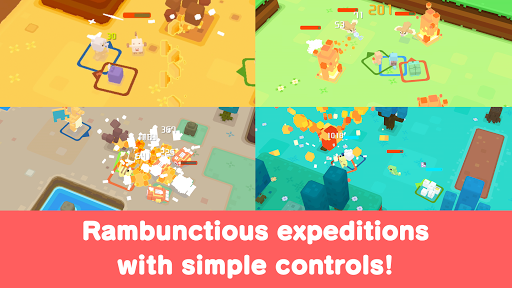
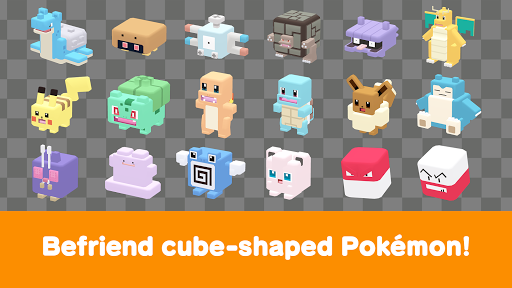
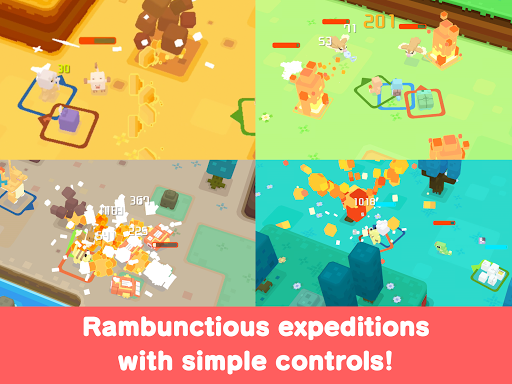
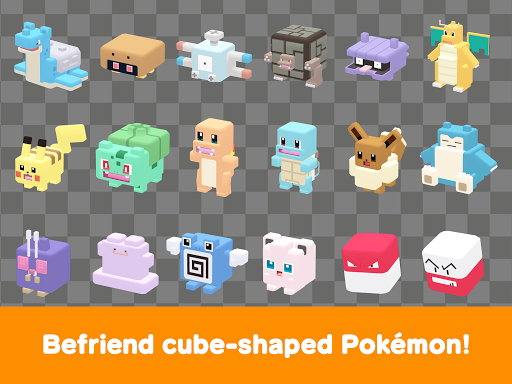
Pokémon Quest is one of those mobile games that wins you over in the first few minutes simply by nailing its personality. The cube-shaped art style could have felt like a throwaway gimmick, but in practice it gives the entire game a playful identity that makes every screen feel inviting. The Pokémon wobble, bounce, and bustle around your base camp with a toy-box charm that never really gets old, and the clean presentation makes it very easy to pick up and understand even if you are not looking for a long tutorial-heavy RPG. What struck me most during extended play is how well Quest works as a “background game” without becoming a meaningless idle app. The basic flow is simple: build a team of three Pokémon, send them on expeditions, gather ingredients and resources, cook dishes back at camp to attract new Pokémon, then tweak your lineup and head out again. On paper, that sounds repetitive. In practice, the game keeps the loop moving because each part feeds into the next in a satisfying way. A good expedition gives you ingredients, ingredients give you new recipes, recipes give you new recruits, and those recruits open the door to stronger teams and tougher stages. It is a very smart little progression hook. The battles themselves are intentionally streamlined. You tap moves as they come up, trigger evasive maneuvers when things get crowded, and watch your trio push through waves of enemies before a boss encounter closes the stage. There is an element of automation here, and that will divide people immediately. I found it refreshing at first because it makes the game feel portable in the best sense: you can play a stage while half-paying attention, then lean in more during tougher fights. At the same time, the simplified combat never becomes truly deep in the way a traditional Pokémon RPG does. You are managing timing and team composition more than you are carefully directing every action. That makes the game approachable, but it also creates one of its biggest frustrations: when your Pokémon bunch up awkwardly, fire a move in the wrong direction, or dodge into danger, it can feel like you lost control at the exact moment you needed it most. That issue with combat control is probably my biggest complaint after spending real time with the game. Pokémon Quest is not broken, but it definitely has moments where the AI feels a little too eager to make decisions for you. Some moves can miss in irritating ways, and because the battlefield can get visually busy, precise tactical play is not always the game’s strength. It works best when you accept that this is a light action RPG with some chaos built in, not a precision strategy game. The second thing I genuinely liked is how friendly the app feels as a free download. The absence of intrusive ads is a huge plus. On mobile, that alone makes Quest feel more polished and respectful than a lot of free-to-play RPGs. I never had the sense that the game was constantly interrupting me to push a video ad or break immersion. There are in-app purchases, but the core experience feels accessible without opening your wallet. That gives the whole package a more relaxed, confidence-in-its-own-design feel. The base camp and cooking systems also deserve credit. Decorating your camp is not just cosmetic fluff; it gives the game a cozy layer between expeditions, and the recipe-driven Pokémon collecting is one of the app’s most charming ideas. Rather than simply catching monsters in the usual way, you feel like you are gradually learning how to attract the companions you want. It is a cute, distinctive spin on collection, and it helps Quest stand apart from more straightforward monster battlers. Still, there are clear limits to how far the game goes. The content focus feels narrow, especially if you are hoping for a broader Pokémon celebration. The experience is heavily rooted in the original generation, and while that nostalgic angle has appeal, it also makes the game feel smaller than it could have been. After a while, I started wishing for more variety in environments, more exciting stage structure, and more sense of adventure beyond the efficient loop of battling, cooking, and upgrading. The game is fun, but it is not especially rich in story or world-building. Another weak point is friction in progression. The battery system means your play sessions can feel clipped just as you are getting momentum, and some difficulty spikes push you into periods of grinding levels, recipes, or team optimization. To be fair, that challenge can be rewarding when you finally break through a wall with a better setup. But it can also make the game feel more stop-start than it should, especially if you are the kind of player who wants long uninterrupted sessions. There are also a few quality-of-life rough edges. Managing a growing roster can become clumsy, and some menu interactions start to feel less elegant the longer you play. Early on, the simplicity is a strength. Later, that same simplicity can make sorting, experimenting, and comparing Pokémon feel more cumbersome than necessary. So who is Pokémon Quest for? It is ideal for Pokémon fans who want a breezy, cute, low-pressure mobile game with a good collection loop and a surprising amount of tactical flavor under the surface. It is also great for players who value a free game that does not bombard them with ads. If you enjoy dipping in for short runs, building teams, and watching a charming camp come to life, this is easy to like. Who is it not for? If you want the strategic depth, narrative pull, and precise control of a traditional mainline Pokémon adventure, Quest will probably feel too simplified and too hands-off. And if limited stamina systems frustrate you, this one may test your patience. Even with those caveats, I came away impressed. Pokémon Quest knows exactly what kind of mobile game it wants to be: cute, compact, accessible, and just engaging enough to keep you tinkering with one more recipe and one more expedition. It does not replace a full Pokémon RPG, but it was never trying to. Taken on its own terms, it is one of the more enjoyable and polished free Pokémon experiences you can put on your phone.