
Apps Games Articles
Clubhouse
Alpha Exploration Co.
Rating 4.0star icon
Editor's summary
Editor rating
star icon star icon star icon star icon empty star icon
4.2

One-line summary Clubhouse is still one of the most engaging places for live, voice-first conversation and discovery, but I’d hesitate to recommend it wholeheartedly if you’re sensitive to bugs, noisy notifications, or a slightly confusing setup.

  • Installs

    10M+

  • Developer

    Alpha Exploration Co.

  • Category

    Social

  • Content Rating

    Teen

  • Latest version

    24.11.12

  • Package

    com.clubhouse.app

Screenshots
In-depth review
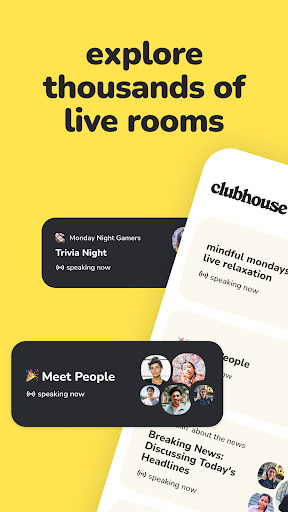
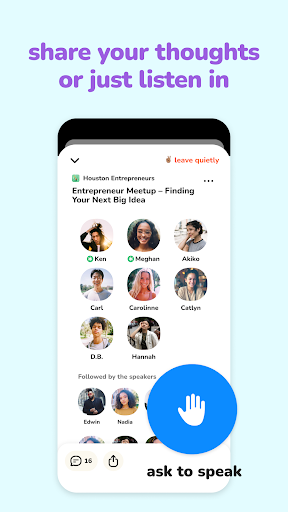
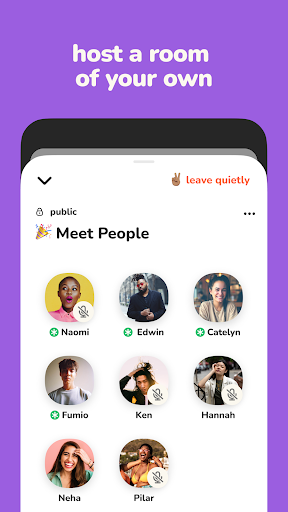
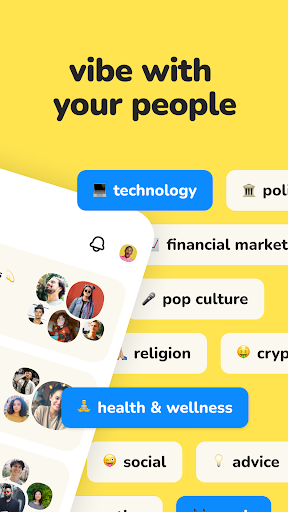
Clubhouse remains a fascinating app because it does something many social platforms still struggle to do well: it makes online conversation feel spontaneous again. After spending real time with it on Android, dipping into live rooms throughout the day and using it both actively and passively, my impression is that Clubhouse is at its best when it feels effortless. You open the app, glance through the hallway of live conversations, tap into a room, and within seconds you are listening to a smart discussion, a casual hangout, or an unexpectedly useful exchange between people you would probably never meet elsewhere. When it clicks, it is absorbing in a way text-heavy social apps rarely are. That immediacy is Clubhouse’s biggest strength. The app is built around live voice, and voice still feels like its killer format. It is more human than comment threads and less demanding than video. I found it especially effective in moments where I didn’t want to stare at a screen: while walking, commuting, doing chores, or just winding down. Clubhouse works well as a drop-in social layer for the day. You can participate, raise your hand, and speak when the room is well moderated, or you can simply listen in the background. That flexibility gives the app a very different rhythm from most social platforms. It feels less performative than posting and less exhausting than livestream video. The second thing Clubhouse gets right is topic discovery. Once the app starts learning what kinds of rooms and people interest you, the hallway becomes much more useful. It can surface conversations that feel tailored rather than random, and that curation matters because the app lives or dies on whether it can get you into a good room quickly. In my testing, the experience improved the more intentional I was about following topics and people I genuinely cared about. There is real value here for curious listeners, lifelong learners, people trying to improve their speaking confidence, and anyone who enjoys informal but thoughtful conversation. Third, the room format itself can be genuinely strong when the hosts know what they are doing. Clubhouse shines in moderated discussions where there is a clear flow between speakers and listeners. The structure can support surprisingly large live conversations without immediately collapsing into chaos, which is not a trivial achievement for a voice app. In good rooms, it feels intimate and broad at the same time: you can hear different perspectives, react in real time, and occasionally join the stage yourself. That makes the app feel more alive than podcasts and more welcoming than many livestream chats. But Clubhouse is also a product that still shows rough edges, and those rough edges are hard to ignore if you use it often. The first weakness is onboarding and general usability. The app is not impossibly hard to understand, but it is not as self-explanatory as it should be. The first-time experience can feel a bit opaque, especially if you are not already familiar with the etiquette of rooms, the difference between listening and speaking, or how to shape your feed into something worthwhile. It becomes better with use, but it asks for more patience than a mainstream social app should. The second weak point is reliability. During regular use, Clubhouse can feel mostly smooth, but there are enough hiccups to keep it from feeling fully polished. Audio routing can be inconsistent, especially around Bluetooth and headphones. Calls and connection changes can interrupt the listening experience more than they should. I also ran into moments where the app seemed overly sensitive about network quality, even on a connection that was otherwise stable. Because this is a live audio app, small technical annoyances matter more here than they would in a static social feed. If the sound path breaks, if the room drops, or if the app behaves unpredictably, the whole value proposition takes a hit immediately. The third issue is friction around notifications and background use. Clubhouse wants to be a live destination, and that means it leans heavily on alerts to pull you back in. In practice, that can become noisy. Unless you are very proactive about managing notifications, the app can go from helpful to intrusive quickly. Background listening works, but it could do more to make passive use feel elegant and informative, especially for people who spend long stretches listening rather than speaking. Visually, the app is functional, but it does not feel especially luxurious or deeply customizable. The interface puts the conversation first, which is the right priority, but there are places where small quality-of-life improvements would go a long way. For an app built around extended listening sessions, comfort features matter. If you are spending real time here every day, you notice where the experience feels unfinished. So who is Clubhouse for? It is best for people who enjoy live conversation, community-driven discussion, networking through voice, and discovering perspectives in real time. If you like the idea of joining a room and learning something, laughing with strangers, or finding a space built around your interests, Clubhouse still has a lot to offer. It is also good for listeners who want something more interactive than a podcast but less intense than being on camera. Who is it not for? If you want a frictionless app that works perfectly in the background, if you dislike notification-heavy social products, or if you prefer polished, visual-first experiences with very clear onboarding, Clubhouse may test your patience. It also is not ideal for people who want immediate value without first curating who they follow and which rooms they enter. My overall take is that Clubhouse is still compelling because the core idea remains strong. Good live audio conversation is powerful, and Clubhouse can still deliver that spark better than many social apps. But the app is also not completely friction-free, and its best moments are sometimes separated by avoidable annoyances. I’d recommend it to people who are excited by voice communities and willing to put in a little setup effort. For everyone else, it may feel like a great concept that is still a step short of being consistently excellent.
Alternative apps