
Apps Games Articles
Discord - Talk, Play, Hang Out
Discord Inc.
Rating 4.3star icon
Editor's summary
Editor rating
star icon star icon star icon star icon
half star icon
4.5

One-line summary Discord is still one of the best places to talk, game, and build communities in one app, but mobile performance hiccups and an increasingly cluttered feature set keep it from being an automatic recommendation for everyone.

  • Installs

    500M+

  • Developer

    Discord Inc.

  • Category

    Communication

  • Content Rating

    Teen

  • Latest version

    319.14 - Stable

  • Package

    com.discord

Screenshots
In-depth review
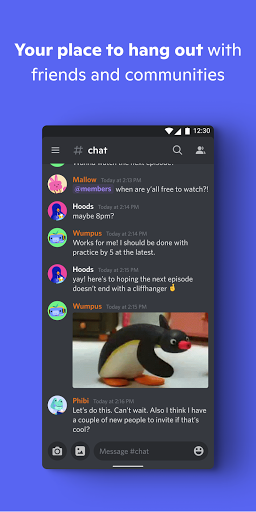
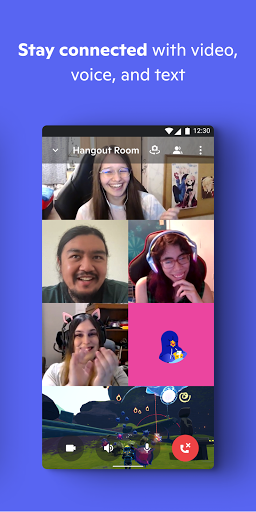
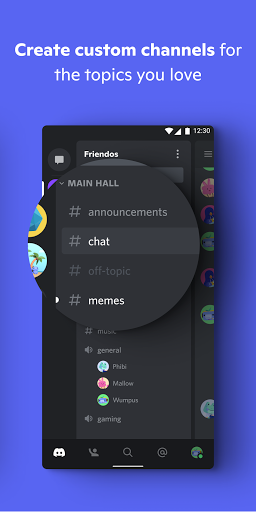
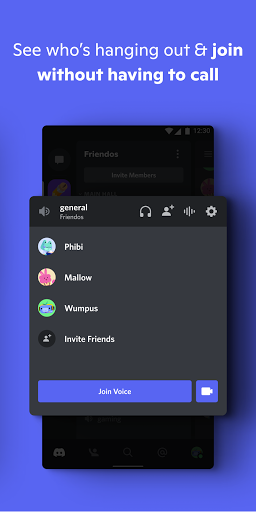
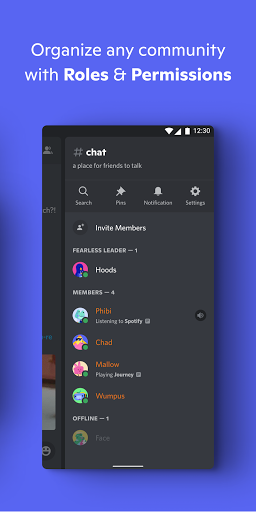
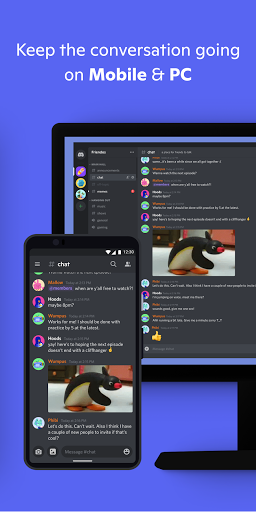
Discord remains one of those rare apps that can feel essential once your friends, gaming group, or community actually lives inside it. After spending real time with the Android app, that core appeal is still easy to understand: it blends group chat, voice rooms, servers, media sharing, and casual hangout tools into something that feels far more alive than a plain messaging app. At its best, Discord is less like opening a chat client and more like stepping into an ongoing digital room where people are already around, talking, posting, streaming, or waiting for others to join. That is Discord’s biggest strength, and it is still hard to beat. The app handles text chat, voice chat, and lightweight community management in a way that feels naturally connected rather than bolted together. Jumping from a private message to a group chat to a server channel is fast once you understand the layout. In daily use, that flexibility makes Discord excellent for friend groups who game together, student circles, hobby communities, and anyone who wants a persistent shared space instead of a string of isolated conversations. If your ideal communication app is “a place” rather than “an inbox,” Discord gets that better than most. I also came away appreciating how expressive the platform feels. Profiles, status messages, emoji reactions, stickers, soundboards, and custom server culture all give Discord personality. Even basic conversations tend to feel more animated here than they do in standard chat apps. That matters more than it sounds. A lot of communication apps are functional but sterile; Discord encourages inside jokes, rituals, and group identity. Creating a server, organizing channels, and shaping a little online home is one of the reasons people stick with it. For communities, that structure is a genuine strength, not just a cosmetic extra. Voice and streaming are another big reason to use it. The app is at its best when you want to casually drop into conversation without the heavy feeling of formally placing a call every time. That “hop in, hang out, leave when you want” rhythm works extremely well. During testing, voice chat generally felt convenient and low-friction, and the overall design encourages spontaneous use. Being able to move between text, voice, and shared activity without switching apps constantly is part of what makes Discord so sticky. Still, the Android app is not as polished as the idea behind Discord. My biggest issue is performance inconsistency. On a good day, it works smoothly and disappears into the background, which is exactly what a communication app should do. On a bad day, it can feel oddly heavy. I ran into lag in places where the app should be snappier, and some parts of the interface occasionally felt slower than they should for a chat app. Media handling and profile customization areas can also be less stable than the core messaging experience. That doesn’t ruin Discord, but it does chip away at the sense of reliability. The second weakness is that the mobile interface can feel overdesigned and occasionally confusing. Discord has grown far beyond simple chat, and the app now carries the weight of years of added systems, menus, experiments, and social features. Once you learn it, navigation becomes second nature, but the learning curve is real. New users may find the app busy, especially when moving between servers, direct messages, notifications, profile settings, and channel tools. Even experienced users can run into moments where the mobile UI feels inconsistent or just more complicated than it needs to be. The third complaint is feature gating and uneven value for free users. Discord is generous enough to be highly usable without paying, and importantly, the app has no ads interrupting the experience. That alone makes it more pleasant than many “free” communication apps. But there is still a noticeable line between what free users can do and where premium customization begins to matter. If you care deeply about profile flair, richer personalization, and certain quality-of-life extras, you will feel the pull toward paid upgrades. For many people that is fine; for others it can make parts of the app feel like a tease. Moderation and server management are also a mixed experience in practice. Discord gives communities a lot of tools, but with that freedom comes a bit of mess. Smaller private groups are easy to manage, but open or growing spaces can become chaotic if admins are not active and careful. The app works wonderfully as a controlled hangout; it feels less comfortable when a server starts attracting spam, unwanted invites, or general noise. That is less a failure of the core app than a reminder that Discord works best when the people running the space know what they are doing. So who is Discord for? It is ideal for gamers, online friend groups, fandoms, study groups, hobby clubs, and communities that want text, voice, and shared social space in one place. It is also great for people who enjoy hanging out online casually rather than only messaging with a purpose. Who is it not for? Anyone who wants a dead-simple messenger, anyone who dislikes layered menus and server structures, or anyone who expects flawless performance on mobile every time may find it more frustrating than charming. Overall, Discord is still one of the most compelling communication apps on Android because it does something many rivals do not: it creates a real sense of place. When it runs well, it is fantastic. When the mobile app stumbles, it can be irritating. But for people who want an always-on social hub for friends and communities, it remains an easy app to keep installed and a very easy one to keep opening.