
Apps Games Articles
Zalo
Zalo Group
Rating 3.8star icon
Editor's summary
Editor rating
star icon star icon star icon star icon empty star icon
4.1

One-line summary Zalo is an easy, fast, surprisingly full-featured messenger that feels built for everyday life in Vietnam, but its rough English support, occasional notification quirks, and account friction make it harder to recommend globally.

  • Installs

    100M+

  • Developer

    Zalo Group

  • Category

    Communication

  • Content Rating

    Teen

  • Latest version

    23.10.01

  • Package

    com.zing.zalo

Screenshots
In-depth review
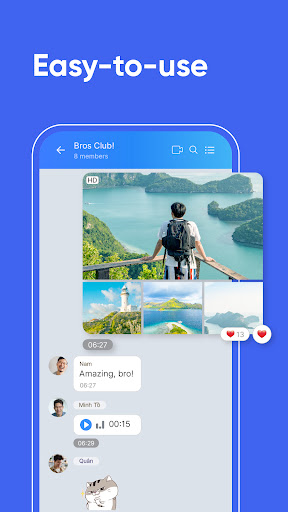
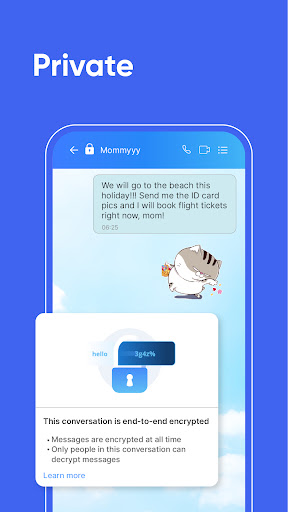
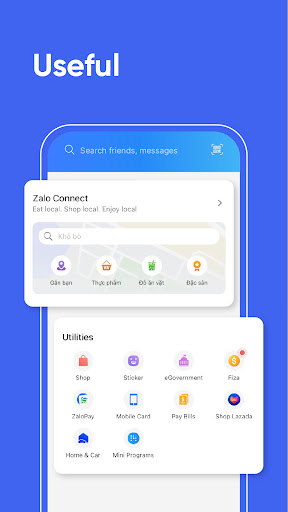
After spending real time with Zalo, the biggest takeaway is that this is not just another basic chat app. It feels like a messaging platform that wants to be woven into daily life: one-to-one chats, group conversations, calling, media sharing, a social-style timeline, and a few utility features that make it feel broader than a simple messenger. In the best moments, Zalo is quick, lightweight in feel, and refreshingly practical. In the worst moments, it reminds you that polish is not always consistent, especially if you are using it outside its core Vietnamese audience. Let’s start with what Zalo gets right, because there is a lot here that works. The core messaging experience is strong. Sending text, photos, and files feels fast, and the app generally gives the impression of being built for frequent daily communication rather than occasional check-ins. Chats load quickly, conversations are easy to follow, and the interface does not feel overloaded despite the app trying to do more than just messaging. I especially liked how straightforward it is to move between text chat and calls. For an app with this many functions, it rarely feels intimidating. That simplicity is one of Zalo’s strongest assets. You can hand it to someone who is not deeply technical and they can usually figure out the basics without much help. The navigation is not perfect, but it is clear enough that everyday messaging, calling, sharing photos, and joining group chats become second nature pretty quickly. On tablets and larger devices, the experience is usable, though not always fully optimized in the way I would like. Some parts feel more phone-first than truly adaptive. Another strength is that Zalo feels personal in a way some larger chat platforms no longer do. The presence of stickers, calling, media sharing, and the Timeline-style social layer gives it a more lived-in feel. It is easy to use for staying in touch with family, friend groups, and local communities instead of treating every conversation like a sterile work thread. The app also makes a real effort to support privacy-oriented features such as message recall, disappearing messages, and account controls around who can contact you. Whether you use all of those features or not, they help the app feel more respectful of personal boundaries than some social-first platforms. File and media handling is another area where Zalo is better than many people may expect. Sending images and larger attachments is convenient, and for everyday use it does a good job balancing speed with simplicity. I never felt like the app was fighting me when I wanted to share something quickly. That matters more than flashy design in a communication app, and Zalo understands that. Still, using Zalo for a while also reveals some recurring frustrations. The first is localization. If you are outside Vietnam or not fully comfortable with Vietnamese, the app can feel uneven. Some English is present, but not always enough, and there are moments where the experience becomes less welcoming than it should be for international users. That does not make the app unusable, but it does make it feel less polished if you are hoping for a truly global-ready messenger. The second weakness is notification reliability and general consistency across contexts. In day-to-day use, the app is usually dependable, but not always. Communication apps live or die by trust: if a message arrives late, a call alert is missed, or notifications become inconsistent when traveling or switching environments, confidence drops fast. Zalo is very good when everything is working normally, but it occasionally gives off the sense that it is not equally smooth for every user in every location. The third issue is account friction. I did not find Zalo difficult to set up, but parts of the identity and verification flow can feel stricter or less flexible than they need to be, particularly for foreigners or anyone outside the most common use case. That might not affect everyone, but if you rely on the app for important personal or business communication, any risk of being locked out or slowed down by verification becomes a serious concern. I also ran into small rough edges like browser handling for links and some missing quality-of-life options that you would expect a mature messenger to have already perfected. Who is Zalo for? It is best for people who communicate regularly with friends, family, classmates, or communities in Vietnam, and for anyone who wants a messenger that blends chat, calling, sharing, and a lightweight social feed in one place. If your contacts already live on Zalo, it becomes an easy recommendation because the app is fast, convenient, and genuinely useful. Who is it not for? If you want a universally polished international app with flawless English support, highly predictable cross-border behavior, and zero account-management friction, Zalo may test your patience. It is also not the best fit for people who want a minimalist chat tool with no extra social layer. Overall, I came away impressed. Zalo succeeds where it matters most: it makes staying in touch feel easy and immediate. The app has personality, practical features, and enough privacy-minded thinking to stand out. It just stops short of greatness because some important details still feel uneven, especially for non-local users. For its core audience, though, this is a strong and often genuinely enjoyable communication app.