
Apps Games Articles
Evony: The King's Return
TG Inc.
Rating 4.1star icon
Editor's summary
Editor rating
star icon star icon star icon
half star icon
empty star icon
3.9

One-line summary Evony is easy to recommend if you want a deep, social strategy MMO with endless things to do, but much harder to recommend if you came for the ad-style puzzles or hate games that lean on time gates, alliance politics, and spending pressure.

  • Installs

    100M+

  • Developer

    TG Inc.

  • Category

    Strategy

  • Content Rating

    Everyone 10+

  • Latest version

    5.16.0

  • Package

    com.topgamesinc.evony

Screenshots
In-depth review
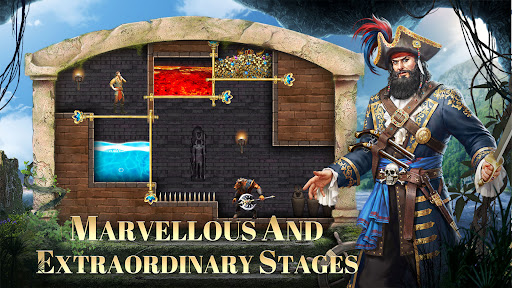
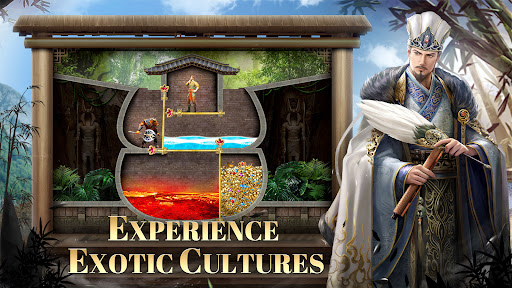
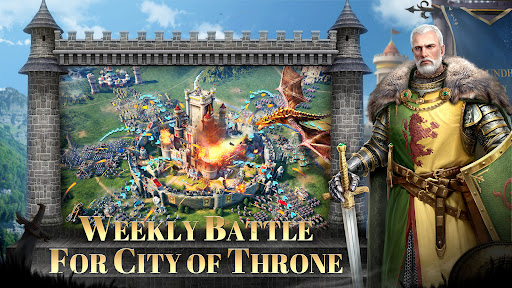
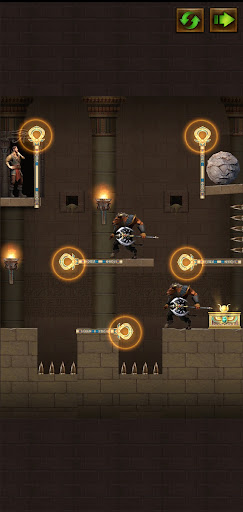
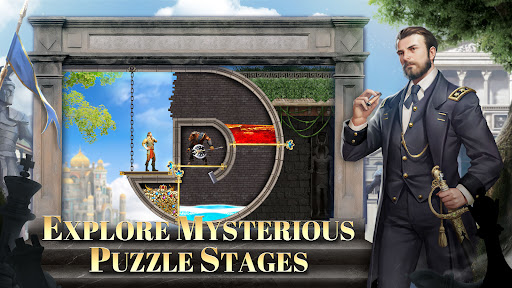
Evony: The King's Return is one of those mobile games that reveals its real identity only after you’ve spent a few sessions with it. If you arrive expecting a pure puzzle game built around the familiar “move and shoot” ad format, the first surprise is that those sequences are only a small slice of the actual experience. The real game is a sprawling kingdom-builder and war-focused MMO where your daily rhythm is less about quick puzzle clears and more about upgrading buildings, training troops, hunting monsters, joining rallies, managing resources, and navigating the social ecosystem of an alliance. That disconnect between the advertising vibe and the actual game is both Evony’s biggest hurdle and, oddly enough, one of its strengths. On the one hand, it can feel misleading. On the other, once I settled into what the app really is, there was a lot more depth here than the ads suggest. This is not a lightweight distraction. It’s a layered, often absorbing strategy game that expects regular check-ins and rewards players who enjoy long-term progression. The first thing Evony does well is scale you into its systems without making the opening hours feel dry. Early progress comes quickly. Buildings finish fast enough to keep momentum going, the city develops at a satisfying pace, and the game constantly points you toward the next useful task. There is almost always something waiting: a troop queue to manage, a resource node to gather from, a general to assign, a research path to pursue, or a world map activity to join. That sense of constant activity is one of the app’s strongest hooks. Even during shorter play sessions, it rarely feels empty. The second major strength is the alliance-driven structure. Evony becomes far more interesting once you join an active group. In solo play, the game can feel slow, exposed, and a little impersonal. In an alliance, it opens up. Suddenly monster hunts become cooperative, help timers speed up your builds, chat becomes useful instead of decorative, and the broader map starts to make more sense. The built-in communication tools and the general emphasis on teamwork give the game a social energy that many mobile strategy titles chase but don’t always achieve. Evony feels at its best when you are part of a functioning team rather than just tending your own city in isolation. The third strength is scope. For players who like layered progression, Evony has plenty to chew on. There are civilization styles, generals, troop composition choices, building priorities, research decisions, world map movement, and recurring side activities that break up the basic upgrade loop. It creates the pleasant illusion that there is always one more productive thing you can do, and for a strategy audience, that is catnip. The game also looks polished enough to support that ambition, with a world map and city presentation that feel appropriately grand for an empire-management game. But Evony is also very good at revealing its rough edges the longer you stay with it. The first major weakness is that progression slows dramatically. Early growth is brisk; later growth is all waiting, optimizing, and stretching every resource. Build times get long, upgrades become more demanding, and the temptation to spend money becomes increasingly visible. This does not mean the game is unplayable for free, but it absolutely starts to feel more demanding and less forgiving as your ambitions grow. If you dislike games that shift from generous onboarding to marathon pacing, Evony will test your patience. The second weakness is the social environment, which can be rewarding or miserable depending on your server and alliance. In a healthy server, the politics add tension and purpose. In a toxic one, they can dominate the experience. Powerful groups can set the tone for everyone else, and if that tone is hostile, progress can feel constrained in a way that has nothing to do with your own skill or consistency. This is one of those games where your surrounding player culture matters almost as much as the systems themselves. The third weakness is technical friction. In regular use, I ran into the kind of annoyance that doesn’t always break the game but does chip away at your enthusiasm: sluggish moments, occasional freezing, and a general sense that the app is carrying a lot of moving parts at once. For a game built around habitual daily play, even brief instability feels more noticeable than it would in a simpler mobile title. As for the puzzle content, it exists, and some of it is genuinely fun in short bursts. But it should be treated as a side dish, not the main course. If that’s the reason you downloaded Evony, you may feel bait-and-switched once the city-building and MMO loops take over. If, however, you like the idea of a broad strategy game with puzzle flavor sprinkled on top, you’ll probably adjust quickly. So who is this for? Evony is for players who enjoy routine-based strategy games, alliance cooperation, long progression curves, and the feeling of tending a living empire over weeks and months. It is also for players who don’t mind checking in often and learning a fairly dense set of systems over time. It is not for someone looking for a clean, puzzle-first experience, a low-commitment strategy game, or a fair-weather solo campaign you can ignore for days without consequence. In the end, I came away seeing Evony as a better strategy MMO than its advertising gives it credit for, but also a more demanding and less approachable game than its first impression suggests. When it clicks, it is engaging, communal, and surprisingly sticky. When it doesn’t, it feels like a time-hungry kingdom grinder wrapped around a mini-game that should never have been sold as the headline attraction.