
Apps Games Articles
Tiles Survive!
FunPlus International AG
Rating 4.4star icon
Editor's summary
Editor rating
star icon star icon star icon star icon
half star icon
4.5

One-line summary Tiles Survive! is easy to recommend for players who want a surprisingly absorbing survival-builder with plenty to do and no ad clutter, but the constant upgrade juggling and monetization nudges can wear on anyone looking for a cleaner, more relaxed strategy loop.

  • Installs

    10M+

  • Developer

    FunPlus International AG

  • Category

    Strategy

  • Content Rating

    Teen

  • Latest version

    2.4.500

  • Package

    com.funplus.ts.global

Screenshots
In-depth review
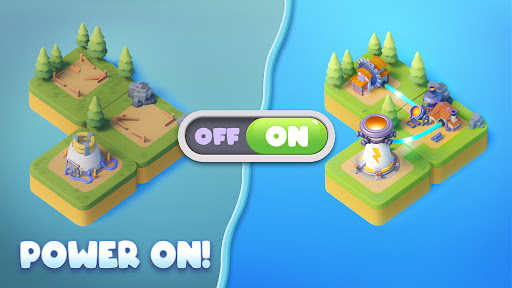
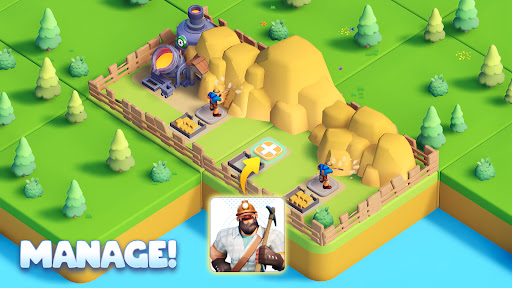
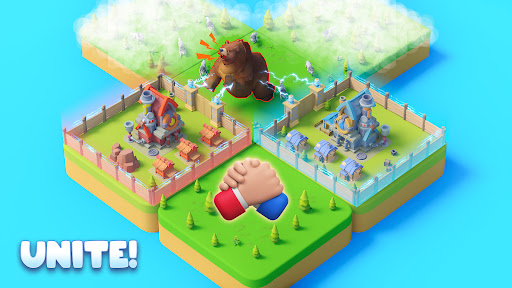
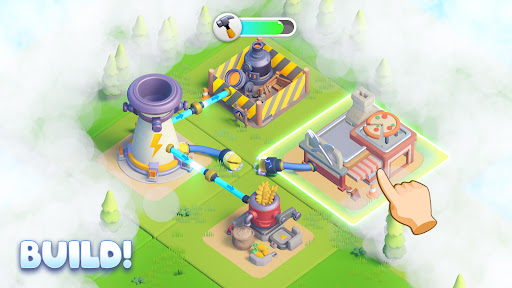
Tiles Survive! is one of those mobile games that does a slightly poor job of introducing itself and a very good job of keeping you around once you give it a real chance. From the name alone, I expected something lighter and more puzzle-like. What I actually found was a casual survival-management game with territory expansion, worker assignment, base growth, and the kind of layered progression that makes you say, “I’ll just finish one more upgrade,” and then realize half an hour has passed. The first thing that stood out during my time with it was how active the game feels. There is almost always something competing for your attention: a structure to improve, a new tile to push into, a survivor job to optimize, a resource bottleneck to solve, or a side activity dangling a reward. That sounds chaotic on paper, but in practice it gives the game a nice sense of momentum. Early on, especially, the loop is satisfying. You gather, build, assign, expand, repeat. The shelter gradually turns from a rough camp into something more organized and more productive, and the game does a good job of making those upgrades feel visible rather than abstract. That sense of progression is probably Tiles Survive!’s biggest strength. It understands that survival strategy on mobile needs short-term rewards as much as long-term goals. Unlocking more structures, improving output, and extending your territory all create a steady cadence of progress. Even when I wasn’t making huge leaps, I usually felt like I was moving something forward. For a free-to-play strategy title, that matters a lot. Another thing I appreciated is that the presentation is generally inviting without becoming visually exhausting. The art style is polished, the shelter and surrounding environments are easy to read, and the overall look lands in a nice middle ground: colorful enough to feel lively, restrained enough that it doesn’t come off like a children’s game. On a phone, where strategy interfaces can quickly become messy, Tiles Survive! stays readable more often than not. Menus, objectives, and build paths are busy, but not incomprehensible. The game’s third major strength is that it gives different types of players something to latch onto. If you like optimization, there is enough worker and production management here to keep you busy. If you like exploration, pushing into new tiles and maps gives the experience forward motion. If you enjoy collection and progression systems, heroes, upgrades, and decorative or loot-style rewards help feed that urge. It is not the deepest strategy game in every category, but it mixes enough systems together that it rarely feels one-note. That said, the game is not friction-free. My biggest recurring complaint is that the interface can start to feel crowded with prompts, icons, and upgrade opportunities. Even without traditional ads interrupting play, there is still a lot vying for your attention. At times, it feels less like you are calmly running a survivor camp and more like you are clearing notifications from a dashboard. The game remains playable, but it does chip away at the survival atmosphere. The second issue is pacing. Tiles Survive! is strongest when upgrades complete quickly and territory expansion happens at a satisfying clip. As you get deeper in, that rhythm becomes more stop-start. Build timers stretch out, planning around event windows becomes part of efficient play, and the game starts nudging you toward a more scheduled relationship with it. That is common in the genre, but it can make the experience feel more mechanical than adventurous. I enjoyed checking in regularly; I enjoyed it less when I felt like I had to time progress around systems rather than simply play. My third complaint is that the game occasionally feels too eager to layer systems on top of systems. There is a lot to do, which is good, but there were stretches where I wanted the game to trust its core loop more. The best moments came from solving resource flow problems and expanding the shelter. The weaker moments came when too many side tasks and reward paths diluted that focus. Some players will love that abundance. Others will feel as though the game is trying a little too hard to keep every second productive. Even with those caveats, I came away impressed. Tiles Survive! has that hard-to-fake “pull” that many mobile strategy games chase and never quite achieve. It gets you invested in your base, makes upgrades feel meaningful, and gives you enough parallel goals that downtime rarely turns into boredom. I also appreciated that the experience is not buried under intrusive ad interruptions, which makes ordinary play sessions smoother and easier to enjoy. Who is this for? It is a strong fit for players who like casual strategy games with base management, resource chains, and a constant stream of objectives. If you enjoy checking in throughout the day, optimizing little systems, and watching a settlement become more capable over time, this is an easy game to sink into. Who is it not for? If you want a pure survival sim, a stripped-down strategy game, or something you can play in long uninterrupted sessions without thinking about timers and layered progression hooks, Tiles Survive! may feel too busy and too free-to-play in its structure. Overall, I found Tiles Survive! more compelling than its name suggests. It is polished, generous with things to do, and genuinely fun in that dangerous mobile-game way where “just a few minutes” turns into a habit. It is not especially elegant, and it does ask you to tolerate clutter and waiting, but the core management loop is strong enough that I kept coming back.