
Apps Games Articles
Traffic Run!: Driving Game
Geisha Tokyo, Inc.
Rating 3.9star icon
Editor's summary
Editor rating
star icon star icon star icon star icon empty star icon
4.2

One-line summary Traffic Run! is an easy-to-pick-up mobile time killer with genuinely satisfying stop-and-go timing, but its ad-heavy hypercasual design and occasional rough edges keep it from feeling essential.

  • Installs

    100M+

  • Developer

    Geisha Tokyo, Inc.

  • Category

    Action

  • Content Rating

    Everyone

  • Latest version

    2.1.1

  • Package

    com.geishatokyo.trafficrun

In-depth review
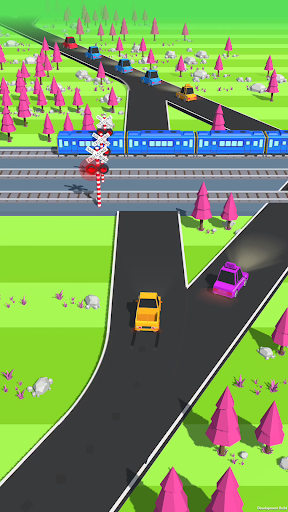
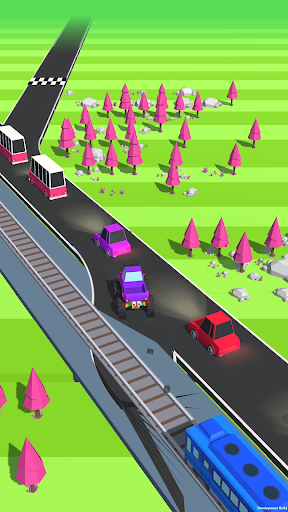
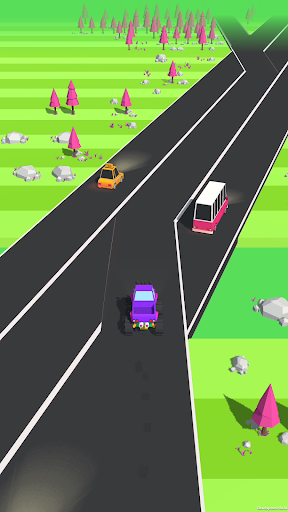
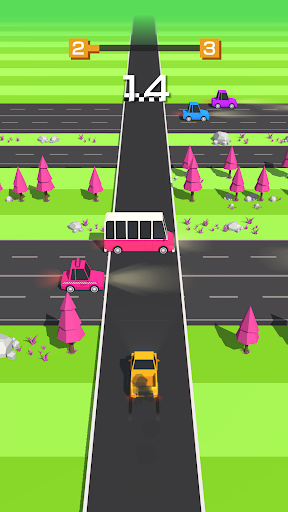
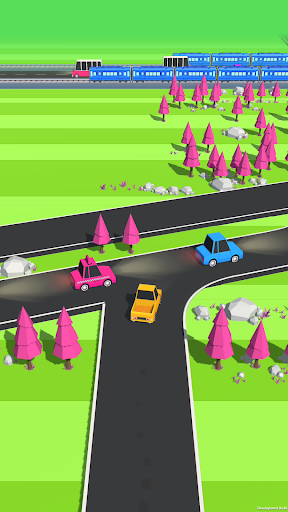
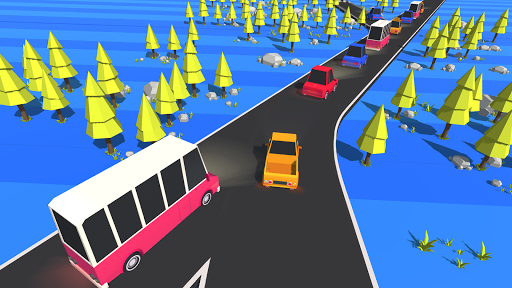
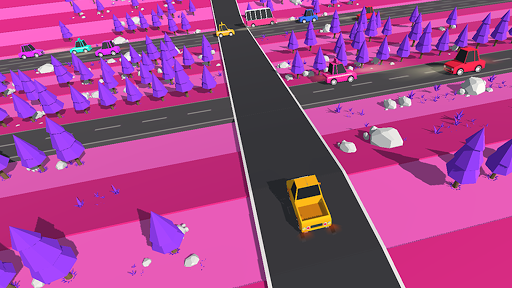
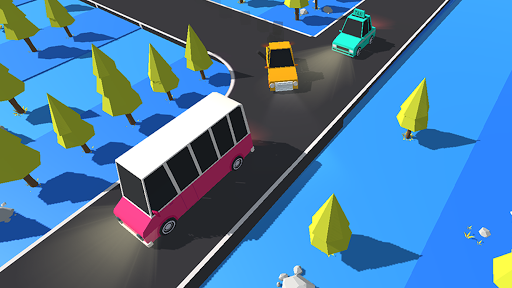
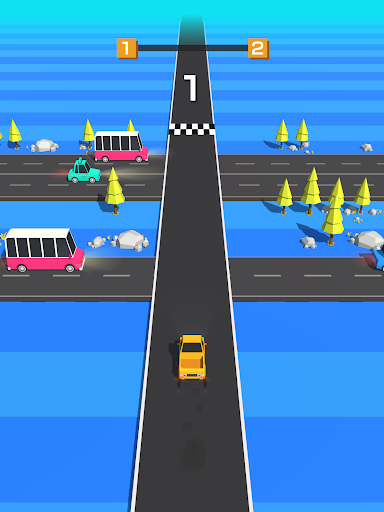
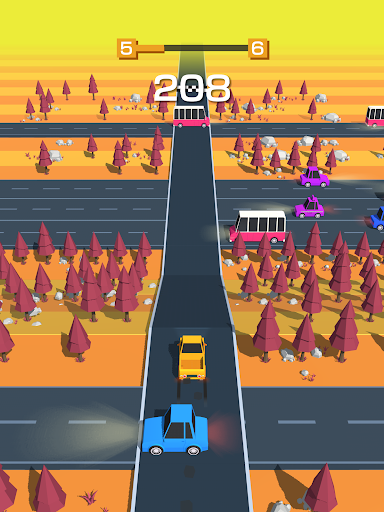
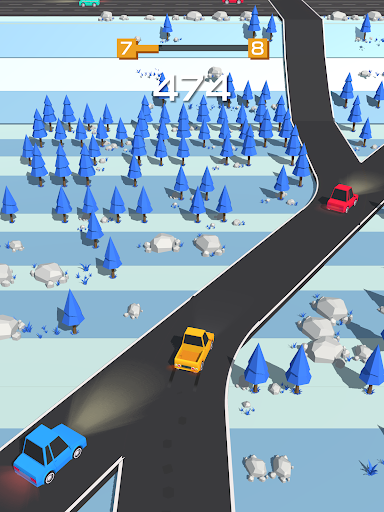
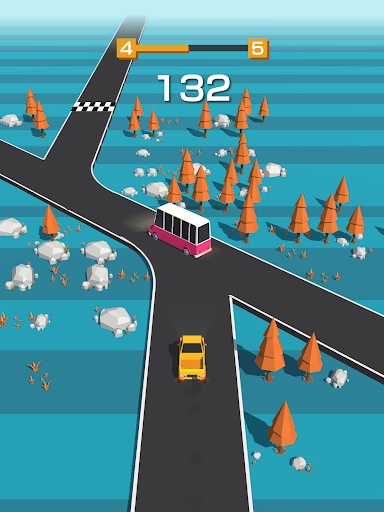
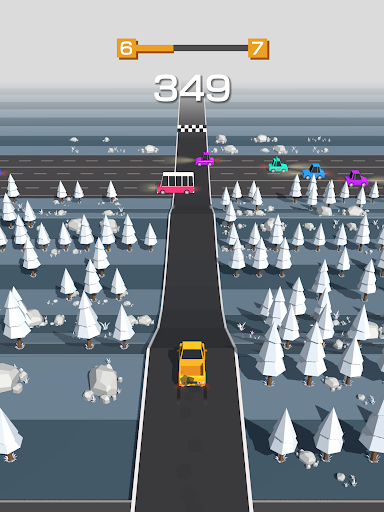
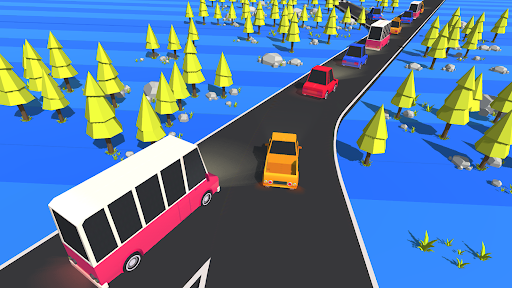
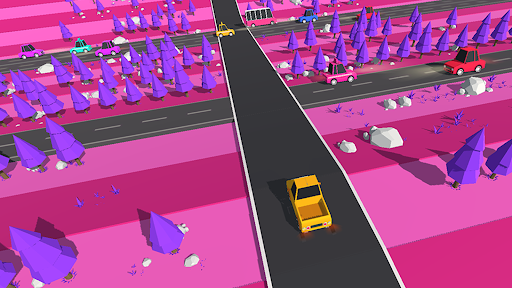
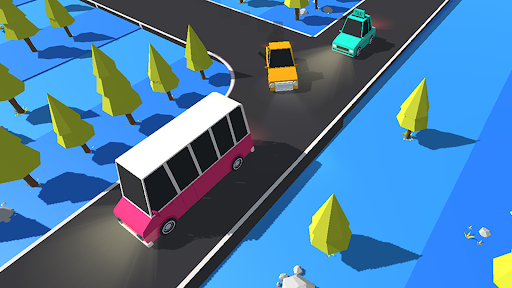
Traffic Run!: Driving Game knows exactly what kind of mobile game it wants to be: fast, simple, readable, and instantly playable with one finger. After spending time with it, that clarity ends up being both the game’s biggest strength and its main limitation. This is not a deep driving simulator, and it does not pretend to be one. It is a reflex-and-timing game dressed up as a driving game, and when you meet it on those terms, it can be surprisingly addictive. The basic loop is about as clean as mobile design gets. You press and hold to move, let go to stop, and try to thread your vehicle through streams of cross traffic without getting clipped. The car handles its own turns, so the only real decision is when to commit and when to brake. That sounds almost too simple on paper, but in practice it creates a steady rhythm that is easy to understand and hard to put down. A good run feels great because the game constantly tempts you to take one more chance than you probably should. Sliding through a crowded intersection at the last possible second gives Traffic Run! its best moments. What impressed me most during regular play is how well it works in short bursts. Levels are quick, restarts are immediate, and failure never carries much punishment beyond trying again. That makes it ideal for exactly the sort of use case hypercasual games are built for: a few minutes in a waiting room, on a commute, or whenever you want something that occupies your hands without asking too much from your brain. There is also enough variation in road layouts, traffic patterns, crossings, and roundabouts to prevent the first hour from feeling like a total repeat loop. The game introduces just enough unpredictability to keep you alert. That unpredictability is also one of the reasons the game stays enjoyable longer than expected. Even after many stages, Traffic Run! can still surprise you with a lane that looks safe until a speeding vehicle enters from off-screen. Some levels are all about patience; others reward boldness. There is a nice push and pull between caution and momentum, and the game is at its best when it makes you read traffic rather than simply memorize a pattern. The unlock system helps too, at least in a light way. Earning coins and gradually opening up different vehicles gives the game an extra layer of motivation beyond simply clearing another stage. The vehicles are not the point of the experience, but they do add a bit of personality and a reason to keep playing. Visually, the game is also solid for its category. The 3D presentation is clean, colorful, and legible, which matters a lot in a game built around split-second timing. You can usually read the road instantly, and that readability supports the core gameplay well. Still, Traffic Run! absolutely carries the usual hypercasual baggage. The biggest annoyance is ads. In its best form, the game is a smooth loop of attempt, crash, retry, and progress. Ads break that rhythm. Even when they are not constant, their presence is felt because the game is built around such short rounds; any interruption feels larger than it would in a longer-form game. If you are very sensitive to ad pressure, this will wear on you quickly. The second issue is that, for all its variety, the game eventually shows its ceiling. The controls are intentionally minimal, and that works beautifully at first, but over time it also means there is only so much depth the experience can produce. You are still fundamentally making one decision: go or stop. The game does find clever ways to remix that decision, but players looking for richer driving mechanics or more strategic progression may hit a wall after the novelty fades. The third complaint is polish. For the most part, Traffic Run! runs smoothly and feels responsive, but it can occasionally feel rough around the edges. Some crashes feel a little cheap because of traffic appearing in a way that is hard to anticipate, and there are moments where responsiveness or presentation does not feel as crisp as it should. Nothing here completely wrecked the experience for me, but it does stop the game from feeling truly refined. Who is this for? It is a strong pick for casual players, teens, and anyone who likes quick-restart mobile games with simple controls and an addictive “one more try” loop. It is especially good for players who want something playable in tiny chunks without a tutorial or any real learning curve. It is also a decent fit for offline-style gaming habits, since the core design does not depend on constant online interaction. Who is it not for? If you want a serious driving game, nuanced car handling, long-form progression, or a premium-feeling experience free of hypercasual interruptions, this is probably not your app. Players who hate ads or repetitive loops will likely bounce off it early. In the end, Traffic Run! succeeds because it understands mobile friction better than many bigger games do. It gets you into the action instantly, gives you fast feedback, and builds tension from a very small set of inputs. That elegance carries it a long way. It is not sophisticated, and it is not always polished, but it is often fun. For a free action game built around timing and traffic gaps, that is enough to make it easy to recommend—with a small asterisk attached for patience with ads and repetition.