
Apps Games Articles
Draw Joust!
VOODOO
Rating 4.2star icon
Editor's summary
Editor rating
star icon star icon star icon star icon empty star icon
4.2

One-line summary Draw Joust! is an easy-to-love physics battler with a genuinely clever draw-your-own-cart hook, but its repetitive progression, occasional chaos-inducing bugs, and ad-heavy mobile structure keep it from being an unqualified recommendation.

  • Installs

    50M+

  • Developer

    VOODOO

  • Category

    Action

  • Content Rating

    Everyone 10+

  • Latest version

    2.106

  • Package

    ru.galya.drawjoust

Screenshots
In-depth review
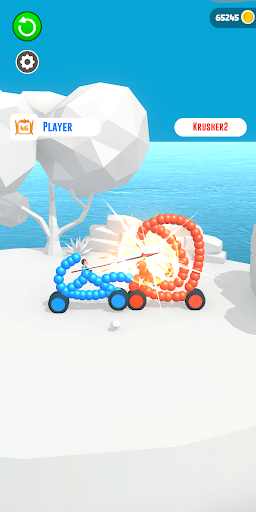
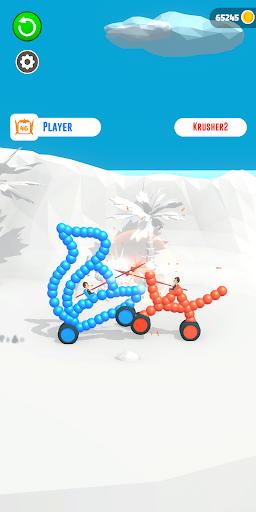
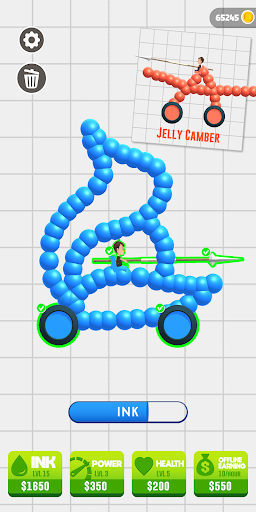
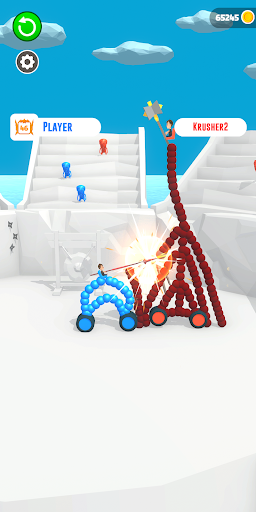
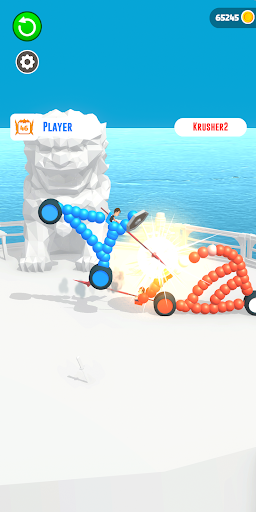
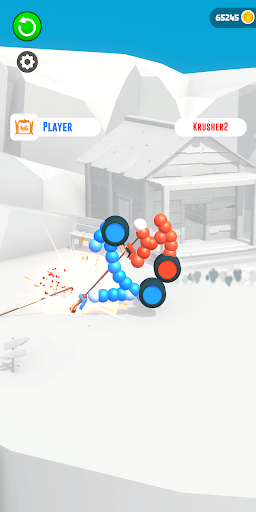
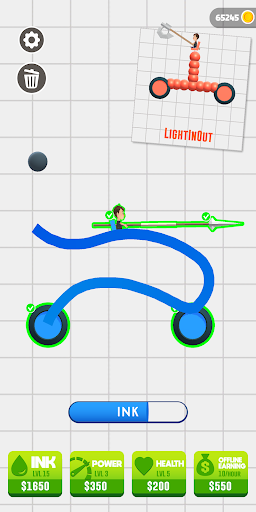
Draw Joust! succeeds because it understands a very specific kind of mobile fun: the kind that feels immediately readable, slightly silly, and satisfying in under a minute. From the first few matches, the premise clicks. You sketch a vehicle shape, it spawns with wheels and a weapon, and then you rumble toward an opponent in a physics-driven duel that is part strategy, part improvisation, and part slapstick disaster. It is one of those games where the concept does a lot of the heavy lifting, and in this case that is a compliment. What struck me most in regular play was how approachable it is. There is almost no friction between opening the app and getting into a match. You draw, you fight, you collect rewards, you upgrade, and you do it again. That loop is simple enough for casual players to grasp instantly, but it has just enough room for experimentation to stay engaging longer than expected. I found myself tweaking cart designs more than I expected: long low frames for stability, weird towering contraptions for aggressive weapon reach, compact builds for speed, and occasional absurd doodles just to see whether the physics engine would tolerate them. That freedom is the app's best feature. It makes each round feel at least partly like your own creation rather than a prefab action game with a cosmetic gimmick. The second major strength is that the game is consistently entertaining even when it is not being elegant. In fact, some of its appeal comes from how messy the fights can become. Matches often end in satisfying instant knockouts, wheels flying off, opponents getting stuck, or both vehicles collapsing into a glorious heap. The exaggerated physics create a lot of laugh-out-loud moments, and that gives Draw Joust! strong "one more round" energy. It also helps that the controls themselves are easy to live with. This is not a precision combat game. It is closer to a toy box where rough input is part of the design, and on that level it works. A third plus is that it fits real-world mobile play very well. This is an excellent pick-up-and-put-down game. Sessions can be just a few minutes, and because the mechanics are so readable, it is easy to return after a break without relearning anything. It also works well as an offline-friendly time killer, which adds to its value for commuting, waiting rooms, or any stretch of low-attention downtime. That said, the longer I spent with Draw Joust!, the more its limits became obvious. The biggest issue is repetition. The core loop is fun, but it does not evolve very much. After enough matches, you start to see the same rhythm over and over: draw a variation on a successful cart, crash into another machine, collect currency, buy upgrades, repeat. There are bosses and equipment variations to freshen things up, but not enough depth to make the game feel dramatically different dozens or hundreds of levels in. If you enjoy grinding through simple physics combat for the sheer pleasure of it, this is fine. If you need steadily deepening mechanics or meaningful strategic layers, Draw Joust! begins to feel thin. The second problem is the physics instability. Some chaos is part of the fun, but there is a line between funny unpredictability and mechanical breakdown, and this game crosses it at times. In my sessions, there were moments where carts spun uncontrollably, launched into the air, or behaved in ways that seemed less like emergent physics and more like the simulation giving up. Sometimes that creates comedy. Sometimes it just steals a win or turns a promising build into unusable nonsense. This gets more noticeable when speed increases or when more extreme cart shapes are involved, and it can make experimentation feel punished rather than rewarded. The third weakness is the upgrade and monetization rhythm. Draw Joust! is free, and it feels like a free-to-play mobile game in familiar ways. Ads are not the worst I have seen, but they are present often enough to become part of the texture of play rather than a rare interruption. Likewise, progression through upgrades can feel uneven. Some improvements are useful, but not all of them feel transformative, and certain resource costs can make the climb toward more expressive builds slower than it should be. There were stretches where I wanted the game to let me be more creative more quickly instead of nudging me back into the same earning cycle. There are also smaller frustrations. The sudden-death style pacing can occasionally cut off a fight before it feels naturally resolved. Some matches drag when an opponent is effectively immobilized but not technically finished. And while the randomized weapon setup adds variety, it can also make a good design feel compromised by placement you would rather control yourself. So who is Draw Joust! for? It is best for casual players who enjoy physics-based action, quick matches, and the pleasure of messing around with simple creative tools. If you like games that let you improvise, laugh at broken outcomes, and squeeze in a few rounds whenever you have a spare moment, it is easy to recommend. It is not ideal for players who hate ads, want tight competitive balance, or expect a deep combat system that grows substantially over time. In the end, Draw Joust! is not a masterpiece of design depth, but it is a very good mobile toy with an excellent central idea. When it is working, it delivers that rare free-to-play feeling of genuine spontaneity: you draw something ridiculous, it somehow works, and for a few rounds you feel like a genius. When it is not working, you are usually fighting the physics or the repetition rather than your opponent. Even so, the app remains fun more often than frustrating, and that is why it is easy to keep coming back to.
Alternative apps