
Apps Games Articles
Sponge Art
Good Job Games
Rating 4.5star icon
Editor's summary
Editor rating
star icon star icon star icon star icon
half star icon
4.5

One-line summary Sponge Art is easy to recommend as a genuinely calming puzzle game with a satisfying tactile hook, though anyone allergic to repetitive mobile-game loops or occasional ads may lose patience before its charm fully lands.

  • Installs

    10M+

  • Developer

    Good Job Games

  • Category

    Puzzle

  • Content Rating

    Everyone

  • Latest version

    0.88

  • Package

    com.Game.SpongeArt

Screenshots
In-depth review
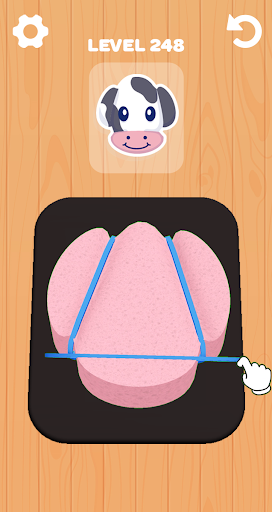
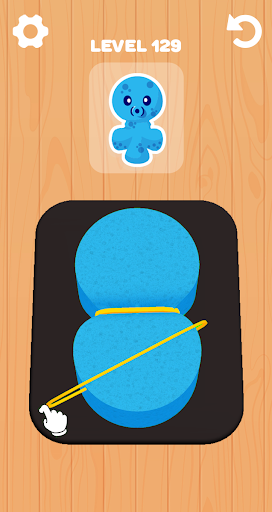
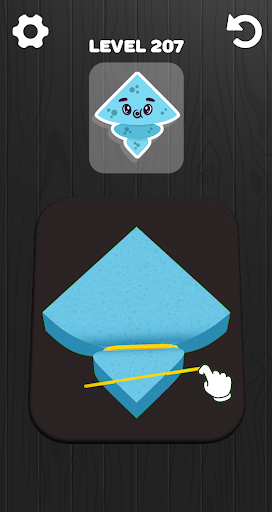
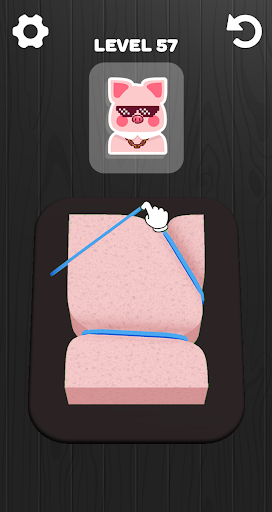
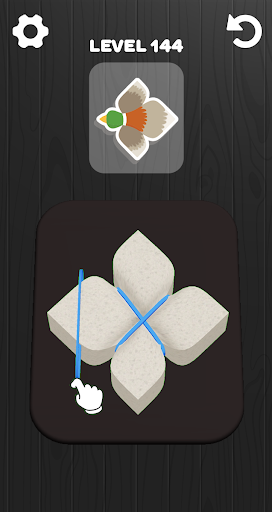
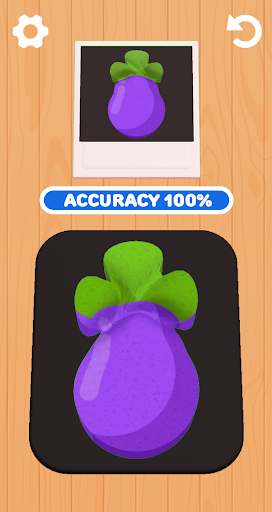
Sponge Art is one of those mobile puzzle games that looks almost too simple to be worth much time, and then quietly ends up eating far more of your afternoon than you planned. After spending time with it, what stood out most was not complexity or innovation in the grand sense, but how effectively it turns a very basic interaction into something relaxing, readable, and oddly satisfying. You stretch rubber bands around a sponge to match a target shape, and the core idea works because it feels instantly understandable. There is very little friction in learning how to play, and that low barrier is a huge part of the app’s appeal. The first thing Sponge Art gets right is the physicality of the concept. Even on a flat phone screen, the act of placing bands and watching the sponge compress into a recognizable figure has a nice toy-like quality. It gives the puzzles a soft, playful feel that separates the game from harsher, more abstract logic apps. Many mobile puzzle games lean on minimalism so heavily that they become sterile. Sponge Art goes the other way: it wants to feel colorful, approachable, and a little silly, and that works in its favor. When a level clicks into place, there is a satisfying sense of having sculpted something rather than merely solved a problem. That same tactile design also makes the game unusually relaxing. This is not a high-pressure puzzler. It is something you open when you want to occupy your hands and your eyes without having your brain put through a stress test. In short sessions, especially, it is very good. A few levels while waiting in line, sitting on a train, or winding down in the evening feels exactly like what this kind of app should deliver. The challenge ramps up enough to keep you engaged, but it rarely becomes intimidating. Even when a solution is not immediately obvious, the game generally invites experimentation rather than punishing trial and error. A second strength is accessibility. Sponge Art does not ask for puzzle-game expertise. It is easy for kids to understand, easy for casual players to dip into, and easy for adults to use as a low-stakes decompression game. That broad appeal matters. There are plenty of puzzle apps that become niche almost immediately because they depend on a very specific way of thinking. Sponge Art is much more universal. If you can recognize shapes and enjoy a bit of visual problem-solving, you can get something out of it. The third big positive is pacing at the level-to-level scale. Levels move quickly, and the quick reward loop is strong. Solving one puzzle naturally pushes you into trying “just one more.” That momentum is what makes the game effective as a time-filler. It rarely bogs you down with explanation, and it does not overcomplicate the interaction model. For a free mobile game, that sense of immediacy is valuable. That said, Sponge Art is not flawless, and its weaknesses become clearer the longer you stay with it. The biggest issue is repetition. The core mechanic is charming, but it is also narrow. Because nearly everything depends on the same basic act of stretching bands to match a target image, the experience can start to blur together over longer sessions. The game is at its best in bursts. Play for ten or fifteen minutes and it feels fresh; push much longer and the formula starts to show its limits. Players looking for evolving systems, layered strategy, or major surprises will probably find it too lightweight. Another drawback is the ad pressure that can creep into the experience. In my time with the app, it did not feel completely unplayable or aggressively hostile, but this is still very much a free-to-play mobile game, and that reality is present. Depending on your tolerance, ad interruptions may range from mildly annoying to immersion-breaking. Sponge Art works best when it maintains a calm rhythm, and any forced break in that rhythm is especially noticeable because the game’s whole identity is built around relaxation. The third weakness is that some of the later challenge feels more fiddly than genuinely clever. There is a difference between a puzzle that makes you think and a puzzle that makes you poke around until the shape finally lines up. Sponge Art occasionally slips toward the latter. When that happens, the game loses some of its elegant simplicity and becomes a bit more mechanical. It is never deeply frustrating, but it can feel less like creative problem-solving and more like nudging pieces until the app decides you are correct. Visually, the game does enough to support the concept without turning into a showcase. The presentation is bright and clean, which fits the light tone. More importantly, the visuals make the objective readable at a glance. That practical clarity matters more here than elaborate style. The app succeeds because it communicates what you need to do quickly and keeps the focus on interaction. Who is Sponge Art for? It is for casual puzzle players, younger audiences, and anyone who likes soothing, toy-like mobile games that can be played in short bursts. It is also a good fit for people who enjoy apps that help them settle their attention rather than overstimulate it. Who is it not for? If you want deep strategy, highly varied puzzle design, or a premium-feeling experience free of familiar mobile-game interruptions, this is probably not your best pick. Overall, Sponge Art succeeds by understanding its lane. It is not trying to be the smartest puzzle game on your phone, and it is not pretending to offer endless complexity. What it offers is a simple, tactile, calming loop that is easy to like and easy to return to. The occasional ad and the repetition keep it from feeling essential, but the core experience is pleasant enough that recommending it is easy. For a free puzzle game, that is a strong result.
Alternative apps