
Apps Games Articles
Gossip Harbor: Merge & Story
Microfun Limited
Rating 4.4star icon
Editor's summary
Editor rating
star icon star icon star icon star icon empty star icon
4.3

One-line summary Gossip Harbor is an easy game to recommend if you want a polished, low-pressure merge puzzler with a genuinely sticky story, but it becomes much harder to love once its tight energy limits and event grind start rationing your playtime.

  • Installs

    50M+

  • Developer

    Microfun Limited

  • Category

    Puzzle

  • Content Rating

    Everyone

  • Latest version

    3.85.0

  • Package

    com.mergegames.gossipharbor

In-depth review
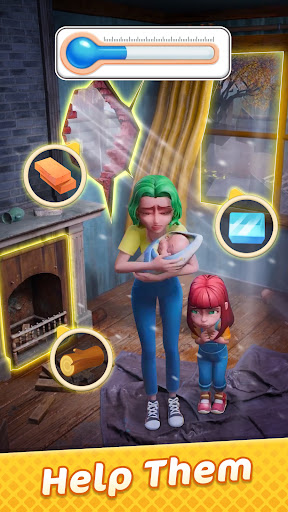
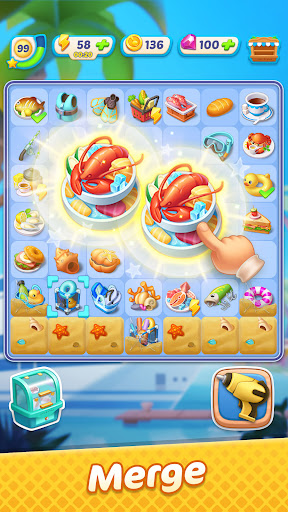
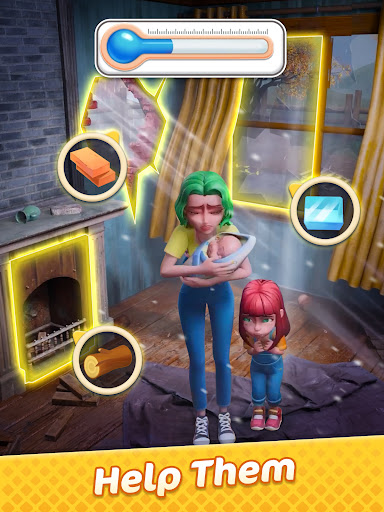
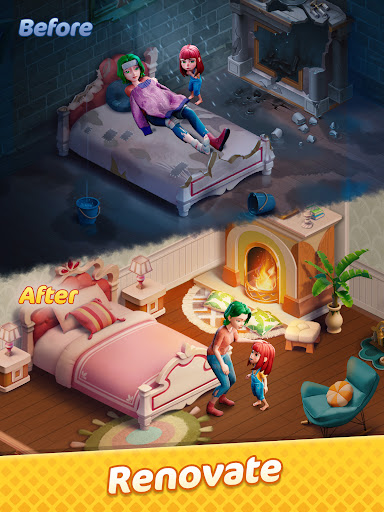
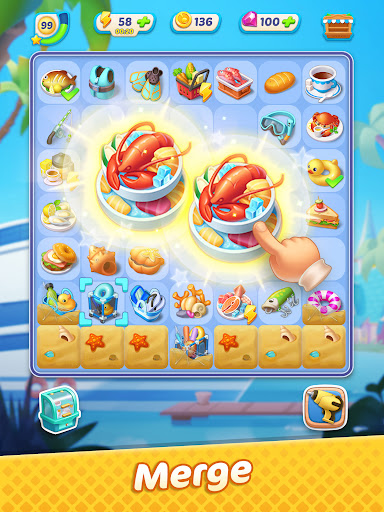
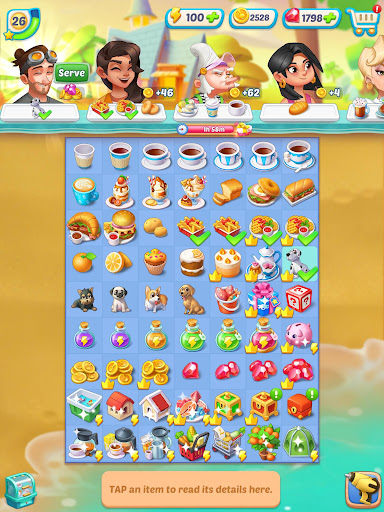
After spending real time with Gossip Harbor: Merge & Story, I came away understanding exactly why it has such a broad audience. This is not a frantic puzzle game and it is not a pure decorating sim either. It sits in that very comfortable middle ground where short merge sessions, light restaurant restoration, and soap-opera storytelling all feed into each other. The result is a game that is immediately approachable, surprisingly relaxing, and more polished than a lot of mobile merge titles. It is also a game that clearly knows how to slow you down once you are invested. The first thing that works in Gossip Harbor is the overall feel. The art direction is bright and appealing without looking cheap, the board is readable, and the flow of tapping, merging, collecting orders, and cashing in rewards is easy to learn within minutes. Even if you have never touched a merge game before, the early hours do a good job of teaching the loop: create ingredients, combine them into higher-tier dishes, fill customer requests, then use the rewards to push the story and renovation forward. It is a familiar structure, but it is handled with enough confidence that it rarely feels clumsy. That sense of smoothness matters because merge games live or die by friction. Here, the basic interactions are satisfying. Watching low-level food items slowly turn into more elaborate orders has a pleasant rhythm to it, and the game is good at giving you just enough small objectives that you always feel like you can make some kind of progress. I liked that it does not bury the player under forced ads every few taps. In daily use, Gossip Harbor feels far less aggressive than many free mobile games. There are monetization hooks, of course, but they are not constantly shoved in your face, and that alone makes the app more relaxing to spend time with. The second big strength is the story wrapper. I would not call it subtle, but it is effective. Quinn's unraveling personal life, the island gossip, and the steady reveal of local secrets give the game momentum beyond simple resource production. This kind of narrative can feel like filler in weaker games, but here it gives the renovation and order-filling loop a reason to exist. I kept wanting to unlock one more conversation, one more reveal, one more room choice. The decorating side also helps. It is not the deepest customization system I have seen, but making visual choices for the restaurant gives a welcome payoff after long stretches of merging sandwiches, coffee, and seafood. A third strength is pacing on a session-by-session basis. Gossip Harbor is very easy to dip into. You can play for a few minutes, clear orders, line up your board, trigger a story beat, and leave satisfied. It suits players who like checking in throughout the day rather than sitting down for hour-long sessions. For older players, casual players, and anyone who wants a low-stress routine game, that structure is a genuine advantage. The biggest weakness, though, is also tied to that structure: energy. Early on, the limits feel manageable. As your board expands and orders become more demanding, the cost of making progress starts to feel much steeper. There were stretches where I felt I had settled into a nice groove only to hit the energy wall far too quickly. You can absolutely play for free, but you have to accept that the game often wants to dictate the length of your sessions. If you are the kind of player who wants to binge progress when you are in the mood, this gets frustrating. The second issue is that repetition becomes more noticeable over time. The core merge mechanic is clean and satisfying, but there is only so much excitement in producing increasingly complex food chains before the task starts to blur together. The story and renovation systems help offset that, but they do not fully eliminate the sense that you are doing variations of the same board management again and again. The game remains pleasant, but not always fresh. The third complaint is that Gossip Harbor does not really match the dramatic style of many of its ads. If you came in expecting a rescue puzzle or a sequence-driven mini-game experience, this is not that. It is a merge-and-story title through and through. I do not think that hurts the game itself, because what is here is better than a gimmick, but it can create the wrong expectation. There are also moments in event design where the game leans too hard into competitive or time-limited pressure, and those parts feel less generous than the main campaign. Who is this for? Players who enjoy merge games, light narrative drama, and decorating progression will probably get exactly what they want. It is especially good for people who prefer calm, repeatable check-ins over high-skill challenge. Who is it not for? Anyone who hates energy systems, wants fully honest ad-to-game consistency, or expects deep puzzle complexity from the start should be careful. Overall, Gossip Harbor: Merge & Story is a strong mobile comfort game. It is attractive, easy to settle into, and unusually successful at making its merge loop feel cozy rather than exhausting. I enjoyed my time with it most when I treated it as a slow-burn daily game instead of a main game. Viewed that way, it is one of the more likable entries in the genre. Just know that once the honeymoon period fades, patience becomes part of the design.