
Apps Games Articles
GoodRx: Prescription Coupons
GoodRx
Rating 4.8star icon
Editor's summary
Editor rating
star icon star icon star icon star icon
half star icon
4.7

One-line summary GoodRx is one of those rare utility apps that feels immediately useful and genuinely money-saving, but you still need to double-check pharmacy acceptance and coupon details instead of assuming every listed price will be effortless at the counter.

  • Installs

    10M+

  • Developer

    GoodRx

  • Category

    Medical

  • Content Rating

    Everyone

  • Latest version

    8.94.0

  • Package

    com.goodrx

In-depth review
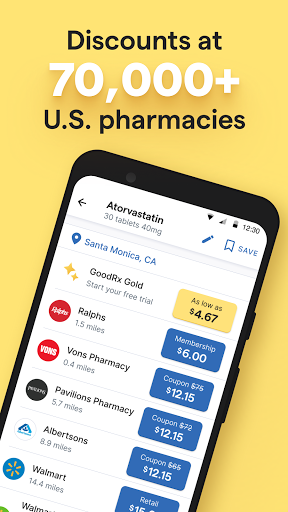
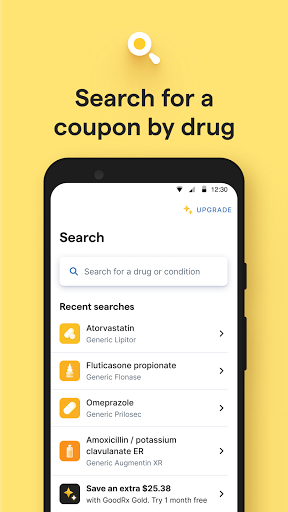
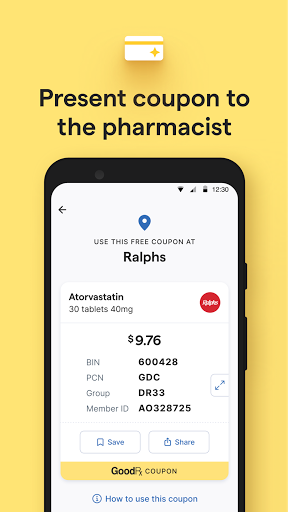
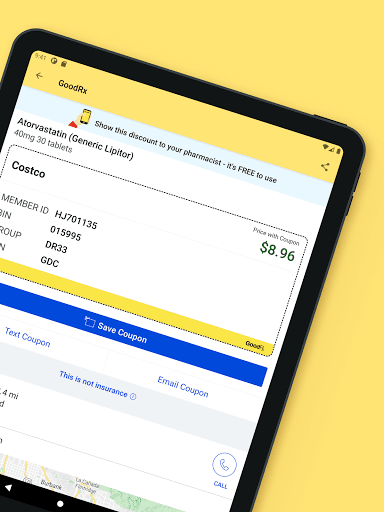
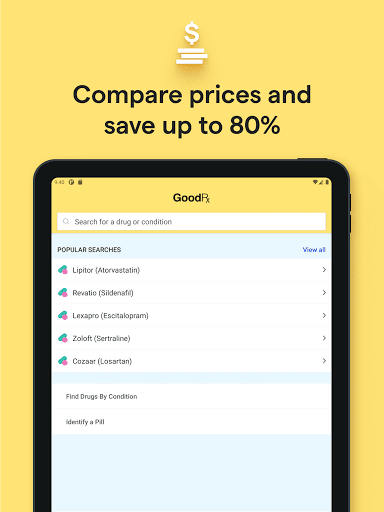
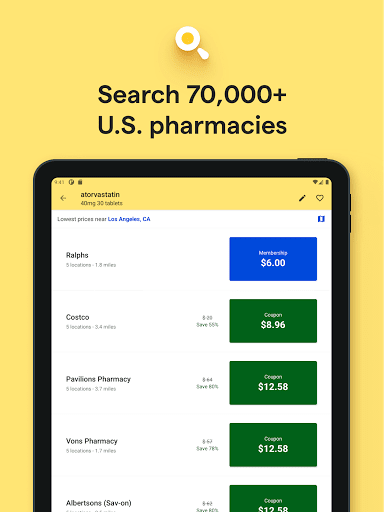
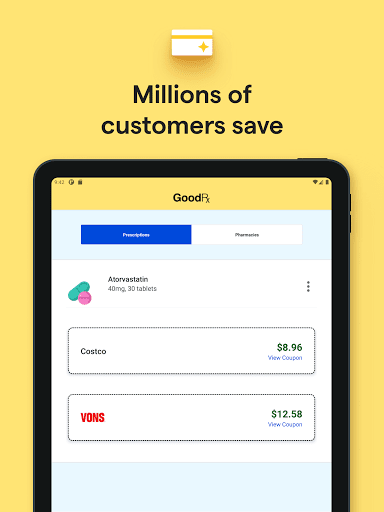
GoodRx: Prescription Coupons is the kind of app that earns its place on a phone not because it is flashy, but because it solves a very expensive real-world problem with surprisingly little friction. After spending time using it the way most people actually would—searching for common prescriptions, comparing nearby pharmacy prices, saving coupons, and pulling them up when it mattered most—my biggest takeaway was simple: this app is at its best when you need fast, practical answers. What does this medication cost near me, and where can I get it cheaper? GoodRx answers that quickly, and in many cases that is enough to make it valuable. The first thing that stands out is how easy the core experience is. Search for a medication, enter the details, and the app presents pharmacy options with pricing in a way that feels direct rather than cluttered. The app does not make its main utility hard to reach. That matters. In many health-related apps, you wade through account prompts, insurance language, banners, and feature overload before getting to the one thing you came for. GoodRx generally keeps the path short. Looking up a prescription and finding a usable coupon feels closer to using a price-comparison tool than navigating a healthcare portal, and that is a compliment. In daily use, the strongest feature is price transparency. Seeing pharmacies listed with prices side by side is useful in a way that goes beyond convenience. Prescription costs can vary wildly, and GoodRx makes those gaps obvious within seconds. We tested it with multiple medications and the experience was consistently eye-opening: the app gives you enough information to make a practical choice before a prescription is sent or filled. If you are paying out of pocket, have weak insurance drug coverage, or simply want to know whether insurance is actually the better deal, this is where the app shines. It turns a process that used to require calling multiple pharmacies into something you can do while standing in line for coffee. A second strength is that the app feels accessible even if you are not especially tech-savvy. The coupon workflow is straightforward: find the medication, choose the pharmacy, pull up the discount details, and show them when needed. There is not much mystery to it. That simplicity matters because the people who most need prescription savings are not always looking for yet another app to learn. GoodRx succeeds by not overcomplicating the part that matters. The third major win is that the free version appears genuinely useful on its own. Too many apps in this category tease utility and then push hard toward a subscription or gate the best functions behind upsells. Here, the basic value proposition is already clear without feeling like a crippled demo. Even if you never go beyond the standard experience, the app can still save real money and time. That said, GoodRx is not perfect, and some of its rough edges show up exactly where people need reliability most: at the pharmacy counter. The app can tell you a price and provide a coupon, but the final transaction still depends on the pharmacy properly accepting and processing that discount. In practice, that means occasional awkwardness. Some stores may need the code re-entered, some refills may not automatically reuse the previous coupon, and some locations may handle mobile screens differently than others. That is not always the app’s fault, but from a user’s perspective it is still part of the experience. If you expect absolute one-tap certainty every single time, GoodRx can feel a little less seamless than it first appears. Another annoyance is that medication search results are only as good as the details you enter. Quantity, generic versus brand name, and pharmacy selection can significantly affect the displayed price. During testing, it was clear that this is an app that rewards careful checking. If you rush through the search, you can easily compare the wrong version of a drug or get a number that is not the exact scenario you need. GoodRx is easy to use, but not so foolproof that you can stop paying attention. The third weakness is that some parts of the broader healthcare toolkit feel secondary compared with the app’s main purpose. GoodRx includes extra health-related services and medication management tools, but the star attraction is clearly prescription price comparison and coupons. That is fine, but it also means some users may download it expecting an all-in-one medical assistant and discover that the killer feature is still the discount search. The app is strongest when treated as a practical prescription savings tool first. Who is it for? This is an excellent app for uninsured users, underinsured users, families managing multiple recurring prescriptions, and anyone who has ever been shocked by what one pharmacy charges versus another. It is also useful for people with insurance, because insurance pricing is not always the cheapest route. If you are willing to compare options before filling a prescription, GoodRx can be incredibly effective. Who is it not for? If you want every prescription purchase to be completely automated, with no need to verify coupon acceptance or compare quantities, this may feel too hands-on. It is also less compelling for someone whose insurance consistently provides better pricing and who always uses the same pharmacy without issue. Overall, GoodRx delivers where it matters most. It is fast, practical, and often surprisingly effective at lowering medication costs. Its best moments feel almost refreshingly old-fashioned for an app in 2025: open it, search, get useful information, save money, move on with your day. That reliability in the core experience outweighs the occasional friction at checkout. I would absolutely recommend keeping it installed, especially if prescription prices are something you ever have to think about—which, for a lot of people, is reason enough.
Alternative apps