
Apps Games Articles
NHS App
NHS Digital
Rating 3.2star icon
Editor's summary
Editor rating
star icon star icon star icon
half star icon
empty star icon
3.9

One-line summary The NHS App is one of the most genuinely useful public-service apps on Android when it works smoothly, but patchy surgery support and occasional login friction keep it from being an easy universal recommendation.

  • Installs

    10M+

  • Developer

    NHS Digital

  • Category

    Medical

  • Content Rating

    Everyone

  • Latest version

    2.23.0

  • Package

    com.nhs.online.nhsonline

In-depth review
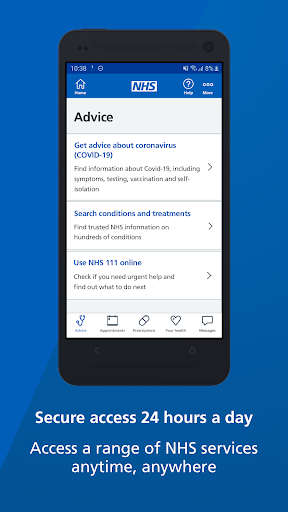
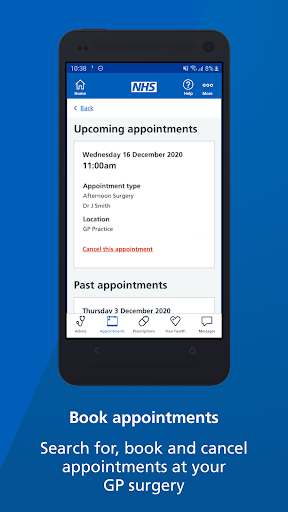
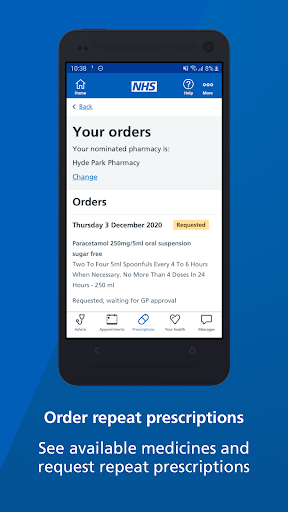
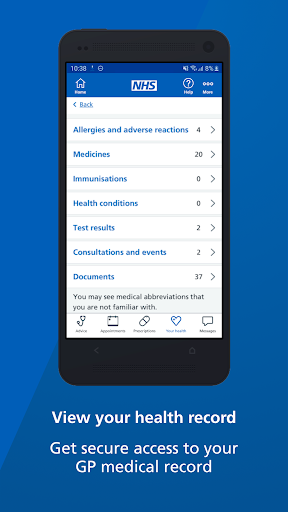
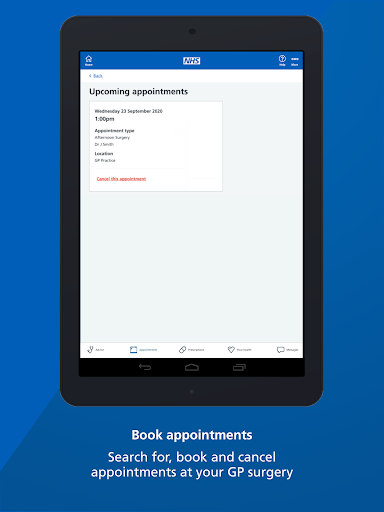
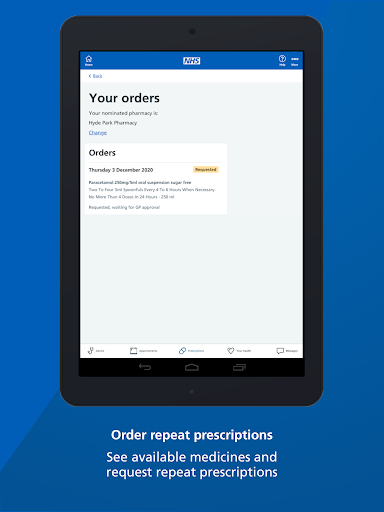
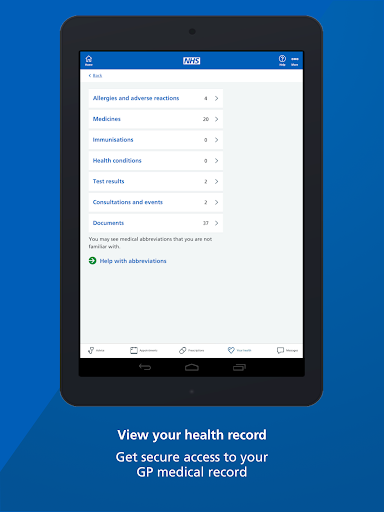
The NHS App is the kind of software that does not need to be flashy to be valuable. It only needs to save you time, cut down on phone calls, and put the information you actually need within easy reach. After spending time using it as a day-to-day health companion rather than just a one-time setup exercise, that is largely what it does well. At its best, it feels like a practical digital front door to NHS services in England: quick to open, clear to navigate, and genuinely helpful when you need to check a prescription, look up a result, or confirm a vaccination record. At its worst, it still carries the familiar frustrations of large public systems, especially when account setup or surgery-specific features do not behave as consistently as they should. The first thing that stands out is that the app is more polished than its mixed reputation might suggest. The interface is clean, sensible, and mostly free of the clutter that often burdens health apps. Key tasks are easy to find, and that matters here more than visual flair. In regular use, the app feels structured around real needs rather than feature bloat. Checking your GP record, viewing medications, looking at appointments, and accessing messages all sit where you would expect them to. There is very little hunting around once you are in. That straightforward design is one of the app's biggest strengths because it makes routine admin feel manageable instead of bureaucratic. Another strong point is convenience. For anyone who deals with repeat prescriptions or simply wants quick access to health information without sitting on hold, the NHS App can be genuinely liberating. Being able to open one app and see medications, appointments, test information, and health messages in one place makes a real difference. It turns what would normally be a chain of phone calls, web logins, and paper notes into a few taps. The app also benefits from secure login options on supported devices, which makes repeat access much less painful once everything is set up properly. In everyday use, that speed adds up. A third strength is that it feels broad without feeling overwhelming. The app is not just a records viewer. It can also act as a practical communication and management tool, whether that means handling prescription requests, checking service information, or viewing official health status details. Importantly, it does not bombard you with unnecessary prompts or commercial nonsense. There are no ads, no upsell tactics, and no sense that your attention is being pulled away from the task at hand. For a public-facing app, that restraint is refreshing. That said, the NHS App is not friction-free. The biggest weakness is still onboarding and login reliability. If your setup goes smoothly, you may wonder what all the fuss was about. But when something breaks, it can fail in ways that feel opaque rather than informative. A blank page after sign-in, confusion during identity checks, or the need to troubleshoot something outside the app itself can quickly drain confidence. This is especially frustrating because health access is not the sort of thing where users have much patience for trial and error. An app like this needs to be boringly dependable, and it does not always hit that standard. The second weakness is that the experience can depend heavily on what your GP surgery supports. On paper, the app presents a fairly comprehensive toolkit, but in practice some features may be more useful than others depending on your surgery. That creates an uneven feeling. You can see the shape of a very capable health app, yet parts of it may feel more like a promise than a tool you can fully rely on. This is not a design failure exactly, but it does affect the experience, and it means two people can come away with very different impressions of the same app. The third issue is that identity verification and account recovery are not always as intuitive as they should be. Most of the journey is guided well enough, but there are moments where the app assumes a level of comfort with document checks, camera positioning, or switching between screens that not every user will have. On a phone, especially for less tech-confident users, password resets and proof-of-identity steps can become more fiddly than they ought to be. That is not a deal-breaker, but it does stop the app from feeling universally accessible. In daily use, though, the balance still tilts positive. Once past setup, the NHS App is often exactly what it should be: a quiet, practical utility that saves time and reduces hassle. I especially liked how little ceremony there is around the main tasks. Open the app, authenticate, and the information is there. No dramatic redesigns, no social features, no nonsense. For checking records and managing routine NHS admin, that simplicity is a genuine virtue. Who is it for? This app makes the most sense for people in England who want a central, mobile-friendly way to manage repeat health tasks, check records, and receive NHS-related messages without relying on calls or paperwork. It is particularly useful for those already comfortable with online accounts and smartphone authentication. It is less ideal for anyone who struggles with digital identity checks, expects every listed feature to work identically regardless of surgery, or needs absolute certainty that login and access will never become a troubleshooting exercise. Overall, the NHS App is a good app with a very important job, and most of the time it handles that job well. It is not perfect, and its rough edges matter because of the kind of service it provides. But judged on what it can do when properly set up, it is useful, thoughtfully designed, and often more efficient than the alternatives it replaces. I would recommend it, with the caveat that your experience may depend as much on the surrounding NHS infrastructure as on the app itself.