
Apps Games Articles
APPatient
Modernizing Medicine
Rating 3.2star icon
Editor's summary
Editor rating
star icon star icon star icon
half star icon
empty star icon
3.8

One-line summary APPatient is worth choosing if your clinic actually supports it well, because it puts messaging, records, and appointment details in one practical place—but its appeal drops fast if you expect a slick, universally seamless app experience.

  • Installs

    100K+

  • Developer

    Modernizing Medicine

  • Category

    Medical

  • Content Rating

    Mature 17+

  • Latest version

    7.0.1 (e331c075b)

  • Package

    com.modernizingmedicine.patientportal

Screenshots
In-depth review
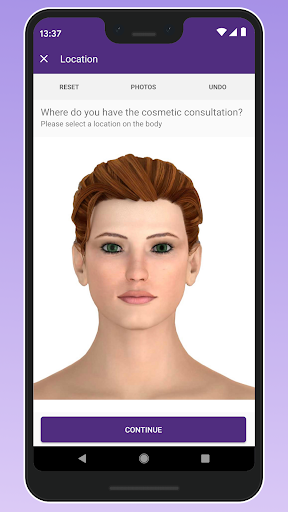
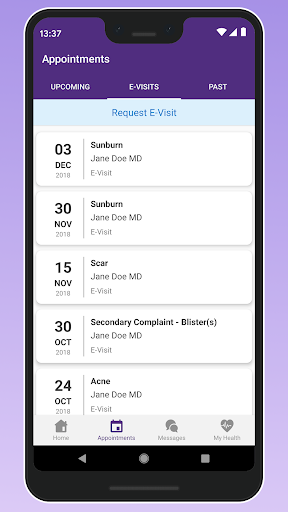
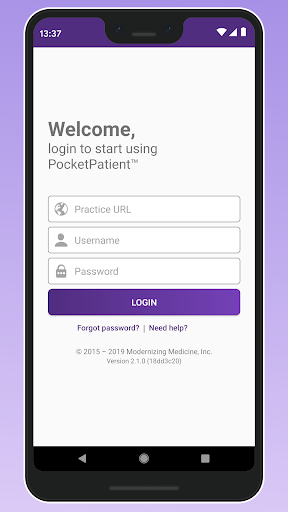
APPatient feels less like a consumer wellness app and more like a working extension of a doctor’s office, and that distinction matters. After spending time with it, the biggest takeaway is that this is a utility-first medical app: it is built to help you handle real tasks—checking upcoming appointments, reading messages, looking up records, reviewing test results, and managing the back-and-forth that usually clogs up phone lines. When it works well, it can genuinely make dealing with healthcare less annoying. When it doesn’t, it reminds you very quickly that clinical software and polished mobile design are not always the same thing. The setup and sign-in experience immediately establish what kind of app this is. APPatient leans on the credentials you already use through your provider’s patient portal, so there is a practical convenience here if your clinic is already in the Modernizing Medicine ecosystem. You are not building a brand-new health profile from scratch; you are stepping into a mobile version of an existing relationship with your practice. That makes the app feel useful right away for the right patient. At the same time, it also means APPatient is only as good as your provider’s support for it. This is the first limitation you notice: unlike a broad health app that can stand alone, APPatient depends heavily on how fully your physician’s office has embraced the platform. Once inside, the best part of APPatient is that the core functions are easy to understand. The app does not bury its value under fitness fluff or lifestyle extras. Its strongest everyday feature is communication. Being able to send a message to your healthcare team without sitting on hold is exactly the kind of basic convenience that matters in real life. In use, this makes APPatient feel calm and practical. If you have a non-urgent follow-up question, want to check on paperwork, or need clarification after an appointment, having a message channel available after hours is a real benefit. That alone can justify installing it. The second major strength is access to records. APPatient is at its most useful when you need to confirm something simple but important: what happened at your last visit, what your chart says, whether a result has posted, or what prescription information is currently on file. That kind of information often matters at inconvenient times—when you are at another appointment, filling out a form, or trying to remember what your doctor told you a week ago. In those moments, the app earns its place on your phone. It reduces friction, and in healthcare, reducing friction is a meaningful feature. A third strength is that it generally keeps the scope under control. There is a straightforwardness to APPatient that many patients will appreciate. It is not especially flashy, but it is approachable. Even users who are not deeply comfortable with technology should be able to navigate the basic functions without much trouble. Reading messages, checking visit summaries, and reviewing lab information all fit the app’s no-nonsense style. In daily use, that simplicity is often better than a more ambitious but confusing design. That said, APPatient is not an app I would call elegant. The first weakness is that the overall feel can be a bit plain and clinical. There is a difference between simple and refined, and APPatient lands more on the functional side than the polished side. Navigation is serviceable, but it does not always feel especially modern or smooth. Nothing about the app invites browsing; you open it with a purpose, complete a task, and leave. For a medical tool, that is not fatal, but it does limit how pleasant the experience feels. The second weakness is the unevenness that comes from provider-dependent features. Some practices may support messaging, check-in, records, telehealth access, and prescription workflows in a useful way, while others may expose only part of the experience. From the patient side, that can make the app feel inconsistent. You may see the promise of a full-service portal, but your actual day-to-day usage depends on what your clinic has enabled and how actively they maintain it. That is not a flaw in the concept, but it is a real source of friction in practice. The third weakness is that APPatient’s value is heavily concentrated in a handful of administrative and communication tasks. If you are hoping for a richer health-management app with broader insights, deeper tracking, or a more consumer-friendly experience, this is probably not it. APPatient does not feel like a destination app; it feels like infrastructure. That makes it helpful, but not especially compelling beyond its practical role. Who is it for? APPatient is best for patients whose doctors already use the Modernizing Medicine system and who want a reliable mobile way to message the office, check appointment information, view summaries, and access records without calling in. It is especially useful for people managing ongoing care, prescriptions, test results, or frequent follow-ups. It is not for someone looking for a general personal health hub, a highly polished lifestyle app, or a tool that offers much value independent of their provider. In the end, APPatient succeeds because it addresses the parts of healthcare that waste the most time: missed details, phone tag, scattered records, and basic follow-up questions. It does not charm its way onto your phone, but it can absolutely earn its spot there. If your physician’s office supports it properly, APPatient is a practical, worthwhile companion. If not, its limitations become visible quickly. That puts it in a slightly awkward middle ground: not a standout app in design terms, but a genuinely useful one when the clinical connection behind it is strong.
Alternative apps