
Apps Games Articles
Telegram
Telegram FZ-LLC
Rating 3.9star icon
Editor's summary
Editor rating
star icon star icon star icon star icon empty star icon
4.2

One-line summary Telegram is still one of the most capable and flexible messaging apps you can install, but its occasional reliability hiccups, spam exposure, and habit of tucking some useful features behind Premium keep it from being an automatic recommendation for everyone.

  • Installs

    1B+

  • Developer

    Telegram FZ-LLC

  • Category

    Communication

  • Content Rating

    Mature 17+

  • Latest version

    12.5.1

  • Package

    org.telegram.messenger

In-depth review
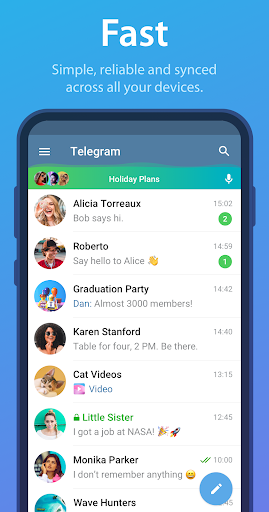
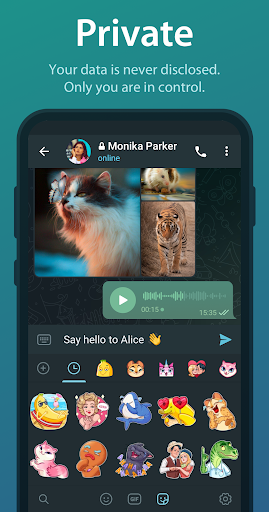
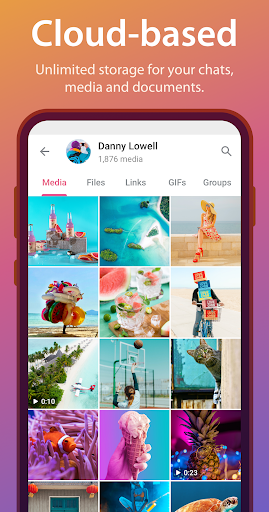
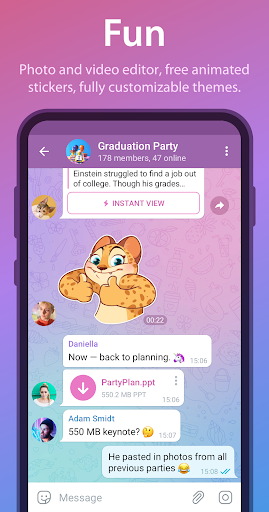
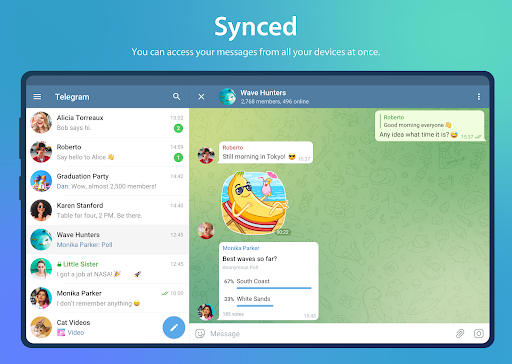
Telegram remains one of those rare messaging apps that feels bigger than messaging. After spending real time with it across routine one-to-one chats, noisy group threads, media sharing, and multi-device use, what stands out most is how unusually capable it feels without becoming completely overwhelming. It is fast, polished in many places, and clearly built for people who do more than send a few texts a day. At the same time, living with Telegram also exposes some recurring annoyances that matter precisely because the app is so ambitious. The best thing about Telegram in daily use is its sense of freedom. You are not boxed into a narrow definition of what a chat app should do. Sending large files is easy, sharing media feels frictionless, and the app handles documents, voice notes, photos, videos, and links with far less resistance than many mainstream messengers. The Saved Messages space is especially useful in practice. I ended up using it as a personal inbox, scratchpad, and cross-device dropbox for notes and files. That cloud-first design makes Telegram feel unusually convenient when you move between phone, tablet, and desktop. Messages, drafts, and shared content are simply there, and that seamless sync is one of the app’s strongest arguments. The second major strength is scale. Telegram is excellent for people who live in communities, study groups, hobby channels, or large discussion spaces. Group chats feel like a core part of the app rather than an afterthought. Even when conversations get busy, Telegram generally stays readable and responsive, and its organizational tools help more than you might expect. Folders, pinned chats, and the overall structure make it easier to manage a crowded inbox than in many rivals. If your idea of messaging includes communities and information feeds as much as private conversations, Telegram is in its element. Its third big advantage is customization and control. The interface is clean enough to learn quickly, but there is a lot under the surface for people who like tailoring their experience. Themes, chat organization, privacy settings, scheduling options, and a broad set of communication tools give Telegram a distinctly power-user flavor. Yet it does not feel hostile to regular users. The app generally lets you start simple and grow into its deeper features over time. That balance between accessibility and depth is one of Telegram’s most impressive design achievements. But Telegram is not friction-free, and the first weakness is reliability consistency. Most of the time, it feels quick and smooth. Then you hit one of those stretches where it gets stuck on connecting, hangs during setup, or briefly behaves like a beta build instead of a mature communication app. In my time with it, the app was usually dependable, but not perfectly dependable. Small bugs and occasional update-related rough edges can feel disproportionately annoying in a messenger, because messaging is the kind of utility people expect to work instantly and invisibly. The second issue is privacy in the practical, day-to-day sense rather than the marketing sense. Telegram offers meaningful privacy tools, and there is genuine flexibility in how visible you are. But the app’s openness can also work against ordinary users. It is simply easier than it should be to attract random messages, spam, bot pings, and scam attempts if your account becomes even slightly exposed. That creates a strange split in the experience: Telegram can feel empowering when you are controlling who can reach you, and irritating when the app’s social openness starts inviting the wrong kind of attention. For users who want a locked-down, tightly curated contacts-only environment by default, Telegram may feel too porous. The third complaint is that some features feel a little too strategically segmented. Telegram is free and highly usable without paying, but now and then you run into options that feel like they should be standard rather than premium-adjacent. It does not ruin the app, but it does introduce a mild sense of friction, especially for longtime users who value Telegram precisely because it historically felt generous and unconstrained. There are also some smaller usability quirks. File handling is powerful, but not always elegant. Downloaded content does not always behave the way you expect on Android, and saving or locating files can occasionally feel less intuitive than it should. Certain interface decisions also prioritize feature density over calmness; depending on your preferences, reactions, story visibility, or account display choices may feel a bit noisier than ideal. None of these issues are deal-breakers on their own, but together they remind you that Telegram is a very feature-rich app that sometimes needs more refinement around the edges. So who is Telegram for? It is an excellent choice for people who want more than basic chatting: students juggling files and group work, enthusiasts active in communities, users who move constantly between devices, and anyone who values flexible sharing and strong organizational tools. It is also a very good fit for people who like having options and do not mind learning a slightly deeper app. Who is it not for? If you want the simplest possible messenger with the fewest distractions, the tightest default control over who can contact you, and a more restrained feature set, Telegram may feel too busy and too open. And if any hint of occasional bugs or connectivity weirdness is enough to sour the experience, that hesitation is understandable. Even with those complaints, Telegram is still easy to admire. Few messaging apps feel this versatile, this cross-device friendly, or this comfortable with both private chats and giant communities. It is not perfect, and it can be messy around the edges, but when it clicks, it is one of the most useful communication apps on Android.