
Apps Games Articles
The Messenger for Messages
Everyday Apps by Appytome Tech
Rating 4.4star icon
Editor's summary
Editor rating
star icon star icon star icon
half star icon
empty star icon
3.8

One-line summary The Messenger for Messages is worth a look if you want a lightweight hub for messaging and quick call access, but I’d hesitate to recommend it as a true all-in-one replacement because parts of the experience feel more like a shortcut layer than a fully polished messenger.

  • Installs

    10M+

  • Developer

    Everyday Apps by Appytome Tech

  • Category

    Social

  • Content Rating

    Mature 17+

  • Latest version

    11.5.4

  • Package

    com.messenger.messengerpro.social.chat

In-depth review
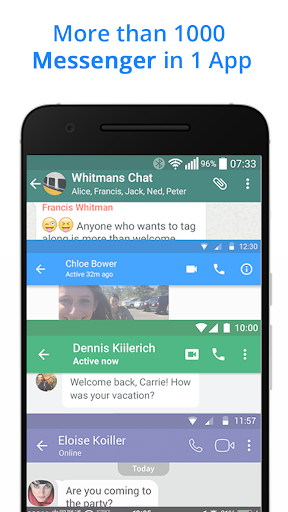
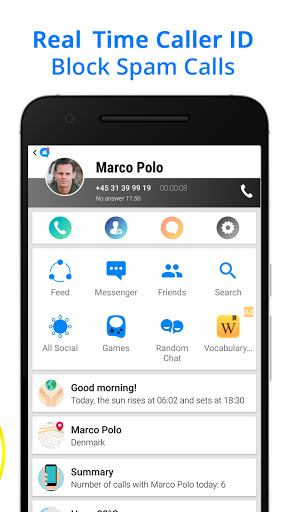
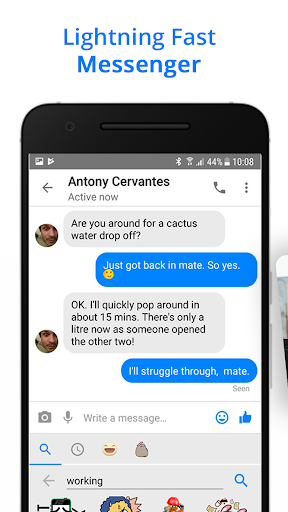
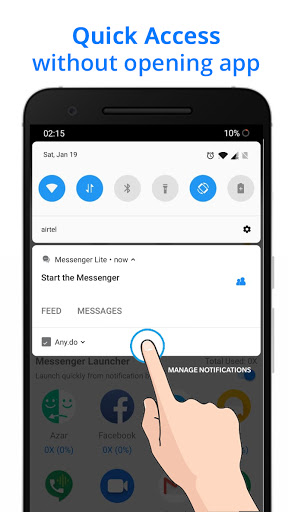
After spending time with The Messenger for Messages, the clearest way to describe it is this: it is less a brand-new messaging universe and more a convenience tool for people who want their communication apps gathered into one place with a few extra utilities on top. That distinction matters, because if you install it expecting a seamless, premium-grade replacement for the biggest chat apps, you may come away disappointed. If, however, you want faster access to messaging, calling, and social tools without filling your phone with too many separate apps, it makes a better first impression. The app’s biggest strength is convenience. On a day-to-day basis, it feels built for people who jump between texting, video chatting, and social communication often, and who do not want to keep hunting around their phone for the right app every time. The quick-access approach works reasonably well. Features like the floating bubble and notification access are clearly meant to reduce friction, and in practice they do help if you are the kind of user who wants to open a messenger from anywhere on the screen. During testing, that “one tap from anywhere” idea was one of the app’s more practical touches. It is not glamorous, but it is useful. Another thing the app gets right is accessibility in a broad, everyday sense. The interface is straightforward enough that it does not take much effort to understand what it is trying to do. Messaging-focused apps can sometimes bury simple actions under layers of tabs and account prompts, but this one aims for directness. I found it easy to move around, and that matters for an app that is supposed to save time rather than create extra steps. There is also a real sense that it is designed for people who rely on messaging heavily to stay in touch with family, friends, or clients. For basic communication, it does a serviceable job of keeping things close at hand. The third clear positive is that the app tries to offer more than just a launcher-like wrapper. The chat mask concept, for example, is an interesting addition for anyone who values a little more privacy while messaging in public. It is not the kind of feature everyone will need every day, but it shows some awareness of real-life use cases. The caller ID and spam-related angle is also potentially appealing. In practice, that gives the app a more utilitarian feel than a plain shortcut tool. It wants to be something you keep around not just for chatting, but for managing communication more broadly. That said, the app’s limitations become obvious fairly quickly. The biggest issue is that the experience can feel uneven depending on what you expect it to be. Its store presentation talks in the language of full messaging, video calling, voice calls, and group communication, but when you actually use the app, the value often comes more from aggregation and access than from a deeply integrated messaging platform of its own. That gap between expectation and experience is the main reason I would not recommend it blindly. If you install it thinking it replaces your primary messenger apps outright, the result can feel a bit underwhelming. Performance is another mixed area. In general use, the app is functional, but not always elegant. Some parts feel smooth enough, while others feel a little delayed or less refined than the best communication apps on Android. Video chat and call-related features are attractive on paper, but this is also where polish matters most, and the app does not consistently feel top-tier. Even small delays become more noticeable in communication apps because timing is part of the experience. When you are reading lips, trying to keep a conversation flowing, or just expecting immediate responsiveness, any lag stands out. A third drawback is that the app’s identity is sometimes muddled. It wants to be a messenger, a social hub, a privacy tool, a caller ID utility, and a lightweight access layer all at once. There is value in that ambition, but it can also make the app feel less focused. The people who will appreciate it most are those who actively want one place to jump into multiple communication tools. The people who probably will not enjoy it are users who want a clean, dedicated, highly polished standalone chat app with a single clear purpose. In everyday use, I found The Messenger for Messages easiest to like when I treated it as a practical helper rather than a central communications platform. Open it quickly, jump where you need to go, use the extra privacy or access features, and it makes sense. Judge it as a direct substitute for the very best dedicated messaging apps, and the rough edges become much harder to ignore. That does not make it bad; it just makes it more niche than its broad branding suggests. So who is it for? It is best for Android users who want a free, simple communication hub, especially those who switch between social and messaging apps often and like utility features such as fast access, chat masking, or caller ID. It may also suit people with limited phone storage who prefer an all-in-one approach over installing and managing many separate apps. Who is it not for? Anyone looking for a best-in-class standalone messenger with the smoothest video calling, the most cohesive interface, and the clearest product identity should probably look elsewhere. Power users who care about polish over convenience may also find it a little too patchwork. Overall, The Messenger for Messages is useful more often than it is impressive. It solves a real convenience problem, and it does so with enough ease that I can see why many people keep it around. But its strongest feature is access, not excellence. If that matches what you need, it is worth trying. If you want a messaging app that feels definitive, this one is harder to fully endorse.