Apps Games Articles
Geometry Dash SubZero
RobTop Games
Rating 4.5star icon
Editor's summary
Editor rating
star icon star icon star icon star icon
half star icon
4.5

One-line summary Choose Geometry Dash SubZero for its brilliantly synchronized, high-energy challenge and standout presentation, but skip it if you want lots of content or have little patience for repeated failure and occasional ad interruptions.

  • Installs

    50M+

  • Developer

    RobTop Games

  • Category

    Arcade

  • Content Rating

    Everyone

  • Latest version

    1.00

  • Package

    com.robtopx.geometrydashsubzero

Screenshots
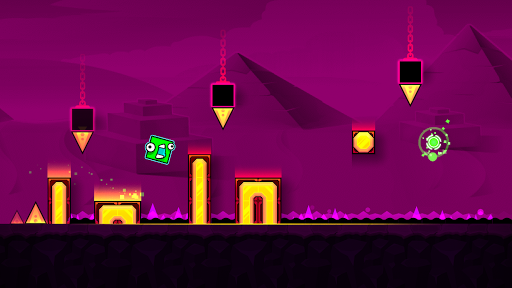
In-depth review
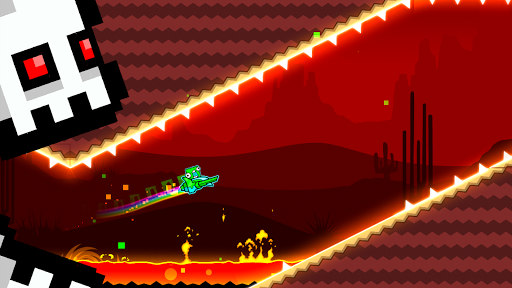
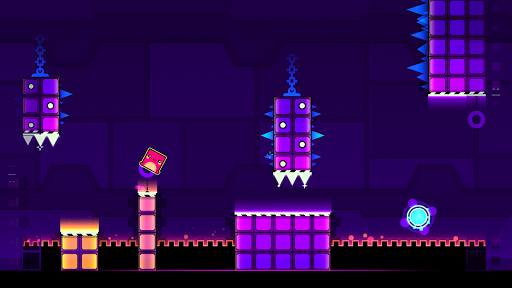
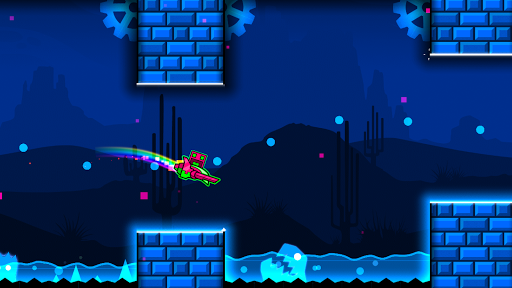
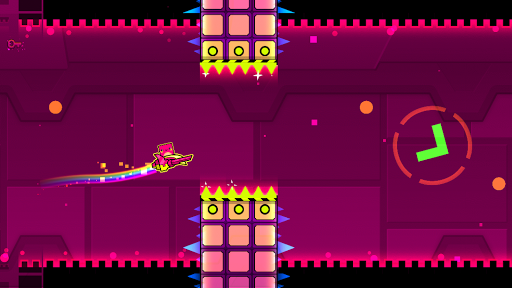
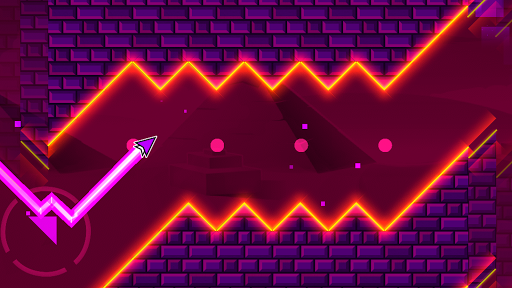
Geometry Dash SubZero is one of those rare free mobile games that understands exactly what it wants to be. Within a minute of starting, it makes its pitch very clearly: this is a rhythm platformer built around precision, repetition, and that addictive “one more try” loop. After spending real time with it, I came away impressed not because it is generous with content or easy to love immediately, but because it is so confident in its design. It is sharp, stylish, punishing, and surprisingly polished for a free standalone entry. The first thing that stands out in actual play is the presentation. SubZero looks fantastic in motion. The levels don’t just scroll from left to right in a flat, mechanical way; they shift perspective, play with camera zoom, reverse direction, flash with neon color, and constantly remix the visual rhythm of the run. It gives the game a sense of momentum that feels far more dramatic than its simple one-touch controls suggest. Even when you are failing over and over, the spectacle keeps the frustration from turning stale. There is always some clever transition, visual trick, or sudden twist in movement that makes another attempt feel worthwhile. Just as important, the music is not background decoration here. It is the backbone of the entire experience. Each stage feels built around its track rather than merely accompanied by it, and that tight sync is what makes the game satisfying. When you finally get through a section that seemed impossible a few minutes earlier, it does not feel accidental. It feels like you learned the song, learned the rhythm, and earned the clear. That is one of SubZero’s biggest strengths: it creates a strong sense of mastery through repetition instead of relying on upgrades, rewards, or filler systems. The controls are as simple as ever: tap to jump, hold when required, react quickly, and memorize patterns. That simplicity is part of the hook. There is almost no friction between you and the challenge. If you die, and you will die a lot, the restart is instant enough that the game rarely loses its momentum. Practice mode also helps soften the difficulty wall. It does not make the game easy, but it gives determined players a way to break down the harder sequences and understand where the level is trying to trick them. For a game this demanding, that option matters. SubZero also does a good job of feeling like a compact, intentional package rather than a stripped-down demo. The three included levels are distinct, memorable, and full of personality. They are not throwaway content. Each one pushes different visual ideas, rhythm patterns, and gameplay gimmicks, and there is genuine satisfaction in learning their structure. Unlockable icons add a little customization, and secret coin routes give better players an extra layer of challenge beyond simply surviving to the end. That said, the game’s weaknesses are just as clear once the initial rush settles. The biggest one is content. Three levels can absolutely be enough to make an impression, and these three are well made, but there is no getting around the fact that SubZero is a short experience. If you are deeply invested in perfecting runs, collecting coins, and replaying for mastery, that limitation matters less. But if you want a steady stream of new stages or a broader progression arc, this app runs out of road fairly quickly. The second major drawback is the difficulty itself. For fans of Geometry Dash, that is part of the appeal. For everyone else, it can feel brutal. This is not a relaxing arcade game to dip into casually while half-distracted. It demands concentration, quick reactions, and a willingness to fail repeatedly while learning exact patterns. There were stretches where the game felt exhilarating, and others where it crossed into pure irritation, especially during trickier late-level sequences that require memorization as much as reflex. If you dislike games that expect repeated trial and error, SubZero will wear you down fast. The third annoyance is the free-to-play friction around ads and occasional rough edges. Ads are not constant to the point of ruining the experience, but they do interrupt the flow often enough to be noticeable in a game built around rapid retries. And while the core gameplay feels polished, there are moments where performance or sync can feel less than ideal depending on device behavior. In a rhythm platformer, even a small hitch is more frustrating than it would be in another genre because timing is everything. Who is this for? It is for players who enjoy skill-based arcade games, rhythm-driven design, and the satisfaction of slowly turning chaos into muscle memory. It is also a great fit for anyone curious about Geometry Dash but unwilling to pay upfront before seeing whether the formula clicks. Who is it not for? Anyone looking for a laid-back platformer, a long campaign, or a forgiving mobile game they can casually breeze through will probably bounce off it. In the end, Geometry Dash SubZero succeeds because it respects the player’s time in an unusual way: it does not pad itself with systems, and it does not pretend to be broader than it is. It offers a small set of hard, flashy, musically driven levels and asks whether you are willing to meet that challenge head-on. If the answer is yes, it is one of the most exciting free arcade downloads on Android. If the answer is no, it will feel punishing, limited, and occasionally repetitive. For the right player, though, that intensity is exactly the point.
Alternative apps