
Apps Games Articles
Rise Up
Serkan Özyılmaz
Rating 3.8star icon
Editor's summary
Editor rating
star icon star icon star icon star icon empty star icon
4.2

One-line summary Rise Up is easy to recommend if you want a genuinely tense, pick-up-and-play reflex game, but its ad interruptions and occasional collision weirdness can chip away at the zen.

  • Installs

    100M+

  • Developer

    Serkan Özyılmaz

  • Category

    Arcade

  • Content Rating

    Everyone

  • Latest version

    3.1.10

  • Package

    com.riseup.game

Screenshots

In-depth review
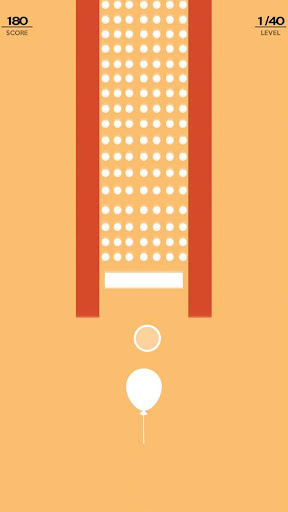
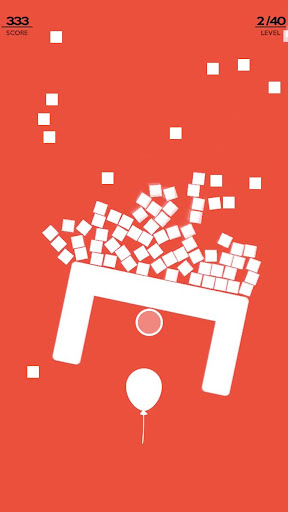
Rise Up is one of those mobile arcade games that looks almost too simple at first. You guide a protective shield ahead of a rising balloon, batting away blocks, beams, spikes, and other physics-driven hazards before they can touch it. That premise is immediate enough that you understand the whole game in seconds, but after spending real time with it, the surprise is how much mileage the app gets out of that single idea. The first thing Rise Up gets right is feel. The controls are extremely straightforward: you drag the shield around and try to clear a safe path. There is no clutter, no complicated tutorial wall, and no need to learn layered systems before the fun starts. On a phone, that matters. This is exactly the kind of game you can open for thirty seconds while waiting in line, then accidentally keep playing for fifteen minutes because you are sure the next run will be better. That “one more try” loop is where Rise Up is strongest. What makes the game work is the tension between precision and chaos. You are not simply tapping enemies in fixed patterns. Objects bounce, slide, tumble, and pile into one another, and that creates moments that feel both skill-based and slightly improvised. Some runs are satisfying because you play cleanly and methodically, carving a perfect path through narrow hazards. Other runs become messy, with you swatting one obstacle away only to send a second piece spinning back toward the balloon. That unpredictability gives Rise Up personality. It feels less like solving a puzzle and more like trying to maintain control in a tiny physics disaster. The presentation also helps. Visually, the game is minimal, but not bland. The clean shapes, soft backgrounds, and uncluttered 2D style keep everything readable, which is essential in a game where fractions of a second matter. Just as important, the music does a surprising amount of work. Instead of pushing loud arcade energy, Rise Up often leans into calmer audio, which gives the game an odd but appealing contrast: your hands are panicking while the soundtrack stays serene. That tonal choice makes the game memorable, and it keeps frustration from boiling over quite as quickly. Another strength is that the challenge ramps in a way that stays engaging for longer than expected. Early obstacles teach you the basics, but later sequences demand better anticipation, cleaner positioning, and smarter use of the shield. The game can feel brutally unfair when you are learning, yet there is usually a sense that improvement is possible. You start recognizing patterns, understanding how certain objects react when pushed, and learning when not to overcorrect. For players who enjoy reflex-heavy arcade design, that learning curve is a big part of the appeal. That said, Rise Up is not frictionless. The biggest annoyance is ads. In a game built around short, repeated runs, interruptions matter more than they do in slower genres. Even when ad breaks are brief, they can blunt the rhythm of failure, retry, improve. This is the kind of app that is best when it feels fluid and immediate, so anything that gets between attempts is felt sharply. If you are especially sensitive to monetization in arcade games, this is the main reason you may hesitate. The second issue is occasional jank in the physics and collision behavior. Most of the time, the chaos is exciting; sometimes it crosses over into feeling a little unreliable. There were moments where an obstacle seemed to clip the balloon in a way that looked harsher than expected, or where moving pieces behaved in ways that felt inconsistent rather than challenging. Because the game is so dependent on precise interactions, even small hiccups stand out. Rise Up usually feels fair enough to keep going, but it does not always feel perfectly polished. The third weakness is simply how punishing the format can be. This is not a relaxed progress simulator where you coast through content. It demands concentration, and repeated failures are part of the design. That is motivating if you enjoy score-chasing and mechanical mastery. It is exhausting if you prefer games that reward persistence more gently. Some levels and obstacle combinations can turn a quick session into a test of patience, especially when one tiny mistake ends the run instantly. Who is Rise Up for? It is for players who like classic arcade pressure, short sessions, and games built on reflexes rather than story or progression systems. It is especially good for people who want something they can dip into offline and immediately understand. It is not for players who hate restarting, dislike ad-supported games, or expect consistently forgiving physics. After spending time with it, my takeaway is that Rise Up remains compelling because it understands the power of a sharp core mechanic. It does not need elaborate features to be memorable. It needs responsive control, readable hazards, escalating pressure, and that constant temptation to try again. It stumbles in a few familiar mobile-game ways, especially around interruptions and occasional rough edges, but when it is in motion, it is hard to deny how effective it is. If you can tolerate a bit of frustration, Rise Up delivers one of the better minimalist arcade hooks on mobile.
Alternative apps