Apps Games Articles
Type Spin
KAYAC Inc.
Rating 4.2star icon
Editor's summary
Editor rating
star icon star icon star icon star icon empty star icon
4.2

One-line summary Type Spin is easy to recommend if you want a light, clever physics time-killer with a genuinely fresh hook, but it is harder to love if repetitive levels and ad interruptions wear out their welcome quickly.

  • Installs

    10M+

  • Developer

    KAYAC Inc.

  • Category

    Racing

  • Content Rating

    Everyone

  • Latest version

    2.4.0

  • Package

    com.kayac.type_spin

In-depth review
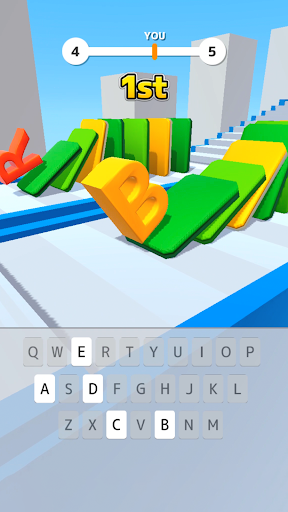
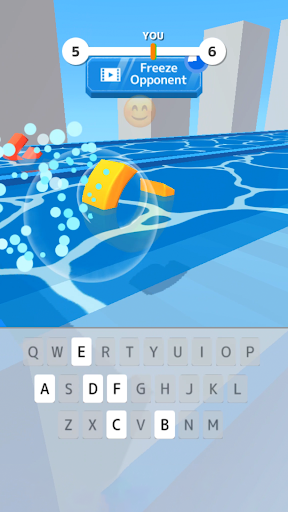
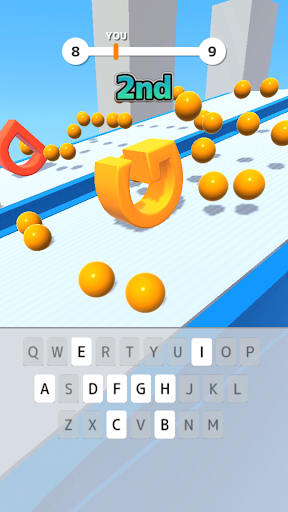
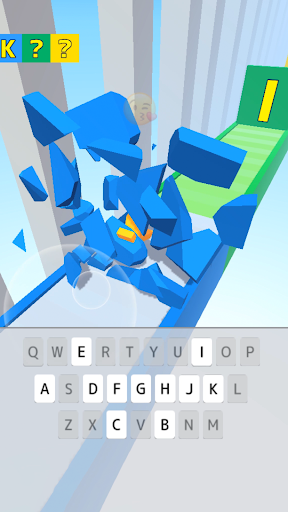
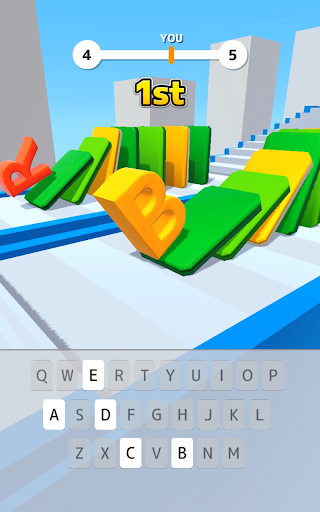
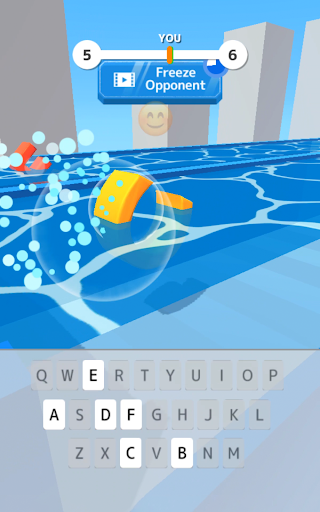
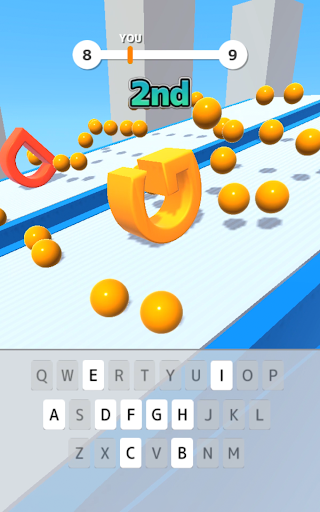
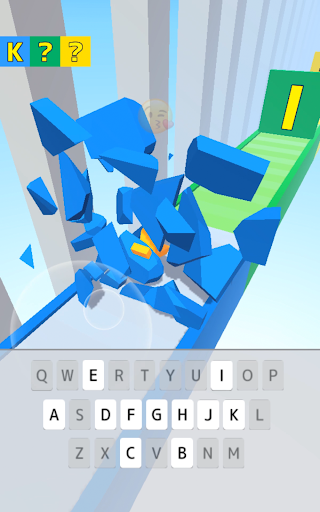
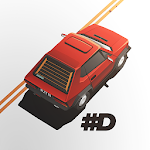
Type Spin is one of those mobile games that wins you over almost immediately because the core idea is so simple and so odd that you want to see how far it can go. Instead of steering a car or rolling a ball in the usual way, you type letters and watch them become the spinning shape that has to reach the goal. That single mechanic gives the game its identity, and in the opening stretch it feels surprisingly inventive. After spending time with it, my reaction is that Type Spin absolutely understands the value of a strong gimmick. The good news is that the gimmick works. The less good news is that the rest of the game does not always build on it in equally interesting ways. What makes Type Spin immediately enjoyable is the tactile relationship between language and physics. Different letters create different outlines, and those outlines interact with the terrain in ways that can be funny, clumsy, efficient, or unexpectedly brilliant. There is real satisfaction in realizing that one shape glides over a gap while another gets snagged, or that a rounder letter can roll where a sharper one stalls. It gives the game a toy-like quality that is easy to appreciate even in very short sessions. I found myself playing “just one more” level more than once simply because I wanted to test another letter combination and see how the object behaved. That sense of experimentation is Type Spin’s biggest strength. This is not a complicated game, and it does not pretend to be. The controls are accessible, the concept is understood within minutes, and the moment-to-moment play is relaxed enough that almost anyone can pick it up without a tutorial-heavy learning curve. If you are looking for a game to kill a few minutes while waiting in line or winding down at night, it fits that role very well. There is also a breezy, low-pressure feel to the presentation. The visuals are clean, the game is readable at a glance, and it rarely feels cluttered. It has the kind of hypercasual polish where you always know what the game wants from you. Another thing I liked is that Type Spin often feels pleasantly silly in the best possible way. Watching letters tumble, spin, and scrape their way toward the finish line gives it a bit of personality without needing a story or a lot of extra framing. The game understands that the physical comedy of awkward shapes doing their best is enough. That keeps it approachable for younger players and for anyone who wants something playful rather than intense. It is also the sort of game that works well even if you only play in bursts; you do not need to remember a complicated progression system or invest in long sessions to enjoy it. Still, once the novelty settles, the game’s limitations become harder to ignore. The first issue is repetition. The central mechanic is clever enough to carry the early experience, but the levels can begin to blur together. You keep doing variations on the same basic action, and while that is normal for a hypercasual title, Type Spin does not always layer on enough fresh twists to keep the concept evolving. I had stretches where it felt engaging and inventive, followed by stretches where I was simply going through the motions because I already understood the trick. That does not make the game bad, but it does put a ceiling on how compelling it remains over longer sessions. The second weakness is pacing. At its best, Type Spin has a smooth rhythm: try a shape, watch the result, clear the stage, move on. At its worst, it can feel a little abrupt. Levels roll by so quickly that the game sometimes seems eager to push you into the next one before you have had time to savor what happened. For players who enjoy bite-size progression, that will be fine. For players hoping for more variety, side activities, or a stronger sense of build-up, the loop can start to feel thin. The third and most obvious friction point is advertising. In a free mobile game, ads are not a surprise, and Type Spin is far from the worst offender I have seen. But ad breaks still affect the overall flow, especially because the levels themselves are short. When the gameplay loop is designed around fast, disposable rounds, even moderate interruptions feel larger than they would in a more substantial game. If you tend to play offline, this becomes much less annoying. If you are online and sensitive to ad-heavy design, it may be the reason you bounce off. So who is Type Spin for? It is best for players who enjoy physics-based mobile games, simple one-handed play, and novelty-driven concepts that are easy to grasp and fun to poke at for a few minutes at a time. It is also a good fit for younger players or casual gamers who want something light, colorful, and low-stress. Who is it not for? Anyone looking for deep challenge, strategic complexity, or a game that steadily expands into something richer will probably hit its limits fairly quickly. Likewise, if ads are an instant deal-breaker, this will test your patience more than premium or less interruption-driven puzzle games. In the end, Type Spin succeeds because it has a memorable idea and delivers it with enough charm to make short play sessions genuinely enjoyable. I had fun with it, and I can see why it has stuck with such a large audience. But I also came away feeling that the concept is stronger than the long-term structure around it. As a casual distraction, it is clever, accessible, and often entertaining. As a game you will want to sink into for extended stretches, it runs out of surprises sooner than I would like. That leaves Type Spin in a good, not great, place: an imaginative freebie that is easy to recommend in moderation.
Alternative apps