
Apps Games Articles
Grindr - Gay chat
Grindr LLC
Rating 3.7star icon
Editor's summary
Editor rating
star icon star icon star icon
half star icon
empty star icon
3.9

One-line summary Grindr is still one of the fastest and easiest ways for LGBTQ people to meet nearby, but the heavy ad load, occasional instability, and uneven profile quality make it a recommendation with real caveats.

  • Installs

    50M+

  • Developer

    Grindr LLC

  • Category

    Social

  • Content Rating

    Mature 17+

  • Latest version

    9.1.1

  • Package

    com.grindrapp.android

Screenshots
In-depth review
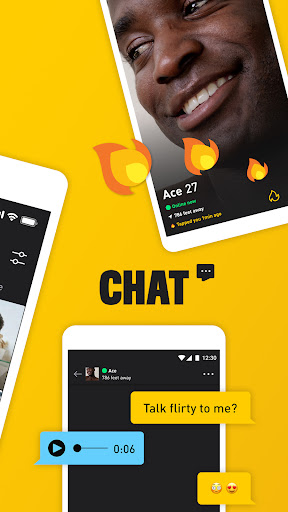
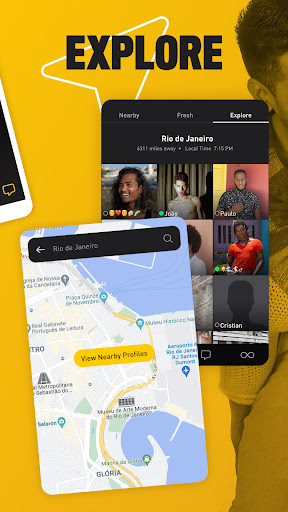
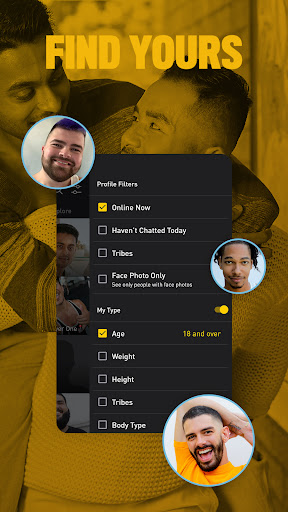
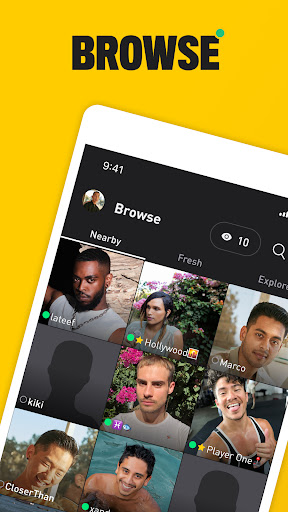
After spending time with Grindr on Android, the most striking thing about it is how little friction there is between opening the app and actually finding people to talk to. That immediacy is still Grindr’s biggest advantage. You launch it, the nearby grid loads, and within moments you have a strong sense of who is around, who is active, and whether the app is likely to be useful where you are. For an app centered on local social discovery, that speed matters, and Grindr generally gets that core experience right. The app is clearly built around convenience. Setting up a profile is quick, and it does not force you into an overly complicated onboarding flow. You can reveal a lot about yourself or keep things fairly minimal, which makes Grindr feel more flexible than many dating apps that try to squeeze everyone into the same identity template. The profile system is one of the app’s stronger points: tags, photos, private albums, and enough room to signal what you are about without making profile creation feel like homework. In day-to-day use, that translates into faster filtering and more useful first impressions. The location-based design is where Grindr feels most effective. If you are traveling, in a new city, or simply want to get a read on your local queer scene, the app is immediately useful. It is not just for dates or hookups, either. In practice, it works well for conversation, casual networking, and making local connections when you do not already know where the community is. That broad usefulness gives it more staying power than an app that only works for one type of interaction. Chat works well enough for regular use. Sending messages is straightforward, photo sharing is easy, and the extra communication tools help the app feel more current than a bare-bones messenger attached to a profile grid. We also appreciated some of the privacy controls. The ability to limit what others see, manage who can contact you, block quickly, and report bad behavior without jumping through hoops makes a real difference on an app where speed and proximity can sometimes invite messy interactions. Grindr does not solve the internet, but it gives users more control than many people expect. That said, the free experience can be exhausting. The ads are not subtle. They break the flow, feel intrusive, and at times make the app seem more interested in monetizing your attention than respecting it. If you are only dipping in occasionally, you may tolerate that tradeoff. If you are a frequent user, the ad pressure becomes one of the first things you notice and one of the hardest to ignore. It is the single biggest reason the app can feel less polished than its scale and reputation suggest. Performance is another mixed area. Grindr is usable, but not consistently smooth. During testing, it sometimes felt a little fragile: occasional crashes, hiccups, or minor rough edges interrupt the otherwise fast rhythm of the app. None of this made it unusable, but it did chip away at confidence. On a social app where timing matters, even small technical stumbles feel larger than they would elsewhere. There is also the issue of quality control in the social environment itself. Because Grindr is so easy to join and so immediate to use, you do run into the usual problems of bots, scammers, low-effort profiles, and blurry or compressed photos that can make genuine connections harder than they should be. The photo handling in particular can be frustrating. Images do not always look as sharp as the originals, which is not ideal on a profile-driven app where visual trust matters. You can still meet real people and have real conversations, but the app asks you to bring some patience and a bit of skepticism. Subscription upsells are present throughout the experience. Some premium features are clearly useful, especially if you want more control over browsing, visibility, and search. But the free version walks a fine line between generous and restrictive. It is functional enough to be worth using, yet persistent enough in what it withholds that you are never allowed to forget there is a paid tier. Whether that feels acceptable depends on how often you use it and how much the ads bother you. Who is Grindr for? It is for gay, bi, trans, queer, and curious adults who want the fastest possible route to meeting people nearby. It is especially good for users who value immediacy, travel-friendly discovery, and a large, active pool of profiles. It also suits people who are comfortable navigating a sometimes chaotic social space and using privacy tools to shape their own experience. Who is it not for? If you want a calm, highly curated, ad-light experience with consistently polished performance, Grindr may wear you down. It is also not ideal for anyone who dislikes proximity-based social apps, has little tolerance for spammy behavior, or expects every interaction to feel thoughtful and high quality. In the end, Grindr remains compelling because its core utility is real. It is quick, local, flexible, and still one of the most practical LGBTQ social apps to keep on your phone. But it is also cluttered by ads, occasionally unstable, and sometimes messy in the way open social platforms can be. If you go in knowing that, there is a lot to like. If you expect refinement at every step, the rough edges will stand out almost immediately.
Alternative apps