
Apps Games Articles
Kismia - Meet Singles Nearby
Kismia Group
Rating 4.1star icon
Editor's summary
Editor rating
star icon star icon star icon
half star icon
empty star icon
3.9

One-line summary Kismia is easy to get into and pleasantly polished for adults seeking real conversations, but the constant pull toward premium features keeps it from being an easy recommendation for budget-minded daters.

  • Installs

    10M+

  • Developer

    Kismia Group

  • Category

    Social

  • Content Rating

    Mature 17+

  • Latest version

    2.2.0

  • Package

    com.kismia.app

Screenshots

In-depth review
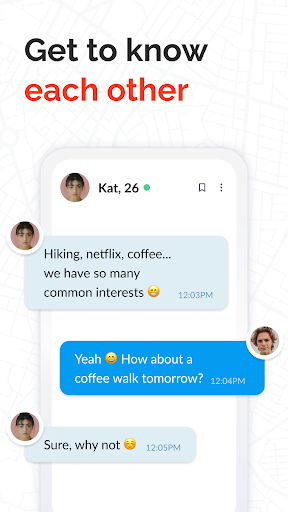
After spending real time with Kismia, the biggest surprise was how little friction there is in getting started. A lot of dating apps claim to be simple, then immediately drown you in gimmicks, cluttered menus, and pressure tactics. Kismia is more streamlined than that. Setting up a profile is straightforward, the main sections are easy to understand, and the overall interface has a smooth, modern feel that makes browsing profiles and checking messages feel natural rather than exhausting. That ease of use is one of the app’s strongest qualities. In daily use, Kismia feels designed for people who want to meet someone without treating dating like a full-time game. The flow from profile creation to discovery to messaging is coherent, and the app doesn’t make basic navigation harder than it needs to be. We liked that it feels approachable even if you haven’t used many dating apps before. Profiles are easy to scan, and moving through the app rarely feels confusing. The second thing Kismia gets right is tone. It feels more relationship-oriented than chaotic. The app presents itself as a place to meet real local singles, and in practice it gives off a calmer, more deliberate vibe than swipe-heavy apps that push speed over substance. During our time with it, the experience felt geared toward adults who want actual conversations and a better sense of who they are talking to, not just a parade of faces. That doesn’t mean every profile is deeply informative, but the app at least nudges things in a more intentional direction. A third strength is that the app generally runs well. We didn’t hit major technical problems, weird crashes, or messy interface hiccups during regular use. That sounds basic, but in dating apps it matters a lot. If the product feels unstable, people leave quickly. Kismia’s controls are responsive, the layout is clean, and the app gives off a polished impression. There are also little touches that make the experience feel more engaging, like compatibility-oriented profile details and a messaging system that tries to keep conversations moving. But Kismia is also the kind of app where the limits of the free experience become obvious fairly quickly. You can explore, browse, and get a feel for the platform without paying, which is useful, but the app repeatedly reminds you that the better version of the experience sits behind a subscription. That is the biggest friction point. If you are the kind of user who wants to chat freely before deciding whether the app is worth your money, Kismia can feel restrictive. It is not unusable for free, but it is clearly designed to nudge you toward premium access. That leads to the second major drawback: some features feel a bit too controlled unless you pay. Messaging, likes, and visibility are central to whether a dating app feels alive, and Kismia places real value on those tools. As a result, free use can sometimes feel like looking through a shop window. You can see enough to be intrigued, but not always enough to relax into the experience. For people who do not mind paying for dating apps, this will be less of an issue. For skeptical users, it can create hesitation. The third weakness is that profile depth and discovery could be better in places. We often wanted a little more context about people at a glance, especially when bios ran long or when location details felt less prominent than they should be. On an app built around meeting people nearby, distance and profile readability matter. Kismia gives you enough to browse, but it does not always give you enough to judge fit quickly and confidently. There were moments when we wanted to tap in for fuller details more easily, or better understand how close a potential match really was. There are also a few smaller annoyances that don’t ruin the app but do affect the feel of long-term use. Features meant to spark interaction can occasionally feel a bit pushy rather than organic. If you like a very stripped-back dating experience, some of these engagement tools may not be to your taste. The app works best when you lean into its structure instead of expecting complete freedom from nudges and prompts. So who is Kismia for? It is best for adults, especially those who are tired of hyper-casual swipe culture and want a dating app that feels more orderly, more mature, and easier to navigate. If you value a clean interface, a smoother onboarding process, and a generally relationship-minded atmosphere, Kismia is appealing. It is also a reasonable choice for people who are willing to test the waters for free and then potentially upgrade if they like what they see. Who is it not for? If you strongly dislike subscriptions, want unlimited messaging from the start, or expect extensive profile detail and transparent location context without friction, Kismia may wear on you quickly. It is also not ideal for people who want a totally minimalist dating app with no upsell pressure. Overall, Kismia leaves a better impression than many mid-tier dating apps because it feels polished, accessible, and oriented toward real interaction rather than pure swiping noise. At the same time, it never fully escapes the usual category problem: the free version is more of an introduction than a complete experience. If you can tolerate that and you like its calmer, more adult tone, Kismia is worth trying. If not, you may admire the interface more than you enjoy the app itself.
Alternative apps