
Apps Games Articles
Randonautica
Randonauts Co.
Rating 3.1star icon
Editor's summary
Editor rating
star icon star icon star icon
half star icon
empty star icon
3.8

One-line summary Randonautica is a genuinely fun way to turn an ordinary walk into a small adventure, but I’d only recommend it if you can enjoy randomness for its own sake and tolerate the occasional technical wobble or dud destination.

  • Installs

    10M+

  • Developer

    Randonauts Co.

  • Category

    Social

  • Content Rating

    Everyone

  • Latest version

    VARY

  • Package

    com.randonautica.app

Screenshots
In-depth review
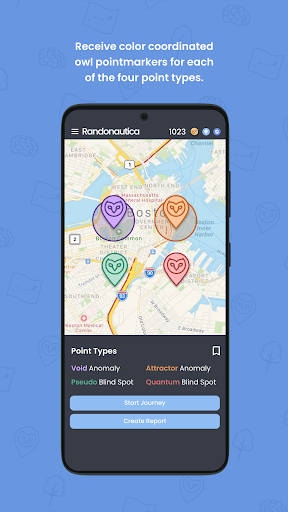
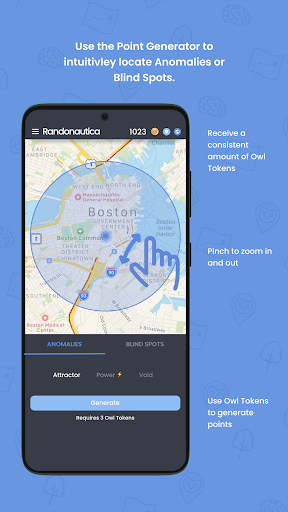
Randonautica is one of those apps that makes much more sense once you stop expecting magic and start treating it like a structured excuse to explore. After spending time with it the way it’s meant to be used—heading out with a loose intention, generating a point, and following the app into parts of the neighborhood I would never have chosen on my own—I came away thinking it is both more grounded and more interesting than its reputation suggests. At its core, the appeal is simple: the app gives you random coordinates and nudges you to go somewhere you probably would not have gone otherwise. In practice, that changes the mood of a walk immediately. A routine stroll becomes a little mission. Even when the destination itself turns out to be unremarkable, the act of going there sharpens your attention. I found myself noticing side streets, odd landmarks, empty lots, strange garden decorations, trails, bits of local texture—things I would normally pass by without a second glance. That is the first thing Randonautica gets very right: it reframes familiar surroundings and makes exploration feel intentional without overcomplicating it. The app experience itself is fairly approachable. The interface does not bury the main idea under endless menus; it wants you to generate a point and get moving. That simplicity works in its favor. You do not need a long tutorial to understand what the app is asking of you, and on a good day it feels like a clever blend of map tool, walking prompt, and novelty generator. I also liked that it can push you out of autopilot. If you have fallen into the habit of taking the same route, going to the same park, or telling yourself there is nothing new around you, Randonautica can puncture that feeling surprisingly well. That said, the app absolutely depends on your mindset. If you are the kind of person who needs every destination to deliver a payoff, you will bounce off it quickly. Some points lead to places that feel intriguing—a tucked-away path, an odd object, a viewpoint, a street you never knew connected to anything. Others lead to nothing more than a roadside patch, a fence line, or a spot that is technically reachable but not especially rewarding. That is not really a flaw in the concept; randomness includes boring outcomes. But in actual use, it does mean the app can feel hit-or-miss, especially in dense urban areas where generated coordinates may land near private property, behind buildings, or in places where the journey is less interesting than the map pin promised. This is where Randonautica’s second big strength and first major weakness show up at the same time. The strength is that it creates a sense of possibility. Even with ordinary destinations, the app can make a day feel less scripted. The weakness is that its success often has more to do with your surroundings than with the software itself. In suburban or semi-rural areas, I found the experience more enjoyable because there was room for the random point to become an actual walkable discovery. In heavily built-up areas, the app was more likely to send me somewhere inaccessible, awkward, or dull. The other issue is reliability. During testing, the app did not always feel perfectly stable. At times it worked smoothly and delivered that quick, playful loop of generate, go, explore. At other times it felt a little fragile, with the kind of hiccups that pull you out of the mood. An app built around spontaneity suffers more than most when it stumbles, because the whole point is to get you from curiosity to movement without friction. If you open it, get delays, or run into a blank or stalled screen, the magic evaporates fast. I also have mixed feelings about the app’s surrounding mystique. The language around intention, synchronicity, and reality-bending is clearly part of the brand, and some people will find that playful framing fun. Personally, I think Randonautica is at its best when treated as a tool for exploration rather than a machine for manifesting meaning. Used that way, it is entertaining, reflective, and sometimes oddly memorable. Used with inflated expectations, it can feel silly or disappointing. The app works better as a catalyst than as a promise. A third strength, though, is that it genuinely gets you outside. Few travel or location-based apps so effectively turn “I might go for a walk” into “I’m going right now.” It adds novelty, a hint of game design, and just enough unpredictability to make local wandering feel fresh again. For people who enjoy urban exploration, casual walking, journaling odd experiences, or turning an afternoon into a mini adventure, that is real value. But there are at least three clear drawbacks to live with: technical inconsistency, generated points that can be inaccessible or underwhelming, and an experience that can feel overhyped if you expect more than randomness. There is also the tokenized usage model to consider. It is not a dealbreaker, and the app does give you room to use it without immediately paying, but it does add a slight layer of friction to something that otherwise thrives on impulse. So who is Randonautica for? It is for curious walkers, bored locals, friends looking for a low-stakes adventure, and anyone who enjoys seeing ordinary places through a slightly stranger lens. It is also a good fit for people who like the ritual of setting an intention, even if they treat the results as playful coincidence rather than proof of anything cosmic. It is not for impatient users, people who need polished reliability every time, or anyone expecting guaranteed thrills, paranormal encounters, or carefully curated destinations. In the end, I liked Randonautica most when I stopped asking whether it was profound and started noticing whether it made me pay attention. It did. Not every outing was memorable, and not every generated point deserved the trip. But enough of them changed the texture of an ordinary day that I kept coming back. That makes it worthwhile—just not quite essential.
Alternative apps