
Apps Games Articles
Walmart: Shopping & Savings
Walmart
Rating 4.7star icon
Editor's summary
Editor rating
star icon star icon star icon star icon
half star icon
4.5

One-line summary Walmart: Shopping & Savings is one of the most practical grocery-and-essentials apps you can put on your phone, but the convenience is occasionally undercut by messy fees, tipping friction, and a few checkout quirks.

  • Installs

    100M+

  • Developer

    Walmart

  • Category

    Shopping

  • Content Rating

    Everyone

  • Latest version

    26.8

  • Package

    com.walmart.android

Screenshots

In-depth review
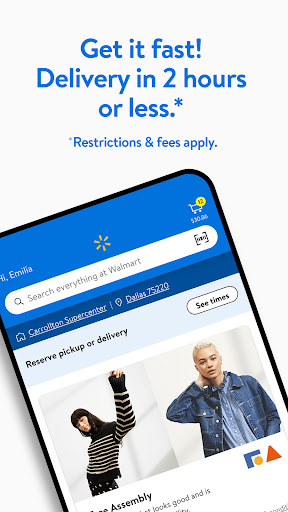
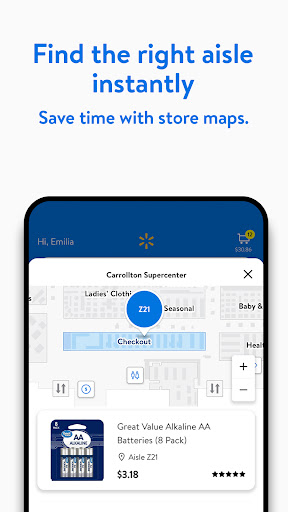
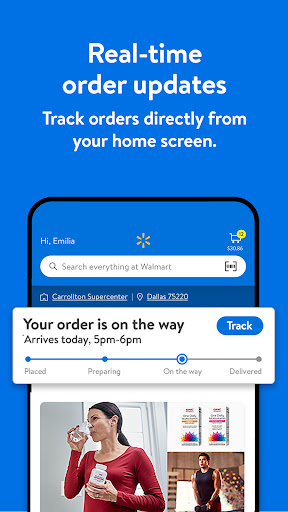
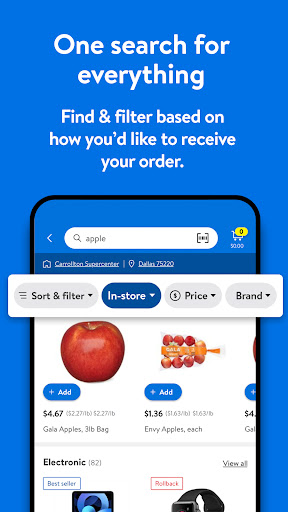
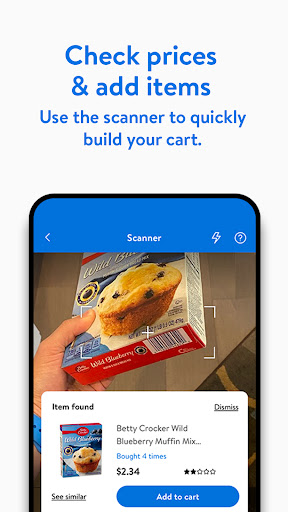
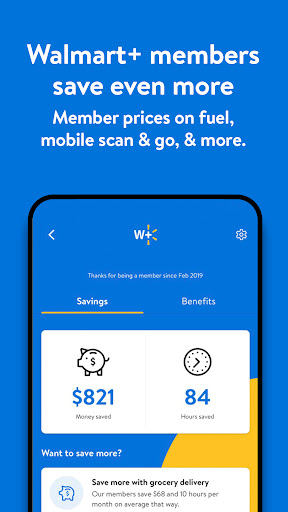
After spending real time with Walmart: Shopping & Savings, my biggest takeaway is simple: this is not just a store app, it is a genuinely useful daily shopping tool. Plenty of retail apps feel like stripped-down websites stuffed into a phone screen. Walmart’s app, by contrast, feels designed around actual routines: reordering groceries, checking prices in a store aisle, scheduling pickup, switching to delivery when life gets busy, and keeping tabs on orders without digging through menus. The strongest part of the experience is how efficiently it handles repeat shopping. If you buy the same household staples over and over, the app quickly becomes comfortable. It remembers prior orders well, surfaces familiar items without much friction, and makes it easy to rebuild a cart without starting from scratch every week. For grocery shopping in particular, that matters. I found it much easier to use than many shopping apps that split essentials across multiple services or bury basics under promotional clutter. Here, the structure is mostly logical: search, add, choose fulfillment, check out. That sounds obvious, but in practice it is surprisingly rare. Another thing Walmart gets right is product detail. This app is at its best when you are comparing practical items rather than impulse-buying. Nutritional information, dimensions, warnings, and general item descriptions are often easy to access, which makes the app more useful than just walking through a store and glancing at shelves. I liked being able to sit with a cart, compare sizes and prices, save things for later, and return without losing the thread. The “save for later” style flow is especially handy when you are balancing needs against a budget. The third major strength is flexibility. Pickup, delivery, and shipping are all clearly central to the app, and that shows. If you want curbside convenience, the app supports that flow well. If you need groceries delivered because you are busy, traveling, or simply do not want to make a store run, the app makes that option feel normal rather than like an add-on. Real-time order tracking and status visibility are also useful in the way good utility features should be: not flashy, just reassuring. When an app lets you place an order and then stay out of your way while still keeping you informed, that is a win. That said, this is not a flawless experience, and the rough edges are noticeable precisely because so much of the app works well. My biggest frustration is pricing clarity around the edges of the order. The base item pricing is often straightforward, but once fulfillment choices, shipping thresholds, delivery details, and tips enter the picture, the app can feel less clean than it first appears. If you are using delivery regularly, the tipping flow can feel a little too preloaded for comfort. It is editable, yes, but I do not love any shopping experience that makes me double-check whether an extra charge has been quietly normalized. Likewise, certain low-price items lose their appeal once shipping is added, and the app does not always make that emotional letdown feel graceful. The second weakness is occasional checkout and payment friction. In day-to-day browsing, the app feels polished. In the final mile, it can get temperamental. Payment method handling, promotional code application, and benefit-related checkout scenarios do not always feel as rock solid as the rest of the interface. These are the moments where convenience matters most, so even a small hiccup feels larger than it would elsewhere. My third complaint is that in-store assistance is useful but still not as refined as it could be. Barcode scanning and store maps are smart inclusions, and they help bridge online and physical shopping. But depending on what you are trying to find, the app can still leave you with only a broad aisle-level sense of direction instead of a truly precise location. For a retailer of this scale, that last step of helping people find items quickly in-store could be sharper. I also spent time with some of the app’s broader convenience features, and the overall impression is positive. Walmart Pay is a sensible addition for people already bought into the ecosystem. Pharmacy management is practical, not glamorous, but exactly the sort of feature that turns a shopping app into something more routine and sticky. The newer AI assistant angle is there as well, though for me the heart of the app is still its core utility, not the novelty layer. The best moments here are not when the app feels futuristic; they are when it saves five or ten minutes and keeps a household running. Who is this app for? It is ideal for busy families, budget-conscious shoppers, people who regularly order groceries, and anyone who wants one app that can handle home essentials, basic retail shopping, pickup, delivery, and order tracking without much learning curve. It is also especially useful for people who depend on convenience options because of travel, mobility, childcare, or lack of easy transportation. Who is it not for? If you dislike delivery tipping as part of the workflow, hate monitoring thresholds and fees, or expect every payment and checkout scenario to be frictionless every single time, this app may occasionally test your patience. It is also not the best fit for someone who only shops in-store once in a while and has no interest in digital order management. Overall, Walmart: Shopping & Savings earns its high reputation because it solves ordinary shopping problems better than most retail apps. It is fast, practical, and genuinely helpful in everyday life. I do not think it is perfect, and I would like more transparency and less friction around charges and checkout. But judged by the standard that matters most—does it make getting groceries and essentials easier?—the answer is clearly yes.
Alternative apps