Apps Games Articles
Woodoku
Tripledot Studios Limited
Rating 4.4star icon
Editor's summary
Editor rating
star icon star icon star icon star icon
half star icon
4.5

One-line summary Woodoku is one of the best pick-up-and-play puzzle games on Android thanks to its calm, clever block-placement loop, but the ad load and occasional progress or stability hiccups keep it from being an easy universal recommendation.

  • Installs

    50M+

  • Developer

    Tripledot Studios Limited

  • Category

    Puzzle

  • Content Rating

    Everyone

  • Latest version

    2.12.00

  • Package

    com.tripledot.woodoku

In-depth review
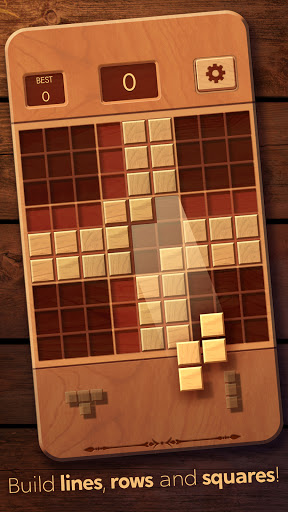
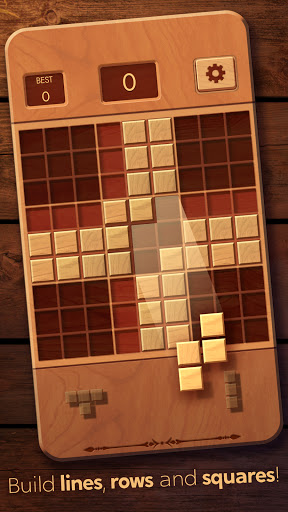
Woodoku succeeds because it understands a simple truth about mobile puzzle games: relaxing does not have to mean mindless. After spending time with it, what stands out most is how quickly it slips into your routine. It is the kind of game you open for a few minutes while waiting in line, then realize half an hour has disappeared because you kept telling yourself, “one more run.” That addictive pull is not coming from flashy gimmicks. It comes from a very clean core idea: place wooden block pieces onto a 9x9 board, clear lines or squares, and try not to trap yourself. What makes that familiar premise work so well is the balance between comfort and tension. The presentation is warm and easy on the eyes, with a tactile wooden look and satisfying board-clearing effects that make each good move feel rewarding. There is no frantic timer pushing you into bad decisions, and that immediately makes Woodoku more inviting than many puzzle games that confuse stress with challenge. You can sit with the board, think through your options, and plan ahead. That slower pace gives the game broad appeal. It is excellent for players who want something mentally engaging without the pressure of speed-based play. In daily use, the game’s biggest strength is just how readable and approachable it feels. Even if you have never touched a block puzzle before, the rules are intuitive within minutes. Place pieces, build complete rows, columns, or 3x3 zones, clear space, survive longer. The Sudoku-like board adds structure without making the experience feel like homework. There is real strategy here, especially in deciding when to protect open areas for awkward future pieces and when to cash in a safe clear. The result is a puzzle game that feels fair more often than not. When you fail, it usually feels like your planning broke down rather than the game arbitrarily punishing you. A second strength is that Woodoku gives the basic endless mode enough support systems to keep it from feeling one-note. The daily challenges and journey-style content are useful additions because they break up the “chase a high score forever” rhythm. In practice, these modes gave me reasons to come back beyond just beating my own best run. They add structure, short-term goals, and a sense of progression that many minimalist puzzle games lack. For players who enjoy collecting rewards, badges, or simply having a fresh objective, these extras make the app feel more like a hobby than a disposable time-killer. Its third major strength is accessibility in the broader sense of lifestyle fit. Woodoku is easy to play in short bursts, works well as an offline distraction, and does not demand that you learn a deep progression system to enjoy it. That matters. Plenty of mobile puzzle games bury their fun under currencies, lives, and daily chores. Woodoku mostly keeps the board front and center, and that restraint is a big part of why it is so easy to recommend. That said, this is not a flawless package. The biggest weakness is advertising. In my time with the app, the ads were not always catastrophic, but they were frequent enough to break the game’s calming mood. A puzzle game like this lives or dies by flow: think, place, recover, try again. When an ad appears at the end of a run or after a challenge, it can feel less like a brief interruption and more like someone tapping you on the shoulder every few minutes. Some players will tolerate that because the core game is so strong, but if you are especially sensitive to ad friction, Woodoku can become irritating faster than it should. The second weakness is that the app occasionally gives the impression of rough edges around the experience outside the board itself. The core puzzle mechanics feel polished, but some surrounding elements do not always feel as smooth or dependable. There are moments where events or side activities feel less essential and more like half-integrated extras. More importantly, the possibility of glitches, freezes around ads, or account-related progress issues puts a dent in trust. In a game built around long-term habit and repeated play, the idea of losing progress or getting bounced out of a session is more than a minor nuisance. The third complaint is that challenge design can sometimes lean from thoughtfully difficult into frustratingly luck-dependent. Most of the time, surviving a run is about good space management and resisting greedy placements. But there are stretches, particularly in structured challenge content, where the incoming piece combinations can make the game feel less like a test of foresight and more like an exercise in damage control. That randomness is part of the genre, of course, but in Woodoku it occasionally pushes too far toward “nothing I could have done” territory. So who is this for? It is for players who want a calm, satisfying, replayable puzzle game they can enjoy at their own pace. It is especially good for adults who like brain-teaser style games but do not want twitch mechanics, competitive pressure, or overly complicated systems. It is also a great fit for commuters, travelers, and anyone who values offline play. Who is it not for? If you hate ads on principle, want absolute control over every puzzle outcome, or get attached to long-term progress and cannot tolerate the occasional technical wobble, Woodoku may wear on you. Likewise, players looking for a rich narrative, lots of customization, or a highly varied game structure may find it too focused on one core loop. Even with those caveats, Woodoku remains one of the stronger mobile puzzle games in its lane. It is elegant, habit-forming, and genuinely satisfying to play. The board design and the moment-to-moment decision-making are good enough that you keep coming back despite the interruptions around the edges. That is usually the clearest sign that a puzzle app has something real going for it.
Alternative apps